

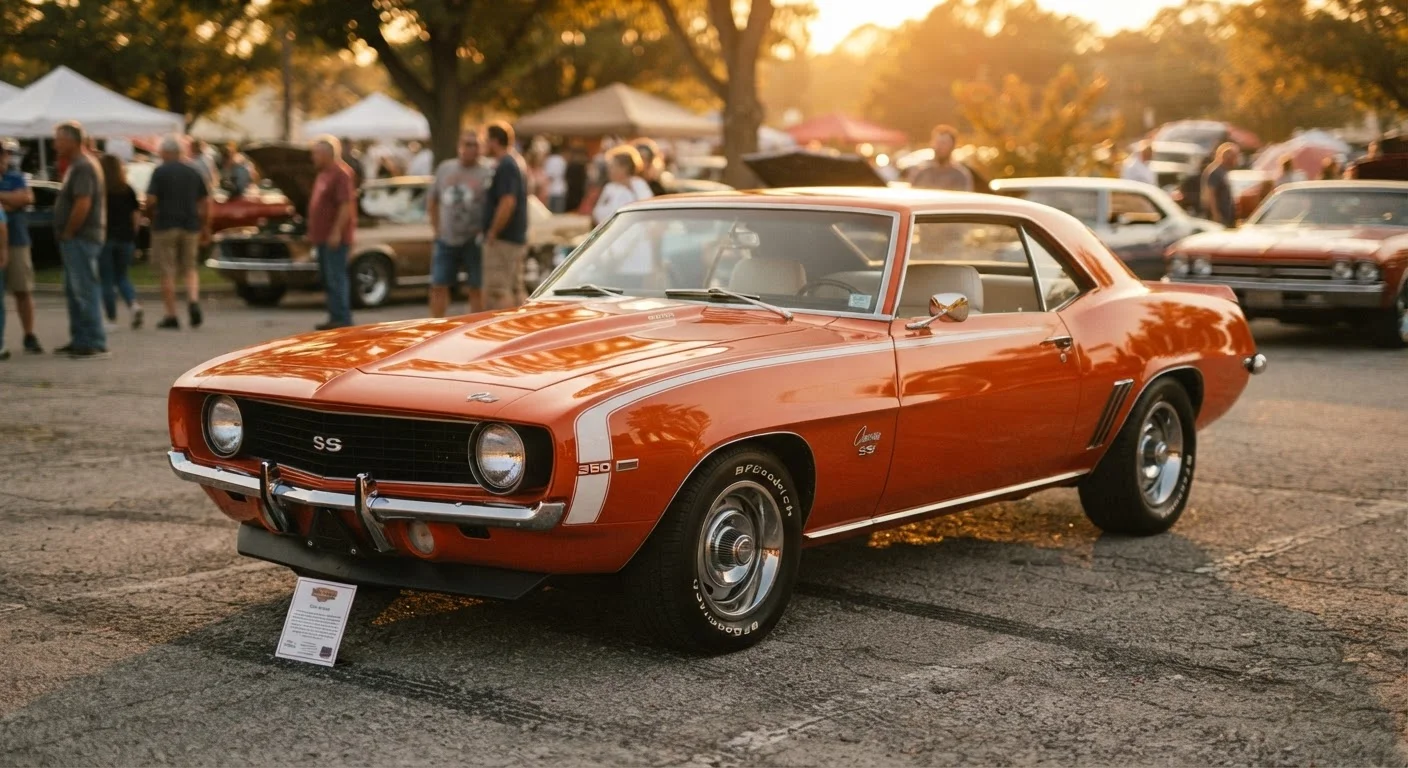
Why Standard Auto Policies Fall Short for Classics
A conventional auto insurance policy is designed for a vehicle that depreciates over time and is driven regularly. It values your car at actual cash value (ACV) — roughly what a comparable vehicle would sell for on the open market at the moment of a loss, minus depreciation. For a 2018 sedan, that calculation makes reasonable sense. For a meticulously restored 1967 Camaro worth many times its original sticker price, it can be financially catastrophic.
Classic and collectible vehicles often appreciate rather than depreciate. A standard policy's ACV payout after a total loss could leave an owner receiving a fraction of what was actually lost. That gap is precisely why specialty insurance exists — and why it's structured so differently from the coverage most drivers carry. For a broader look at what standard policies cover and where they commonly fall short, see what standard auto policies actually cover.
25+ years
Common minimum vehicle age for classic car eligibility
Many specialty insurers use a 25-year threshold, though definitions vary — some accept vehicles as young as 15 years if they qualify as collectibles.
1,000–5,000
Typical annual mileage limit on classic car policies
Most specialty classic car policies cap yearly mileage in this range, reflecting the assumption that the vehicle is not used for regular daily transportation.
The Core Difference: Agreed Value vs. Actual Cash Value
The single most important feature of a classic car policy is agreed value coverage. Before the policy begins, you and the insurer agree on the vehicle's insured value — supported by appraisals, documentation, and comparable sales data. If the car is later totaled or stolen, you receive that agreed amount in full. There are no depreciation calculations, no disputes over market value, no settlement negotiation based on a comparable-vehicle database.
Contrast this with ACV-based policies, where depreciation is always a factor. Even if you've invested heavily in a restoration, a standard insurer may not recognize that value in a claim. Agreed value removes that uncertainty. For context on how collision and comprehensive coverage fit into this picture, understanding collision vs. comprehensive coverage is a useful starting point.
Get a Professional Appraisal Before Insuring
The agreed value in a classic car policy is only as accurate as the documentation behind it. A certified appraisal from a qualified classic car appraiser — supported by restoration records and comparable sales data — gives both you and the insurer a defensible, market-accurate figure. Skipping this step can result in an agreed value that underrepresents what the vehicle is actually worth. Update appraisals periodically as the collector market shifts.
Usage Restrictions, Mileage Limits, and Storage Requirements
Classic car policies are underwritten on the assumption that the vehicle is driven sparingly and stored carefully — not commuted to work, not left in open parking lots, and not put through normal daily wear. This shapes several standard policy conditions:
- Annual mileage limits: Most specialty policies cap yearly mileage, often between 1,000 and 5,000 miles, though some offer higher-mileage tiers.
- Approved use only: Coverage typically applies to pleasure driving, car shows, club events, and exhibitions — not commuting or regular errands.
- Garaged storage: Many policies require the vehicle to be kept in an enclosed, locked garage when not in use, reducing theft and weather exposure risk.
- Qualified driver restrictions: Some policies limit who can drive the vehicle, often excluding drivers under a certain age or with recent violations.
Drivers who want to use their classic more broadly — including as a daily driver — should understand that doing so may conflict with policy terms. Owning a classic as a daily driver versus a show car involves very different insurance considerations worth exploring before committing to a policy type.
Additional Specialty Coverage Features
Beyond agreed value and usage restrictions, many classic car policies offer features tailored to the collector vehicle market:
- Spare parts coverage: Protection for extra components, tools, and accessories stored with or for the vehicle.
- Restoration coverage: Some insurers offer policies for vehicles actively being restored that are not yet roadworthy.
- Inflation-adjusted values: Certain policies include provisions to periodically increase the agreed value to reflect the collector market.
- Roadside assistance: Specialty towing that uses flatbeds rather than wheel-lift trucks, which can damage a low vehicle or classic suspension.
Not every insurer offers every feature, and terms vary considerably. Reading the actual policy document — not just a summary sheet — is essential. Understanding coverage types in plain language can help you evaluate what's included and what's missing in any policy you're considering.
How to Approach Getting Classic Car Coverage
Qualifying a vehicle for classic insurance generally involves documenting its condition, history, and value. Insurers commonly want a professional appraisal, photographs, and records of restoration work. Some require that the owner also maintain a separate daily-use vehicle, confirming the classic is not the primary transportation.
Because coverage terms and eligibility definitions differ meaningfully across providers, comparing policies — not just prices — matters. Look closely at how the agreed value is set, what the mileage allowance actually permits, and exactly which uses are covered or excluded. A licensed insurance agent who specializes in collector vehicles can help you navigate these differences.
For a comprehensive view of everything classic ownership involves — from titling and registration to storage and insurance — everything classic car ownership actually involves covers the full picture. And for general auto insurance literacy, the auto insurance essentials hub is a practical reference.
This article is for general informational purposes only and does not constitute personalized insurance or financial advice. Coverage terms, eligibility, and costs vary by insurer, vehicle, and individual circumstances. Consult a licensed insurance professional and read your actual policy documents before making coverage decisions.
Frequently Asked Questions
Agreed value means you and the insurer settle on the car's insured value before the policy starts. If the vehicle is a total loss, you receive that full agreed amount with no depreciation deducted. This is the most important distinction from standard auto policies, which typically pay actual cash value — the depreciated market value at the time of the loss.
Annual mileage limits vary by insurer but are often in the range of 1,000 to 5,000 miles per year. Some policies offer flexible or even unlimited mileage tiers for drivers who use their classic more frequently, but premiums and terms will reflect that increased exposure. Review your policy's specific limit before driving extensively.
Generally, no — classic car policies are designed for vehicles used only for shows, exhibitions, club events, and occasional pleasure driving. Using a classic as your primary or daily transportation will typically disqualify it from specialty coverage and may void a claim. A standard auto policy or a modified specialty policy may be required for regular-use classics.
Some specialty policies include coverage for spare parts, accessories, and tools kept with the vehicle, but this varies significantly by provider and policy. Restoration-in-progress coverage is a specific option offered by some insurers for vehicles being actively restored and not yet roadworthy. Confirm exactly what is and isn't covered in writing before assuming parts or in-progress work are protected.
There's no universal rule. Many insurers use a minimum age of 25 years, though some accept vehicles as young as 15 years if they qualify as collectibles. Eligibility also depends on the vehicle's condition, use, and storage. Check directly with the insurer, as criteria differ widely across providers.
Specialty classic car policies can be less expensive than standard policies for comparable coverage because mileage is limited and risk exposure is generally lower. However, the insured value is often substantially higher. Cost depends on the agreed value, your driving record, location, mileage allowance, and storage conditions — so actual premiums vary widely.
The content on this site is for informational purposes only and is not a substitute for professional advice. Always consult a qualified professional for guidance specific to your situation.