

Why the Premium Is Only Part of the Picture
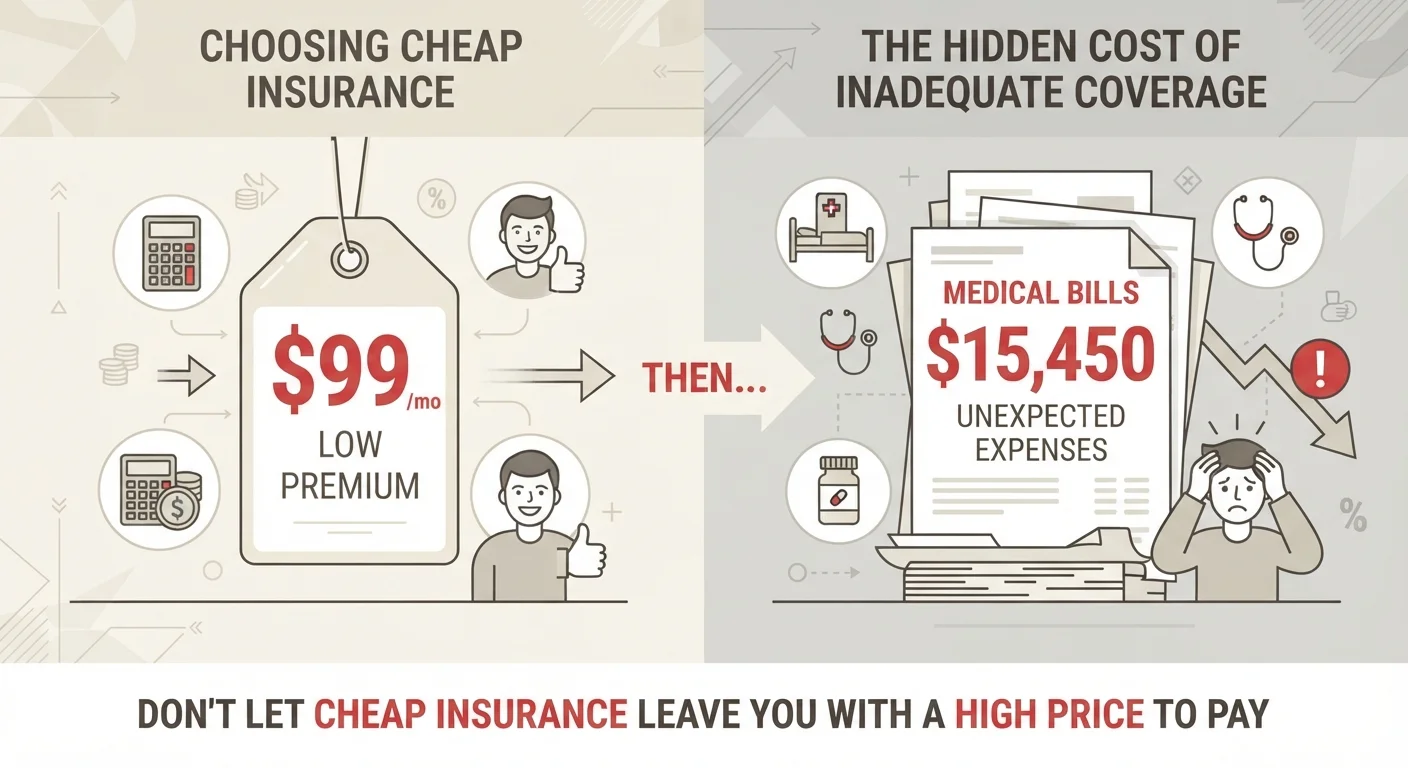
When comparing health insurance plans, the monthly premium — the fixed amount you pay regardless of whether you use care — is the most visible number. It's prominently displayed, easy to compare, and immediately affects your budget. That visibility makes it tempting to stop there. But the premium is just one component of what a plan actually costs you.
Every plan also carries a deductible (the amount you pay out of pocket before most coverage activates), copays and coinsurance (your share of costs after the deductible), and an out-of-pocket maximum (the ceiling on what you can owe in a plan year). These figures interact in ways that can make a low-premium plan far more expensive in practice. For a clear breakdown of how deductibles and out-of-pocket maximums work together, see our article on how deductibles and out-of-pocket maximums shape your costs.
$1,763
Average individual deductible for single coverage
According to KFF's 2023 Employer Health Benefits Survey, the average annual deductible for single coverage in employer-sponsored plans was approximately $1,763.
$9,450
ACA out-of-pocket maximum for individual plans
For plan years, the ACA sets an annual out-of-pocket maximum limit for individual coverage; for 2024 that figure is $9,450, meaning cost exposure below that cap varies widely by plan.
Common Mistakes When Prioritizing the Lowest Premium
The following errors come up repeatedly when people choose a health plan based primarily on its monthly cost. Each one is avoidable with a little additional information.
Ignoring the deductible when comparing plans.
Why it happens: Deductibles are listed separately from premiums and require a little math to factor in. Many people focus on the monthly number because it's the most immediate budget impact.
Assuming a low-premium plan will cover your existing doctors.
Why it happens: People often assume network participation is standard across plans offered by the same insurer or in the same market. Provider networks actually vary plan by plan.
Overlooking the out-of-pocket maximum on a low-premium plan.
Why it happens: Out-of-pocket maximums feel abstract until you face a serious illness or injury. They are easy to skip over when a plan looks affordable month to month.
Choosing a high-deductible plan without funding a Health Savings Account (HSA).
Why it happens: High-deductible health plans (HDHPs) are often the most affordable by premium and are HSA-eligible, but the HSA benefit requires active participation — it doesn't fund itself.
Selecting a plan based on current health without considering likely care needs.
Why it happens: When someone is generally healthy, a minimal, low-premium plan feels sufficient. It's difficult to plan for unpredictable health events or even predictable ones like prescription renewals and annual specialist visits.
For a broader look at how these misconceptions play out, see our guide on health insurance myths that cost people real money.
The Hidden Risk: Narrow Networks and Out-of-Network Costs
Low-premium plans frequently achieve their price point by restricting the network of providers you can see at in-network rates. A narrow network isn't inherently bad — but if your primary care doctor, a specialist you rely on, or your preferred hospital isn't included, you face a choice between switching providers or absorbing sharply higher out-of-network costs.
Verify Your Providers Before You Enroll
Network directories are sometimes out of date. A provider listed as in-network at the time you enroll may no longer participate by the time you schedule care. Always call the provider's billing office directly to confirm their current participation status with your specific plan before your appointment — not just at enrollment.
Out-of-network cost differences are often far larger than people anticipate. Our article on in-network vs. out-of-network care explains how network tiers are structured and what to check before your next appointment.
Once you understand your plan's actual structure, there are practical steps to use it well — see getting the most out of a health plan you already have for habits that reduce surprise costs.
This article provides general information about health insurance concepts and is not personalized insurance, financial, or medical advice. Coverage terms, costs, and network rules vary significantly by plan and provider. Always review your actual policy documents and consult a licensed insurance professional before making coverage decisions.
The content on this site is for informational purposes only and is not a substitute for professional advice. Always consult a qualified professional for guidance specific to your situation.