

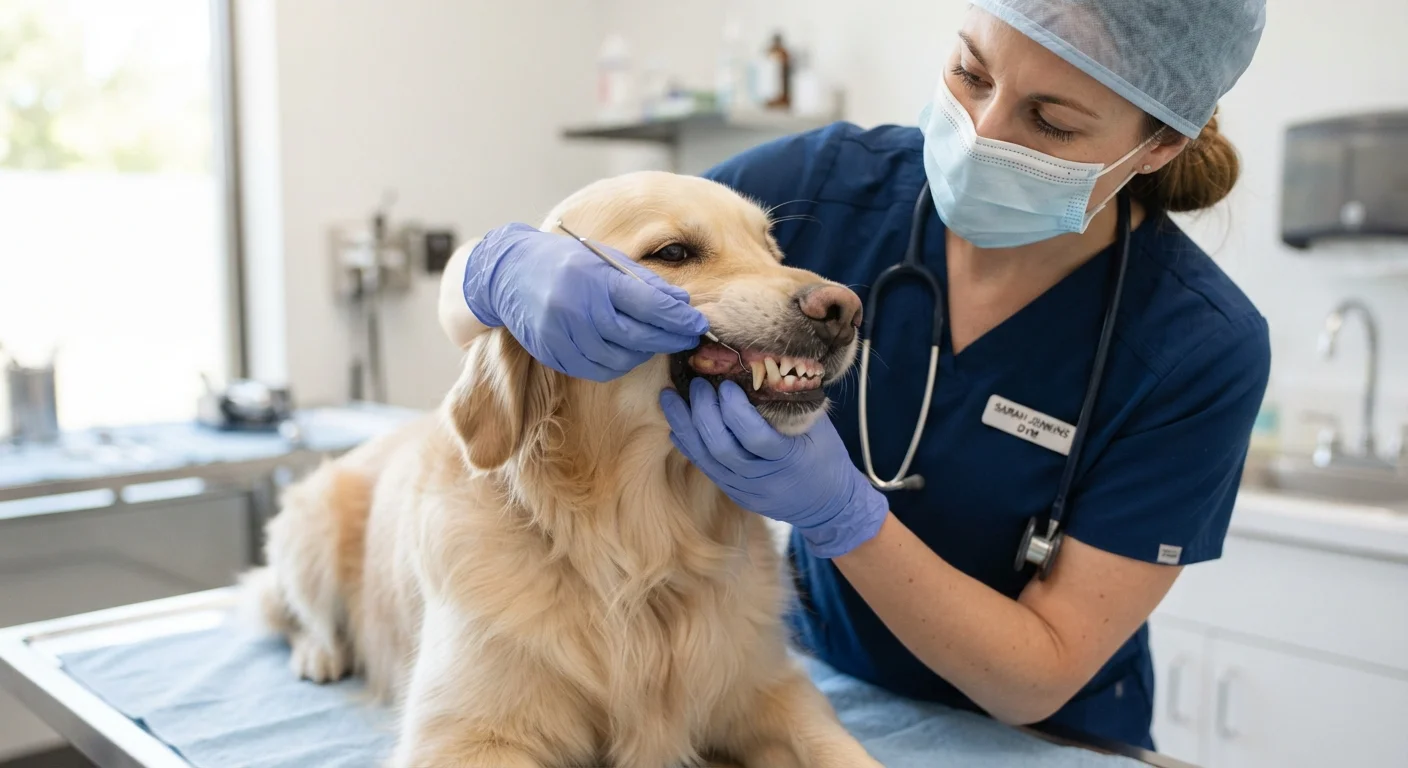
Why Dental Health Gets Overlooked
Most pet owners are diligent about vaccinations, flea prevention, and annual checkups. Dental care, though, tends to fall to the bottom of the list — partly because pets rarely signal oral pain the way humans do, and partly because plaque and gum disease develop gradually, out of sight.
Veterinary organizations estimate that the majority of dogs and cats over age three already have some form of periodontal disease. That statistic surprises many pet owners because their animals appear to be eating and behaving normally. The reality is that pets are wired to mask discomfort, so significant dental deterioration can be underway long before any obvious behavioral change surfaces.
Understanding what's happening in your pet's mouth — and why it matters beyond bad breath — is the first step toward making dental care a consistent part of your routine. See our guide to annual vet visits for a broader look at what routine exams typically involve.
~80%
Dogs with periodontal disease by age three
According to the American Veterinary Medical Association, most dogs show signs of periodontal disease by their third birthday.
70%+
Cats affected by dental disease by age three
Veterinary dental estimates suggest a similar prevalence in cats, with tooth resorption alone affecting a significant proportion of adult cats.
Grade 2–3
Typical stage when owners first notice signs
On the veterinary 1–4 periodontal grading scale, most pets are already at a moderate stage by the time bad breath or behavior changes prompt owner attention.
What Dental Disease Looks Like and How It Progresses
Plaque — a film of bacteria — forms on tooth surfaces every day. When it isn't removed, it mineralizes into tartar (calculus), a hard yellow-brown deposit that can't be brushed away at home. Tartar buildup irritates the gum line, triggering inflammation known as gingivitis. Left untreated, gingivitis advances into periodontal disease, which destroys the ligaments and bone that hold teeth in place.
By the time teeth become loose or an abscess forms, the pet has typically been experiencing chronic oral discomfort for some time. Cats are especially prone to a painful condition called tooth resorption, where the tooth structure breaks down from the inside — often with no visible external sign until the problem is severe.
Common warning signs worth discussing with your vet include:
- Persistent bad breath (beyond normal pet breath)
- Red, puffy, or receding gum tissue
- Visible tartar buildup, especially near the gum line
- Pawing at the mouth or face
- Changes in chewing habits or food preference
- Increased drooling
For a broader discussion of how oral health connects to systemic disease, see oral health as a window into overall wellness.
The Systemic Connection: More Than Just Teeth
Oral bacteria don't stay confined to the mouth. In pets with advanced periodontal disease, bacteria can enter the bloodstream through inflamed gum tissue. Research in veterinary medicine has associated chronic dental disease with inflammatory changes affecting the kidneys, liver, and heart — particularly the heart valves in small-breed dogs.
These connections don't mean every pet with plaque will develop organ disease, and the research continues to evolve. But they do reinforce why most veterinarians treat dental health as an integral part of responsible long-term pet health habits, not a cosmetic concern.
“The mouth is the gateway to the body. What happens in a pet's oral cavity doesn't stay there — bacteria and inflammation can have downstream effects that we're only beginning to fully understand.”
— Veterinary Dental Specialist (paraphrased from commonly expressed clinical consensus), Board-certified veterinary dentist, representing prevailing clinical perspective
Home Care and Professional Cleanings: What Each Does
Home dental care and professional veterinary cleanings serve different but complementary functions.
At home, daily or near-daily toothbrushing with pet-safe toothpaste removes surface plaque before it hardens. Dental chews, water additives, and dental diets carrying the VOHC seal have been evaluated for measurable plaque or tartar reduction — though none replaces brushing entirely. Introducing oral handling early in a pet's life makes these habits considerably easier to maintain.
Professionally, a veterinary dental cleaning under general anesthesia allows thorough scaling above and below the gum line, probing for periodontal pockets, and dental radiography to assess root and bone health. This is the only way to address tartar that has already formed below the gum line — a critical distinction, since that's where most periodontal damage occurs.
Some providers offer anesthesia-free dental cleanings, but veterinary dental specialists generally caution that these procedures cannot safely or effectively address subgingival (below the gum line) disease and may provide a false sense of security.
Start Brushing Early — Patience Pays Off
If your pet isn't used to having their mouth handled, introduce the process gradually. Start by letting them smell and lick the pet toothpaste, then slowly work up to touching the gum line with a finger before introducing a brush. Even a few minutes of gentle daily contact can make a meaningful long-term difference.
The frequency of professional cleanings varies by individual pet — breed, diet, genetics, and home care habits all play a role. Your veterinarian is the right person to help determine an appropriate schedule for your specific animal. For a deeper dive into building a home dental routine, see what most pet owners overlook about dental care.
This article is for general informational purposes only and does not constitute veterinary medical advice. Always consult a licensed veterinarian for guidance specific to your pet's health needs.
Frequently Asked Questions
Dental disease is among the most frequently diagnosed conditions in veterinary practice. Most estimates suggest the majority of dogs and cats show some degree of periodontal disease by age three. Because pets rarely show obvious pain, the problem often advances before owners seek care.
Yes. Oral bacteria from infected gums can enter the bloodstream and have been associated with inflammation affecting the heart, kidneys, and liver. While the exact causal links are still being studied, most vets treat dental health as part of whole-body wellness, not an isolated concern.
A thorough veterinary dental cleaning — including scaling below the gum line and dental X-rays — requires general anesthesia. This allows the vet to safely clean all tooth surfaces, probe for pockets, and take X-rays without causing the pet distress or risking injury during the procedure.
Common signs include persistent bad breath, visible brown or yellow tartar buildup, red or swollen gums, drooling more than usual, dropping food, or reluctance to chew on one side. Many pets will continue eating despite significant oral pain, so the absence of obvious distress does not mean their mouth is healthy.
Daily brushing is the veterinary gold standard for home dental care. If daily is not feasible, several times per week still provides meaningful benefit. Use a toothpaste formulated specifically for pets — human toothpaste contains ingredients that can be harmful if swallowed by animals.
The earlier, the better. Introducing toothbrushing and oral handling during puppyhood or kittenhood makes the process far easier for both pet and owner. Your veterinarian can advise on appropriate timing for a first professional cleaning based on your pet's breed and individual dental development.
The content on this site is for informational purposes only and is not a substitute for professional advice. Always consult a qualified professional for guidance specific to your situation.