

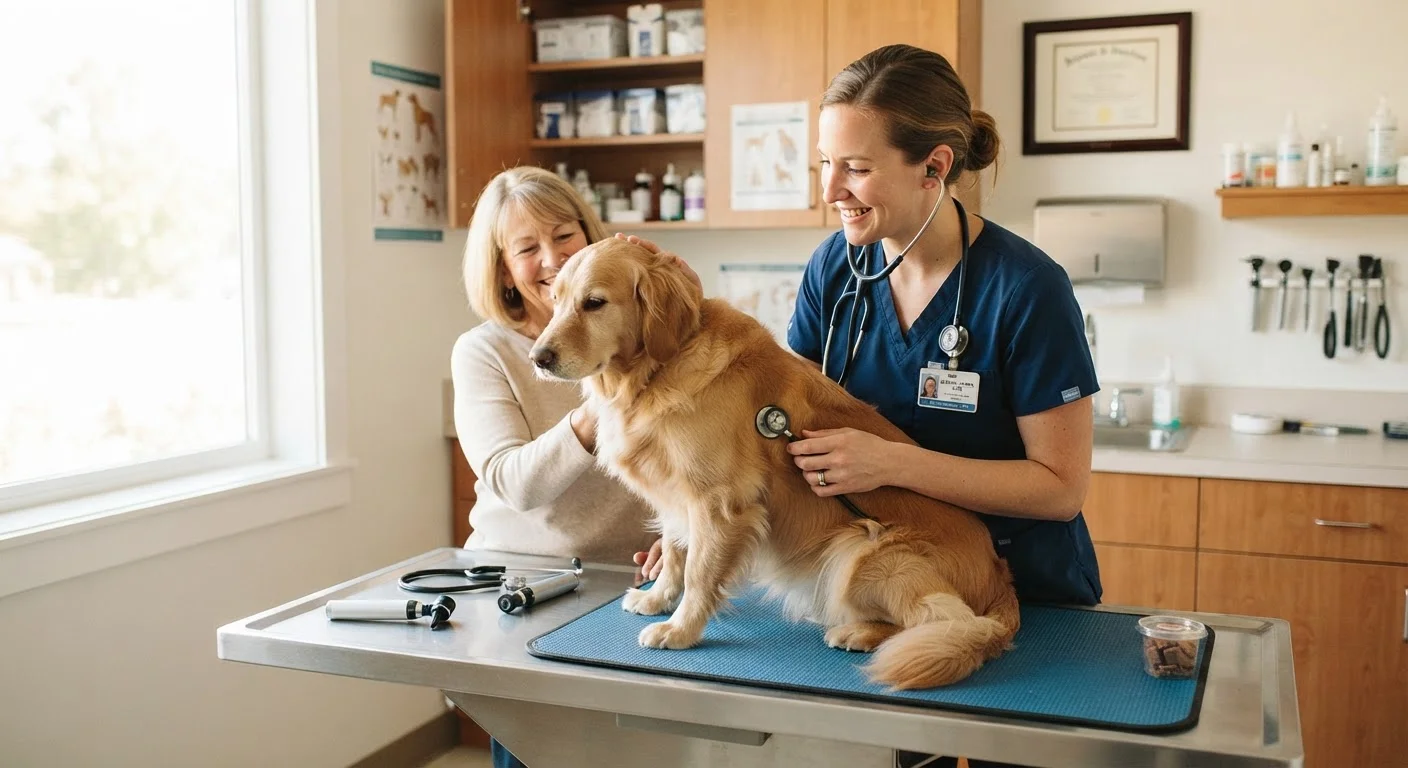
What Actually Happens During the Appointment
The core of any annual vet visit is the physical examination. Your veterinarian works systematically from head to tail, assessing dozens of data points that together form a picture of your pet's health. This includes checking the eyes for cloudiness or discharge, examining the ears for signs of infection or mites, evaluating the teeth and gums for tartar buildup or inflammation, and palpating lymph nodes for unusual swelling.
The heart and lungs are listened to with a stethoscope to detect murmurs, irregular rhythms, or abnormal breath sounds. The abdomen is palpated to assess organ size and check for masses. Skin and coat quality are noted. Weight is recorded and compared against previous visits — gradual weight loss or gain can be an early signal of underlying disease.
Alongside the physical, your vet will review your pet's vaccination history and parasite prevention status. Depending on your pet's age, breed, and risk factors, they may recommend bloodwork, urinalysis, or fecal testing. These aren't routine upsells — they provide information a physical exam simply cannot, especially for organ function. For more on what oral health checks catch, see our article on dental health in dogs and cats.
Make the Most of Your Appointment
Write down any behavioral changes, appetite shifts, or physical oddities you've noticed in the weeks before the visit — even if they seem minor. Vets gather much of their diagnostic picture from owner observations. A few notes on your phone can make the difference between a useful conversation and a forgotten concern.
Why "Looks Fine" Isn't a Reliable Indicator
Pets are instinctively good at masking discomfort — a trait inherited from wild ancestors for whom showing weakness meant vulnerability. This means that by the time a health problem is obvious to an owner, it may already be significantly advanced. Conditions like chronic kidney disease, hyperthyroidism in cats, early heart disease, and dental pain often develop silently over months or years.
Annual exams create a longitudinal health record. A vet who sees a small elevation in kidney values one year can flag it, recheck it, and monitor trends — intervening before the condition reaches a crisis point. This kind of trend-based detection is only possible when there's consistent, documented baseline data. The parallel holds true across species: feeling fine doesn't mean all is well for humans either.
What Blood Tests Can Reveal
A basic wellness blood panel typically measures red and white blood cell counts, liver and kidney function markers, blood sugar, and thyroid levels in older cats. These numbers can reveal early organ stress that shows no outward symptoms. Your vet will explain which tests are appropriate for your pet's age and situation — not every pet needs the same panel every year.
How Visit Frequency Changes With Age and Health Status
The once-a-year recommendation is a general guideline for healthy adult pets, not a universal rule. Puppies and kittens require a series of exams and vaccines in their first year — sometimes every three to four weeks during early development. Senior pets, typically defined as those seven years and older (though this varies by species and size), often benefit from biannual exams because age-related changes can progress quickly.
Pets managing chronic conditions such as diabetes, arthritis, heart disease, or thyroid disorders may need more frequent monitoring still. Your vet will recommend a schedule appropriate to your individual pet rather than a one-size-fits-all interval. Building consistent responsible pet health habits at home between visits also helps you notice changes worth reporting. For a side-by-side look at how wellness exams differ from other visit types, see annual vet visit vs. wellness exam.
This article is for general informational purposes only and is not a substitute for professional veterinary advice. Always consult a licensed veterinarian for guidance specific to your pet's health needs.
Frequently Asked Questions
A vet typically evaluates your pet's weight, body condition, eyes, ears, teeth, skin, coat, lymph nodes, heart, lungs, and abdomen. They also review vaccination history and discuss parasite prevention. Blood or urine tests may be recommended depending on your pet's age and health history.
Most veterinary guidelines recommend at least one wellness exam per year for healthy adult pets. Senior pets — generally those over seven years old — often benefit from visits every six months, since age-related changes can develop quickly.
Yes. Many conditions, including kidney disease, dental disease, and early tumors, develop without obvious outward signs. A physical exam can detect abnormalities a pet owner would not notice at home. Early detection typically leads to more treatment options and better outcomes.
Bring any previous medical records if you're visiting a new clinic, a stool sample if your vet requests one for parasite screening, and a list of any behavioral changes, dietary shifts, or concerns you've noticed. This helps your vet get a complete picture.
Not necessarily. Vaccine schedules vary based on your pet's age, lifestyle, prior vaccination history, and local disease risk. Your vet will review what's due and what can be deferred based on current guidelines rather than giving all vaccines automatically.
A wellness visit is proactive — it's designed to assess overall health and catch issues early when no specific problem is known. A sick-care visit is reactive, focused on diagnosing and treating a specific symptom or illness. The two serve different purposes and are not interchangeable.
The content on this site is for informational purposes only and is not a substitute for professional advice. Always consult a qualified professional for guidance specific to your situation.