

Why Boredom Is More Than Just a Mood
Most pet owners know the scene: shoes chewed through, furniture scratched, a dog spinning in circles at 7 a.m. These behaviors are easy to dismiss as personality quirks or training failures. But behavioral science and veterinary research increasingly point to a more fundamental cause — chronic under-stimulation, or what most of us simply call boredom.
Animals evolved in environments that demanded constant mental engagement. Hunting, foraging, navigating social hierarchies, and problem-solving were daily requirements, not optional extras. When domestic pets live in comparatively static, unstimulating environments, the nervous system doesn't just idle — it can generate stress, anxiety, and compensatory behaviors that carry real health consequences.
Destructive behavior is one visible outcome. Less obvious are the internal effects: elevated stress hormones, disrupted sleep, weakened immune response, and in some cases, compulsive behaviors that cause physical harm. Chronic stress from environmental deprivation is a recognized welfare concern, not a minor inconvenience. For a deeper look at how lifestyle conditions shape pet health, see our guide on how indoor and outdoor lifestyles affect cat health.
~70%
Dogs showing behavioral problems linked to lifestyle factors
Veterinary behavioral literature consistently identifies under-stimulation and lack of mental engagement as contributing factors in a majority of common dog behavior problems seen in clinical practice.
5 types
Core enrichment categories recognized by veterinary behaviorists
Sensory, cognitive, social, feeding-based, and physical enrichment are the five categories most commonly used by applied animal behaviorists when designing welfare programs for domestic pets.
2–3×
More likely: indoor cats to show boredom-related behaviors
Studies in cat behavioral welfare suggest indoor-only cats are significantly more prone to stress and boredom-driven behaviors compared to cats with environmental variety, though indoor living also reduces exposure to outdoor hazards.
What Enrichment Actually Looks Like
Environmental enrichment is not a product category — it's a practice. It encompasses any deliberate effort to engage an animal's behavioral needs through its surroundings, routines, and interactions. Veterinary behaviorists typically organize enrichment into several overlapping types:
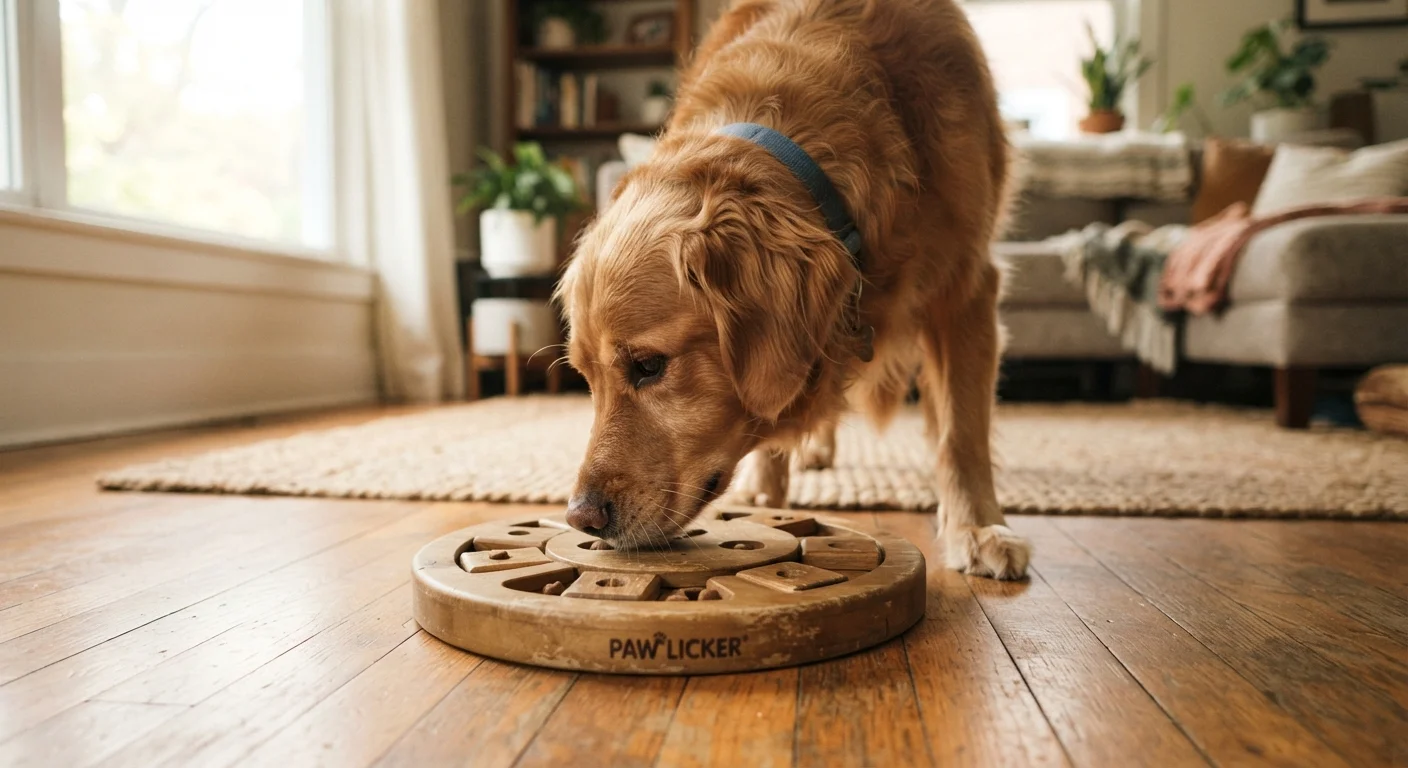
- Feeding-based enrichment: Using puzzle feeders, scatter feeding, or hiding food to engage foraging instincts. This is often the easiest category to implement and one of the most impactful.
- Sensory enrichment: Introducing novel scents, sounds, or textures — rotating toys, letting dogs sniff freely on walks, or placing bird feeders where cats can observe them.
- Cognitive enrichment: Training sessions, trick learning, and problem-solving toys that require animals to think, not just react.
- Social enrichment: Structured playtime, positive interactions with humans, and for social species, appropriate companionship. See our piece on what actually helps when bringing a second pet home for context on social dynamics.
- Physical enrichment: Environmental modifications like climbing structures for cats, varied walking routes for dogs, or digging areas that channel natural behaviors constructively.
The most effective enrichment plans tend to combine multiple types, rotate regularly to maintain novelty, and stay within the animal's physical and cognitive comfort zone.
Start With the Food Bowl
One of the easiest ways to introduce enrichment is to stop serving meals in a standard bowl. Scatter kibble across a sniff mat, stuff it into a food puzzle, or use a slow feeder. For most dogs and cats, mealtime problem-solving provides more genuine mental exercise than many dedicated play sessions. Start simple — complexity can increase as your pet figures out the basics.
Reading the Signs of Under-Stimulation
Animals can't tell you they're bored, but they communicate it through behavior. Recognizing those signals early — before they become entrenched patterns — is one of the most practical things an owner can do.
Common behavioral indicators of chronic under-stimulation include:
- Destructive behavior directed at objects, furniture, or the animal itself (excessive chewing, scratching, over-grooming)
- Repetitive or compulsive movements — pacing, tail chasing, staring at walls
- Hyperactivity or intense attention-seeking that escalates over time
- Lethargy, withdrawal, or loss of interest in play or food
- Increased vocalization without apparent cause
It's worth noting that many of these signs also appear in animals with underlying medical conditions, pain, or anxiety disorders. A behavioral change should prompt a veterinary conversation, not just a new toy. Good responsible pet health habits include monitoring behavior as a routine wellness check, alongside weight, coat condition, and appetite.
“Behavioral needs are as real as physical needs. An animal that cannot perform its natural behaviors is not thriving — regardless of how well it is fed or housed.”
— Overall Veterinary Behavioral Medicine Consensus, Reflected in guidance from the American Veterinary Society of Animal Behavior
Adapting Enrichment Across a Pet's Life
Enrichment isn't static — a puppy's needs differ sharply from those of a seven-year-old dog, and both differ from a geriatric animal managing arthritis or cognitive decline. What works well at one life stage may be physically inappropriate or cognitively frustrating at another.
Young animals often benefit from high-stimulation, varied activities that channel abundant energy into constructive outlets. Middle-aged pets may settle into more predictable routines, but still need regular novelty to prevent habituation. For older animals, the focus often shifts toward low-impact mental engagement — scent games, gentle training, and calm social interaction — that stimulates without overtaxing the body.
Cognitive dysfunction syndrome, recognized in both dogs and cats, is partly characterized by disorientation and behavioral changes. While enrichment isn't a cure, there is ongoing research into whether sustained mental engagement may support cognitive resilience as animals age. Our guide on how health needs shift for senior pets covers this and other age-related changes in more detail.
This article is for general informational purposes only and is not a substitute for professional veterinary advice. If your pet is showing behavioral changes or signs of distress, consult a licensed veterinarian or a board-certified veterinary behaviorist.
Frequently Asked Questions
Enrichment includes any activity or environmental change that engages your pet's natural instincts — sniff walks, puzzle feeders, window perches for cats, rotating toys, and training sessions all qualify. The key is that the activity challenges the animal mentally or physically in a way that feels purposeful. Even altering feeding routines, like hiding food for a dog to find, can be effective.
Chronic under-stimulation is linked to behavioral problems that can escalate into physical health issues — excessive licking can cause skin sores, stress can suppress immune function, and compulsive behaviors can lead to injury. While boredom itself isn't a clinical diagnosis, its downstream effects on animal welfare are well-documented in veterinary behavioral literature.
There is no universal daily quota, but most veterinary behaviorists recommend multiple short enrichment sessions rather than one long activity. Frequency and type depend heavily on species, breed, age, and individual temperament. A young border collie has very different needs than a senior indoor cat.
Yes. Senior pets often need gentler enrichment that accommodates reduced mobility or sensory decline, such as scent-based games rather than vigorous physical play. Mental stimulation remains important throughout a pet's life and may even help slow cognitive decline. Consult your veterinarian to adapt enrichment strategies appropriately as your pet ages.
Indoor cats are generally considered at higher risk for under-stimulation because they lack the sensory variety and behavioral opportunities that an outdoor environment naturally provides. Owners of indoor cats often need to be more deliberate about providing climbing structures, hunting-type play, and novel scents. That said, outdoor access carries its own risks that must be weighed carefully.
If your pet shows sudden behavioral changes, compulsive habits, signs of anxiety, or self-injurious behaviors, consult a veterinarian or a board-certified veterinary behaviorist. These signs can indicate underlying medical or psychological conditions that go beyond simple boredom. Early intervention is generally more effective than waiting for problems to compound.
The content on this site is for informational purposes only and is not a substitute for professional advice. Always consult a qualified professional for guidance specific to your situation.