

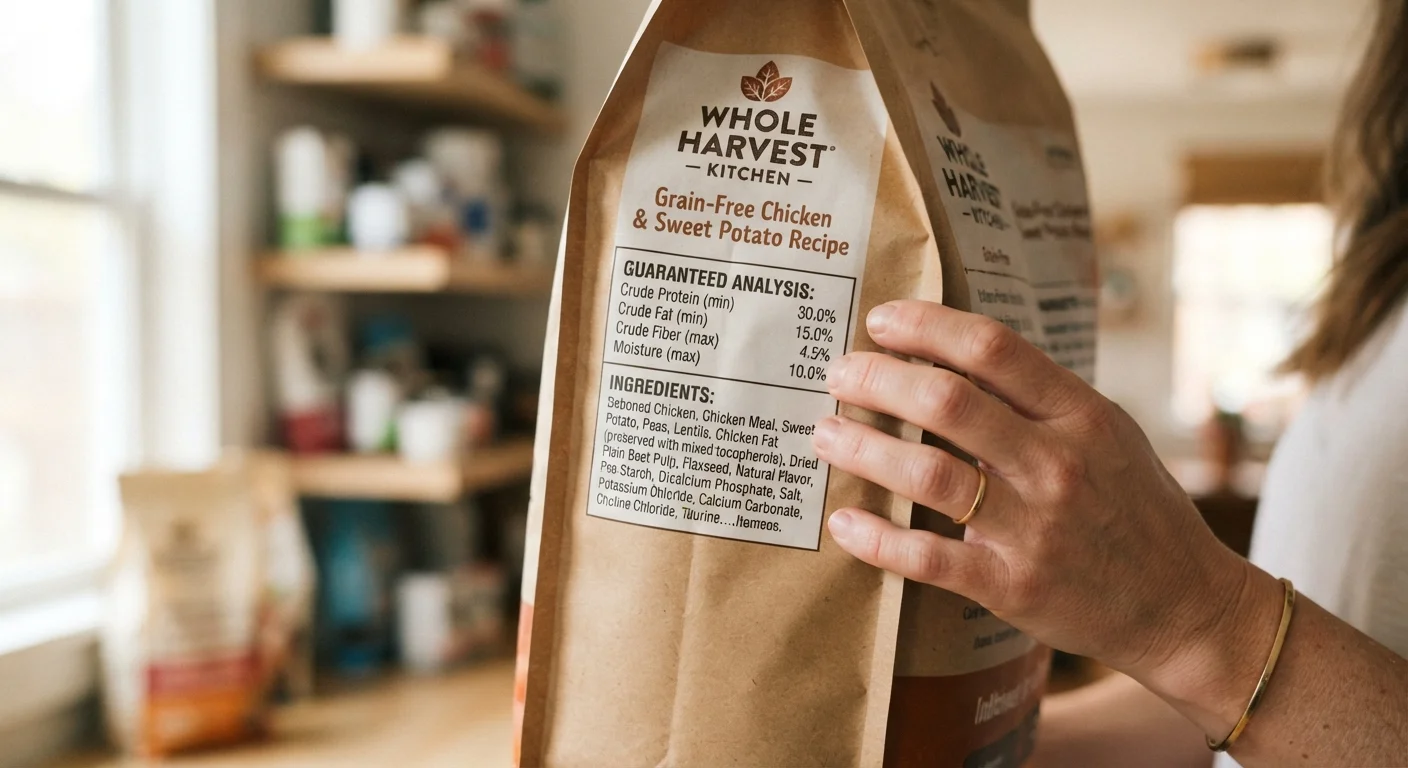
Why Pet Food Labels Feel Confusing
Pet food packaging is designed to sell, but the actual regulatory label — the panel with the ingredient list, guaranteed analysis, and nutritional adequacy statement — is standardized and readable once you know the structure. In the U.S., pet food labeling is overseen by the Association of American Feed Control Officials (AAFCO) and enforced at the state level. Learning to use that framework is more useful than trying to parse every front-of-bag claim.
For a broader look at how ingredient lists work on consumer products generally, the same decoding skills apply — see our guide on reading a skincare label for a useful comparison. But pet food has its own rules, and those are what we'll focus on here.
What you will need
The Label, Step by Step
Work through the following sections in order the first time you evaluate a new food. Once it becomes habit, the whole process takes about two minutes.
Find the AAFCO Nutritional Adequacy Statement
This is the most important line on the label. It tells you whether the food is formulated to meet established nutrient profiles or was tested through feeding trials. Look for language like: "[Product name] is formulated to meet the nutritional levels established by the AAFCO Dog (or Cat) Food Nutrient Profiles for [life stage]."
The life stage listed matters. A food labeled for "all life stages" meets the higher requirements set for growth and reproduction — suitable for puppies and kittens but not necessarily more nutritious for healthy adults. If a label says "for supplemental feeding only" or carries no AAFCO statement, the food is not intended as a sole diet.
Read the Ingredient List in Context
Ingredients are listed in descending order by weight before cooking. This matters because whole meats (chicken, beef, salmon) contain a lot of water weight, which cooks off — so a named meat at the top doesn't automatically mean meat dominates the finished product. "Chicken meal" (a concentrated, moisture-removed form) may actually deliver more protein per pound than whole chicken listed first.
Look for: a named protein source near the top; recognizable whole foods; and a short, legible list without a long tail of additives. No single ingredient placement tells the whole story — the ingredient list works alongside the guaranteed analysis, not instead of it.
Check the Guaranteed Analysis Panel
This panel reports minimum percentages of crude protein and crude fat, and maximum percentages of crude fiber and moisture. These are legal guarantees, not precise measurements — the actual content may be higher than the minimums stated. Four numbers tell you the rough nutritional profile, though they don't capture digestibility or ingredient quality.
Compare foods in the same format (wet-to-wet or dry-to-dry) for a fair picture. If you need to compare across formats, a dry-matter conversion accounts for the moisture difference.
Note the Manufacturer's Contact Information
Reputable manufacturers include a customer service number or website and are responsive to questions about sourcing, quality testing, and recall history. The name and address of the manufacturer or distributor is required by law to appear on the label.
You can also check the FDA's pet food recall database and your state department of agriculture for current recall or safety notices tied to any brand you're considering.
Review the Feeding Guidelines — Then Verify with Your Vet
Feeding guidelines give a weight-based daily serving range. Use them as a starting estimate, then adjust based on your pet's actual body condition score — a hands-on assessment your vet performs at wellness visits. Most labels recommend splitting the daily amount into two meals for adult dogs and cats.
If your pet's weight, activity level, or health status differs from the "average" the label assumes, the printed guideline may not fit. A veterinarian can help you set a target and track progress.
Common Stumbling Blocks
Even after you know the structure, a few areas trip up most pet owners.
Ingredient splitting
Manufacturers sometimes list several forms of the same ingredient separately — for example, "ground corn," "corn gluten meal," and "corn flour" — which pushes each one lower on the list than a combined corn entry would appear. This is legal and common. If several similar ingredients appear near the top, weigh them collectively.
As-fed versus dry matter
The guaranteed analysis is expressed on an "as-fed" basis, meaning it reflects the food's moisture content. Comparing a wet food's crude protein percentage directly to a dry kibble's is misleading because wet food is mostly water. To compare accurately, you'd need to convert both to a dry-matter basis — a straightforward calculation your vet or a board-certified veterinary nutritionist can walk you through.
Front-of-bag claims
Words like "premium," "holistic," and "human-grade" have no enforced regulatory definition in pet food labeling. "Natural" has a loose AAFCO definition but doesn't imply nutritional superiority. For more on what specific terms do and don't mean, see our companion piece on pet food nutrition label terms.
Grain-Free Doesn't Mean Nutritionally Superior
"Grain-free" is a marketing category, not a veterinary recommendation. The FDA has investigated a potential link between certain grain-free diets high in legumes and a form of heart disease (dilated cardiomyopathy) in dogs, though the research is ongoing and causation has not been established. If you're considering a grain-free diet, discuss it with your vet before switching — particularly for breeds with known cardiac risk.
Understanding label claims also helps you spot when popular trends outpace the science. Our article on pet nutrition myths covers several widely held ideas that veterinary research has complicated.
Putting It Into Practice
Once you can read a label accurately, the next step is applying that information to how much and how often you feed. Feeding guidelines on packaging are population-level estimates based on average activity and body weight — they're a starting point, not a prescription. Portion accuracy matters more than most owners realize; for a detailed look at where things go wrong, see weight management mistakes in pets.
When to Loop In a Veterinary Nutritionist
If your pet has a chronic health condition, a food allergy, or needs a therapeutic diet, a board-certified veterinary nutritionist (DACVN) can evaluate labels and recipes in clinical context. Your primary vet can provide a referral. General label literacy is a great foundation, but specialist input matters when dietary stakes are higher.
If your pet has a health condition, is a senior, or is at a life stage with elevated nutritional demands (growth, pregnancy, recovery), label reading is a foundation — not a substitute for veterinary guidance. The Pet Health hub has additional guides on specific conditions and care needs.
This article is for general informational purposes only and does not constitute veterinary or nutritional advice. Consult a licensed veterinarian or board-certified veterinary nutritionist for guidance specific to your pet's health and dietary needs.
The content on this site is for informational purposes only and is not a substitute for professional advice. Always consult a qualified professional for guidance specific to your situation.