

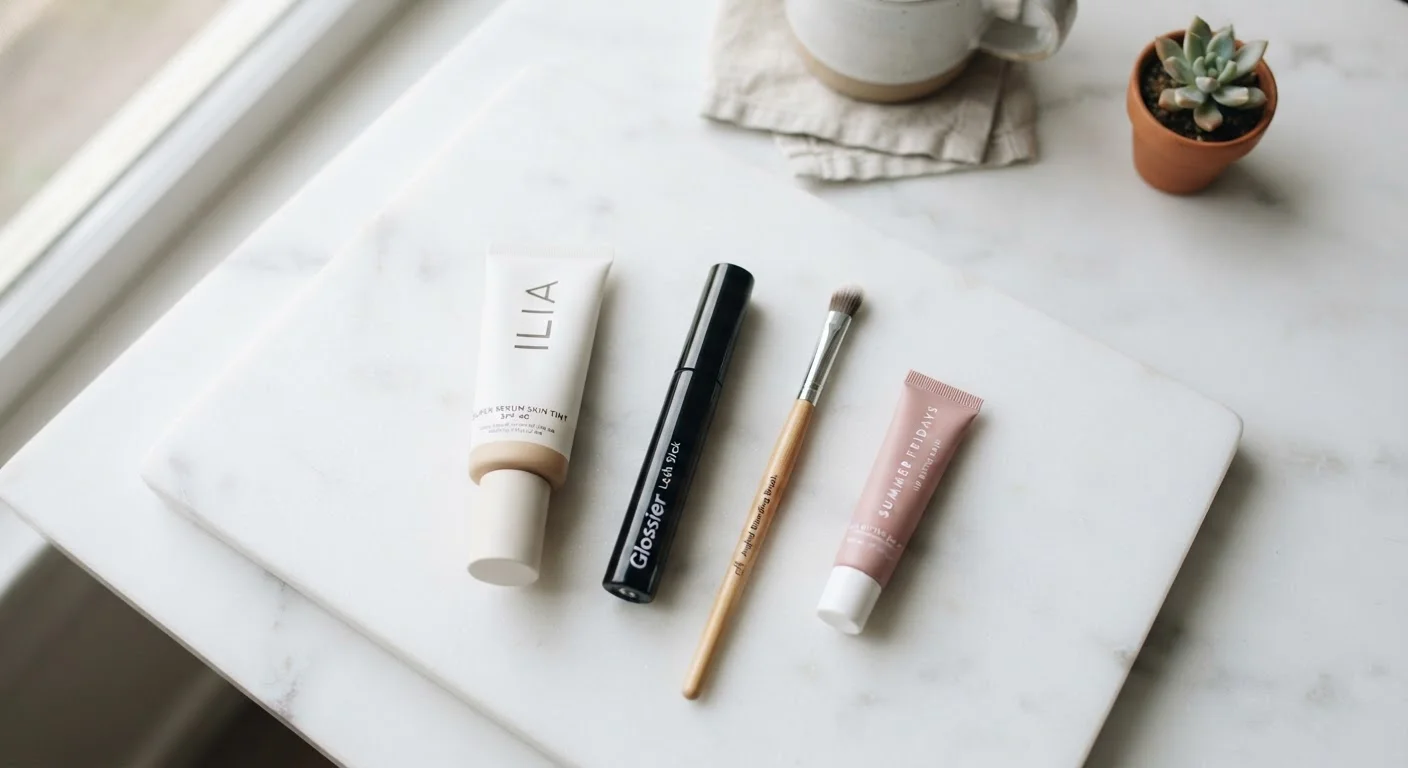
Why Fewer Products Can Actually Work Better
Somewhere along the way, the beauty industry convinced many of us that more steps equal better results. In practice, a crowded routine can lead to pilling, irritation, and wasted time — especially on a rushed morning. The truth is that a well-chosen, intentionally applied minimal routine often outperforms a hasty ten-step process.
This guide is built around technique, not product count. Whether you own three items or thirty, these approaches will help you get the most visible impact from whatever you choose to use. For context on how skin prep affects the end result, our guide to skincare layering order breaks down why the sequence of what you apply matters before makeup even enters the picture.
Start with well-prepped skin, not more product
The single highest-return habit in any makeup routine isn't a concealer or a primer — it's moisturized, hydrated skin before you apply anything. When skin is smooth and plump, even the most basic tinted product blends evenly and clings naturally. When skin is dry or flaky, no amount of layering fixes the texture underneath.
A lightweight moisturizer with SPF covers hydration and sun protection in one step, leaving a receptive base without adding extra time. Apply it with your palms and allow 60 seconds for it to settle before any makeup goes on top. That brief pause makes a measurable difference in how foundation or tint wears throughout the day. For a fuller picture of how prep affects results, see our article on common foundation pitfalls and how to fix them.
Moisturized, smooth skin is the real foundation — everything applied on top performs better.
Use a tinted moisturizer or skin tint instead of foundation
Full-coverage foundation is a skill-intensive product. It requires precise shade matching, careful blending, and often a primer and setting powder to keep it in place. A tinted moisturizer or skin tint, by contrast, forgives imprecision, combines hydration with light coverage, and applies in seconds with fingers.
The key technique: apply a small amount to the center of the face — the nose, center of the forehead, and chin — then blend outward toward the hairline and jaw using light, pressing motions rather than sweeping strokes. This concentrates coverage where it's most visible and thins out naturally at the edges, avoiding the mask-like line that trips up many beginners.
Apply tint to the center of the face first, then blend outward for a natural, seamless finish.
Spot-conceal rather than covering everything
Full-face concealer coverage is time-consuming and can look cakey without careful blending. A more efficient approach is targeted concealing: apply a small amount only to areas that genuinely need help — under-eye shadows, any redness around the nose, or a specific spot — and leave the rest of the skin alone.
Use a fingertip to tap (not swipe) the product in. Tapping warms the formula and presses it into skin rather than pulling it across the surface. For under-eye areas specifically, applying in a triangular shape pointing down toward the cheek and blending downward brightens the entire midface, not just the immediate eye area. This technique does more visible work than dabbing directly under the lash line.
Tapping concealer into the skin with a fingertip blends more naturally than any brush swipe.
Make mascara your anchor product
If you apply only one eye product, mascara consistently delivers the highest return. It opens the eyes, adds definition, and shifts the overall impression of a face from bare to finished — all in under two minutes. The technique matters as much as the formula: wiggle the wand at the base of the lashes and sweep upward in a single stroke per section, rather than pumping the wand repeatedly into the tube (which pushes air in and dries the product faster).
For a truly quick routine, one coat on upper lashes only is often sufficient. A second coat concentrated at the outer corners can create a subtle lift effect without requiring a separate eyeliner step.
One coat of mascara on upper lashes alone can transform a bare face into a polished one.
Use a lip-and-cheek product to unify the look
A cream blush or multi-use color product that works on both lips and cheeks is one of the most efficient tools in a minimal routine. Applied to the apples of the cheeks with fingers and blended upward, it adds warmth and dimension. A small amount pressed onto the lips ties the look together without requiring a separate lipstick or blush step.
The technique for cheeks: smile gently to locate the apple, apply the product there, and blend upward toward the temple in a C-shape. Avoid blending downward — upward movement creates a lifted, awake impression. This single step can replace both a blush and a lip color, trimming two products into one.
A single cream color product on cheeks and lips unifies the face and cuts two steps into one.
Set strategically, not everywhere
Setting powder is often applied all over the face out of habit, which can flatten the skin's natural glow and add unwanted weight to a lightweight routine. A more precise approach is to set only the areas that genuinely tend to get shiny — typically the center of the forehead, the nose, and the chin (the T-zone). Everywhere else can be left alone.
Use a small amount on a fluffy brush and press lightly rather than sweeping. This approach extends wear where it matters without dimming skin that looks good without powder. If you're working with a two- or three-product routine, this step is optional — well-prepped skin with a skin tint often holds acceptably on its own for several hours.
Setting powder only where you actually get shiny keeps skin looking fresh without flattening it.
Putting It All Together
A minimal makeup routine works best when you treat it as a system rather than a random selection of steps. Anchor your routine around one or two products that do double duty, prepare your skin so those products perform well, and apply with intention rather than habit. Done consistently, this approach takes under five minutes and delivers a look that reads as polished and deliberate.
The "One Minute Check" Before You Leave
Before you step out, give your face a quick scan in natural light if possible. Look for any unblended edges, excess product at the hairline, or mascara flakes. A clean fingertip or a small brush can fix most things in seconds. This final check costs almost no time but closes the gap between a rushed finish and a polished one.
If you find your overall look feels slightly dated even with a simplified makeup routine, it may be worth reviewing other style habits too — our piece on subtle styling habits that date a look covers low-effort refreshes that work alongside a simplified beauty approach.
The content on this site is for informational purposes only and is not a substitute for professional advice. Always consult a qualified professional for guidance specific to your situation.