

Why Fabric-Specific Care Actually Matters
Every garment you own is essentially a financial and practical investment. Washing a wool sweater the same way you wash a cotton T-shirt is one of the fastest ways to turn a perfectly good piece into a shrunken, misshapen mess. Understanding fabric behavior takes the guesswork out of laundry day and makes your clothes work harder for longer.
If you're actively building a functional wardrobe on a tight budget, extending the life of each piece is one of the most powerful moves you can make. And it pairs naturally with the broader goal of building savings by reducing how often you need to replace worn-out clothes.
~$500
Average annual American clothing spend
U.S. Bureau of Labor Statistics Consumer Expenditure Survey estimates clothing spending in the range of $400–$600 per household annually.
2x–3x
Potential garment lifespan increase with proper care
Textile care researchers generally estimate that correct washing and storage can significantly extend the usable life of most garments.
80%
Of fabric damage caused by over-washing
Industry fabric care guidance frequently identifies excessive laundering as the leading cause of premature fiber breakdown and color fading.
The sections below break down the most common fabrics in American wardrobes and exactly how to treat each one.
Fabric-by-Fabric Care Guide
Cotton
Cotton is durable and forgiving, but it shrinks under high heat. Wash most cotton in cold or warm water and tumble dry on medium. Reserve hot water for heavily soiled items like dish towels. Color loss is the main enemy here—turn dark cotton inside out before washing to protect dye.
Wool & Cashmere
Wool is the highest-maintenance common fabric. Heat + agitation + moisture = felting, which is permanent. Hand wash in cool water with a gentle detergent, or use a machine's dedicated wool/delicate cycle. Lay flat to dry—never hang, as wet wool stretches under its own weight. Store folded, not hung, and use cedar blocks to deter moths.
Care label
The sewn-in tag on a garment that provides manufacturer-recommended washing, drying, and ironing instructions using standardized symbols and text. Always check it before laundering a new item.
Pilling
Small balls of fiber that form on fabric surfaces due to friction during wear or washing. Common on knitwear and synthetic blends, pilling can be reduced with a fabric shaver.
Mercerized cotton
Cotton treated with a caustic solution to increase luster, strength, and dye absorption. It looks slightly shinier than regular cotton and holds color longer.
Felting
An irreversible shrinking and matting process that happens to wool when exposed to heat, agitation, and moisture simultaneously. Once felted, a garment cannot be restored to its original size.
Wicking
The ability of a fabric to pull moisture away from the skin and toward the outer surface where it can evaporate. Common in polyester and nylon athletic wear.
Raw denim
Denim that has not been pre-washed or treated after dyeing. It fades uniquely with wear over time but requires special care to avoid heavy initial shrinkage.
Denim
Denim is tougher than it looks, but over-washing is its biggest enemy. Wash inside-out in cold water every 5–10 wears to preserve color and fiber integrity. Air dry when possible—heat causes the weave to break down faster. Raw denim benefits from its first wash being delayed as long as practical to allow wear-in fading.
Synthetics (Polyester, Nylon, Spandex)
Synthetic fabrics are generally easy to care for but suffer under high heat, which can cause pilling and fabric distortion. Wash on a gentle cycle in cold water and dry on low heat or air dry. Avoid fabric softener on athletic synthetics—it clogs the wicking fibers and reduces performance. Use a mesh laundry bag to reduce microfiber shedding.
Linen
Linen softens beautifully over time but wrinkles notoriously fast. Machine wash in cool water and tumble dry on low, removing while still slightly damp. Iron on a high-steam setting while the fabric retains a little moisture for the smoothest result. Store loosely folded or hung—avoid tight compression, which sets creases.
Silk & Delicates
Silk requires the most caution. Hand wash in cool water with a gentle detergent formulated for delicates, or dry clean if the label specifies. Never wring silk—press gently between towels to remove water, then air dry away from direct sunlight, which yellows the fiber over time. Iron on the lowest setting, inside out, while slightly damp.
When in Doubt, Go Gentle
If a garment's care label is faded or missing, treat it as delicate: cold water, gentle cycle, air dry. This approach won't guarantee perfect results, but it dramatically reduces the risk of shrinkage, color loss, or fiber damage. When you're building a wardrobe on a budget, erring on the side of caution protects your investment.
Storage and Long-Term Garment Care
Washing correctly is only half the equation. Poor storage undoes good laundry habits fast. Here's what to keep in mind:
- Hang structured pieces (blazers, woven shirts, trousers) on shaped or padded hangers. Wire hangers distort shoulders over time.
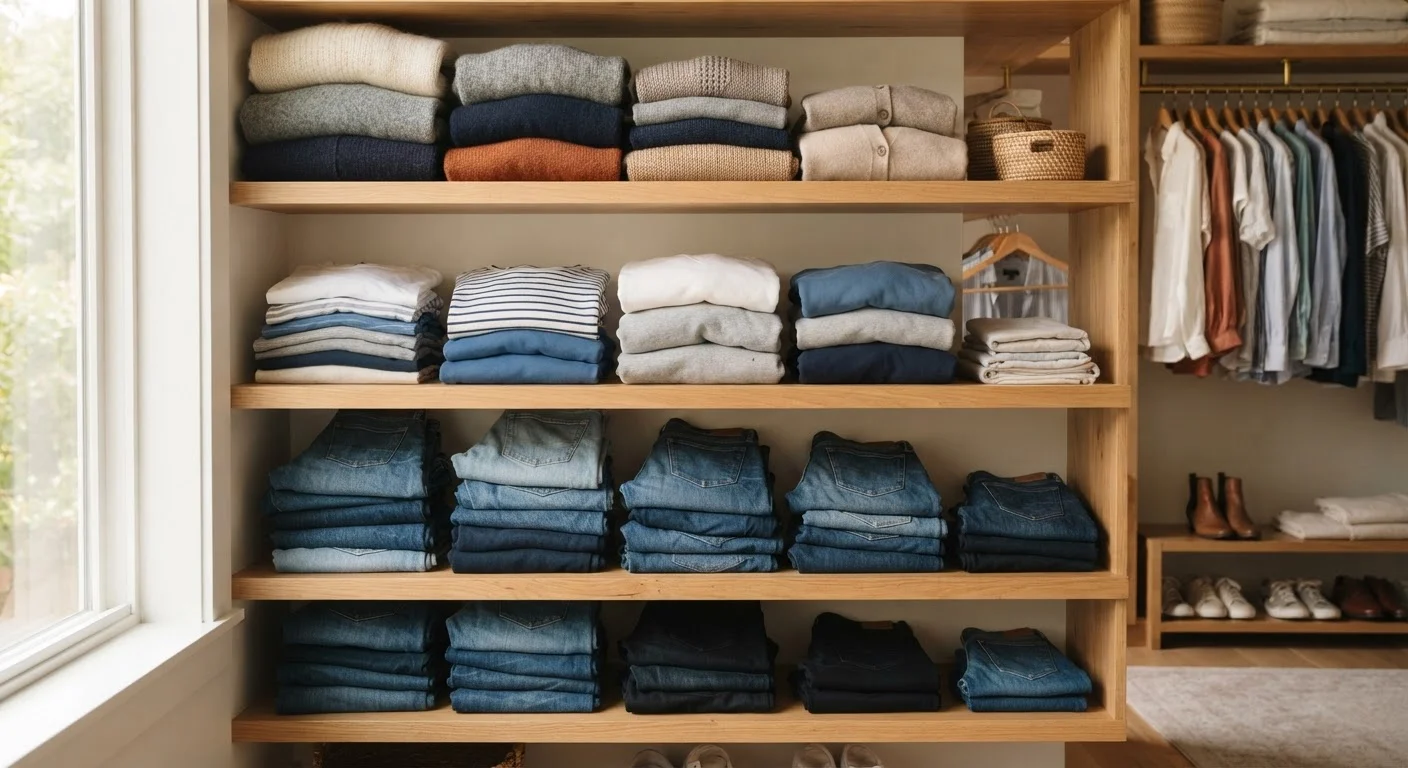
- Fold knitwear and heavy sweaters rather than hanging, which causes stretching at the shoulders.
- Breathe before storing: air out worn-but-not-dirty items before returning them to the closet. This reduces odor buildup and bacteria without unnecessary washing.
- Keep seasonal items clean before storing: stains oxidize over months and become nearly impossible to remove. Always launder before boxing away off-season clothes.
- Use cedar or lavender sachets near woolens to naturally deter moths—avoid mothballs, which leave a strong chemical odor that's difficult to remove.
These habits are especially useful when you're doing a wardrobe audit or planning a seasonal wardrobe transition — knowing each piece is in good condition means you work with what you have instead of reflexively buying new. For more on making every garment go further, see the complete guide to American everyday style.
| Most heat-sensitive common fabric | Wool (Textile care consensus) |
| Safe universal wash temperature | Cold water (60°F / 15°C) (AHAM appliance guidelines) |
| Denim wash frequency | Every 5–10 wears (General garment care guidance) |
| Recommended storage for knitwear | Folded flat, never hung (Apparel conservation best practice) |
| Synthetics drying method | Low heat or air dry (Fabric care label standards) |
| Linen wrinkle tip | Iron while slightly damp (Textile care guidance) |
The content on this site is for informational purposes only and is not a substitute for professional advice. Always consult a qualified professional for guidance specific to your situation.