

Why Everyday Style Matters
Style isn't reserved for fashion insiders or special occasions — it's the daily practice of presenting yourself in a way that feels intentional and comfortable. Research in social psychology consistently suggests that clothing influences both how others perceive us and how we feel about ourselves, a phenomenon sometimes called enclothed cognition. That doesn't mean you need an expensive wardrobe. It means the choices you make each morning carry real-world weight.
For most Americans, the wardrobe challenge isn't a lack of clothes — it's owning a closet full of items that don't work together. The goal of this guide is to help you cut through that chaos and build a practical system that lets you dress confidently every single day, whatever your budget, body type, or lifestyle.
82%
Americans say clothing affects self-confidence
According to survey data cited in multiple consumer psychology studies, the majority of adults report that what they wear has a direct impact on how confident they feel throughout the day.
~$1,700
Average annual U.S. household spend on apparel
The U.S. Bureau of Labor Statistics Consumer Expenditure Survey consistently places average annual household clothing expenditure in the range of $1,600–$1,800.
3 in 10
Adults feel overwhelmed choosing outfits daily
Consumer research on decision fatigue suggests a significant portion of adults cite their wardrobe as a daily source of low-level stress, often due to poor mix-and-match versatility.
Building Your Wardrobe Foundation
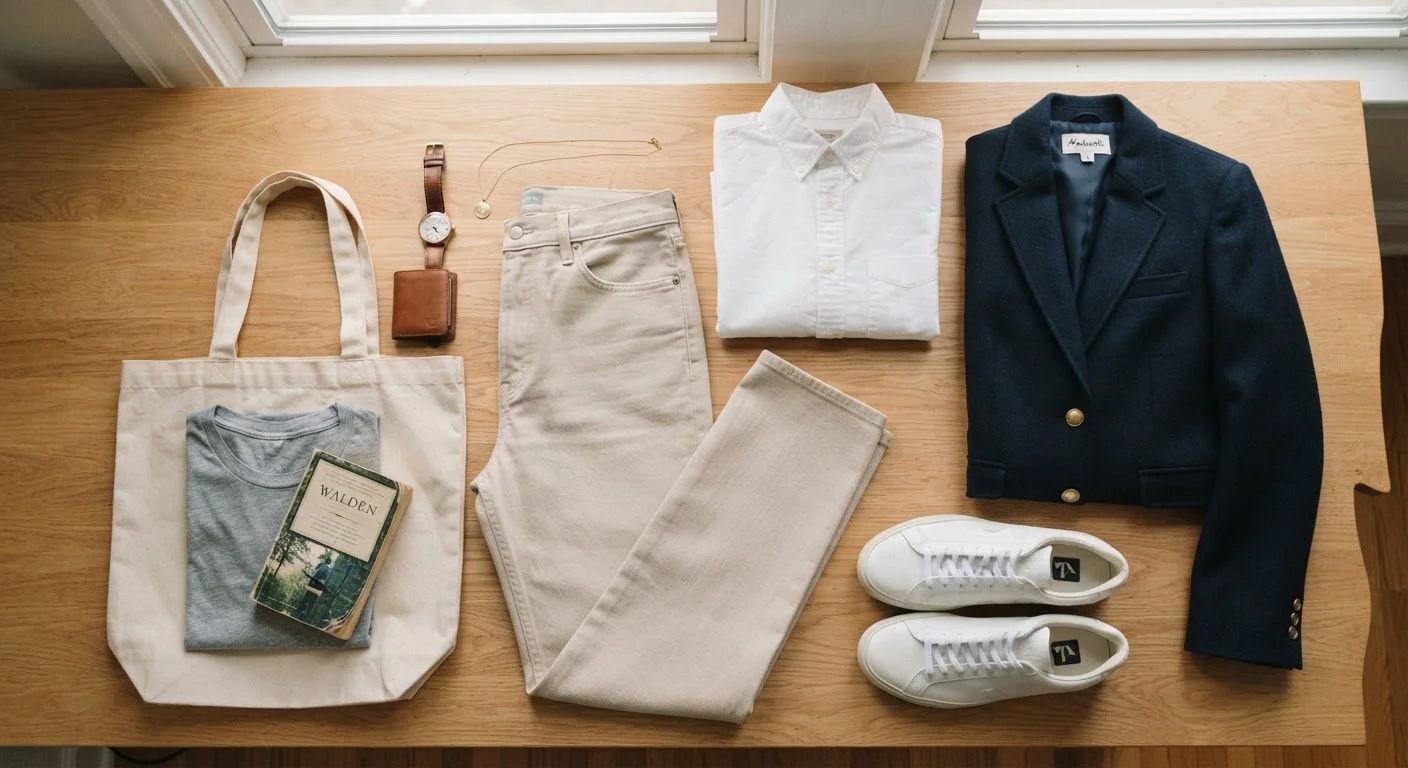
Every functional wardrobe starts with a foundation of versatile, neutral-toned basics — pieces that mix and match effortlessly. Think well-fitted dark jeans, a few plain crewneck or V-neck tees, a crisp button-down shirt, a simple knit sweater, and comfortable, clean footwear. These items do the heavy lifting day after day.
If you're starting from scratch or working with limited funds, prioritizing quality over quantity makes a measurable difference. Our guide to building a wardrobe on a tight budget walks through exactly how to sequence those purchases wisely.
Once your basics are solid, consider how neutrals function as a foundation. Whites, grays, navies, tans, and blacks coordinate with almost anything, which is why they're the backbone of most well-functioning wardrobes. Dive deeper into that logic in our piece on building an outfit foundation with neutrals.
Before buying a new basic, hold it up against three items already in your closet. If it doesn't work with at least two of them, it's probably not the versatile piece it appears to be.
This quick mental check prevents the common trap of buying items that seem neutral in the store but don't actually integrate with your existing wardrobe, leading to unused purchases.
Invest proportionally: spend more on items you wear most often (a go-to pair of jeans, an everyday shoe) and less on pieces you'll wear rarely, regardless of how appealing they look in the moment.
Cost-per-wear is a more useful metric than sticker price. A $90 pair of jeans worn 150 times costs far less per use than a $40 pair worn only a dozen times before wearing out.
Dressing for Every Occasion
One of the most practical skills in everyday dressing is understanding dress codes — those shorthand labels like "business casual" or "smart casual" that appear on invitations and workplace guides. Misreading them leads to that familiar, deflating feeling of being visually out of place.
Business casual typically means tailored trousers or chinos, a collared shirt or neat blouse, and closed-toe shoes — no jeans or sneakers in most interpretations. Smart casual is more relaxed: dark jeans are often fine, layering a blazer over a plain tee can pull an outfit together. Our full dress codes decoded guide covers the full spectrum so you're never caught guessing.
For those navigating a workplace without a clear "work wardrobe," the good news is that a single versatile closet can cover both professional and personal life. See how in our article on dressing well for work without a separate work wardrobe.
The One-Outfit Test for New Purchases
Before buying anything, mentally build at least two complete outfits using it with pieces you already own. If you can't do it in the store or dressing room, the item is likely to sit unworn. This single habit reduces impulse purchases and closet clutter dramatically.
Making the Most of What You Own
Before buying anything new, audit what's already in your closet. Pull everything out, assess what fits, what's worn out, and what you genuinely reach for. Donate or repurpose what no longer serves you. What remains is your real working wardrobe — and it's almost always more useful than it appeared crammed on a rack.
Next, think about the ratio of basics to statement pieces. Bold prints, bright colors, and trend-driven items have a place, but when they outnumber your basics, outfit-building becomes harder. Our piece on balancing statement pieces and basics offers a practical framework for getting that ratio right.
Accessories are often the most underused tool in an everyday wardrobe. A belt, a simple scarf, a watch, or a structured bag can shift an outfit from forgettable to pulled-together without adding complexity or cost.
Fit, Care, and Longevity
Fit is the single biggest factor separating a polished look from a sloppy one — and it has nothing to do with body type. A $30 shirt that fits well looks better than a $200 shirt that doesn't. When you find something you love, consider getting it tailored. Basic alterations like hemming trousers or taking in a side seam are often inexpensive and transform how a garment looks and feels.
Caring properly for your clothes is equally important. Most garments last significantly longer when washed in cold water, line-dried when possible, and stored correctly. Check care labels — they exist for a reason. Dry cleaning should be reserved for pieces that genuinely require it; over-dry-cleaning can actually degrade certain fabrics over time.
Overwashing Damages Clothes Faster Than Wear
Washing garments too frequently — especially denim, wool, and delicate knits — breaks down fibers and fades color faster than normal wear ever would. Spot-clean when possible, air garments between wears, and reserve a full wash cycle for when it's genuinely needed. Following care labels rather than defaulting to hot water for everything can meaningfully extend the life of your wardrobe.
Style Confidence: The Mindset Shift
Confidence in personal style isn't something you acquire by buying the right things — it's built by understanding what actually works for your life and leaning into it consistently. That means being honest about your real daily routines rather than dressing for an aspirational version of yourself that rarely shows up.
Style is also deeply personal and ever-evolving. What worked five years ago may not reflect who you are today, and that's completely fine. Give yourself permission to experiment incrementally — try a new silhouette, swap a color, test a different shoe style — without overhauling everything at once.
Ultimately, getting dressed well is a learnable skill. Every decision you make — what to keep, what to let go, how to layer, which occasions call for what — builds your intuition over time. Trust the process, start with the basics, and remember: the goal is a wardrobe that works for your life, not anyone else's.
Building a Wardrobe from Scratch on a Tight Budget
A step-by-step framework for anyone starting with little or building back up — covering which pieces to prioritize, how to sequence purchases, and how to make every dollar work harder.
Dress Codes Decoded
A plain-language reference covering business casual, smart casual, cocktail attire, and more — so you always know exactly what to wear to any occasion.
Statement Pieces vs. Basics
An honest look at finding the right balance between bold statement items and reliable basics, with a practical framework for auditing your current closet ratio.
The content on this site is for informational purposes only and is not a substitute for professional advice. Always consult a qualified professional for guidance specific to your situation.