

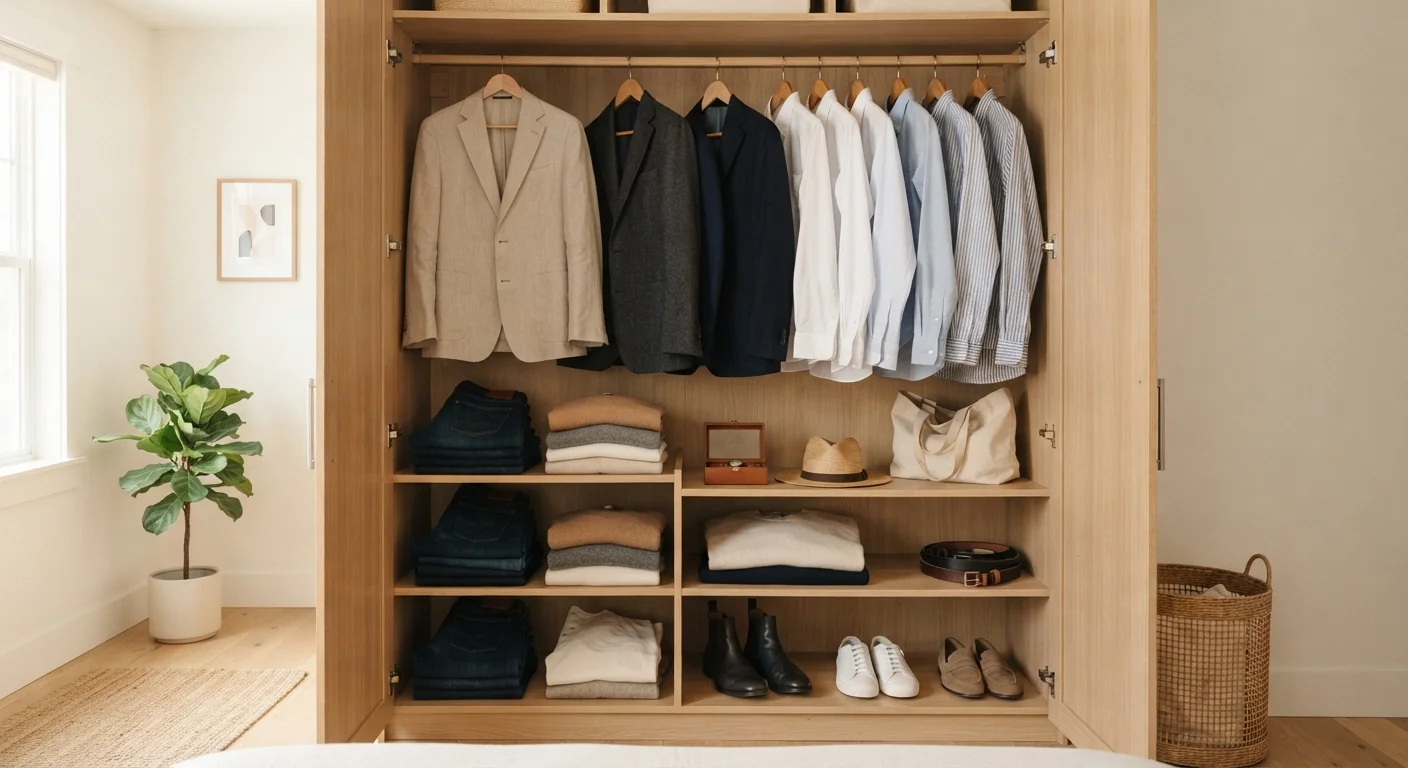
Why One Wardrobe Is Smarter Than Two
The idea of a separate "work wardrobe" made more sense when offices had strict formal dress codes and personal time meant something completely different. For most Americans today, that line is blurrier — and maintaining two distinct wardrobes is genuinely expensive and space-consuming. The smarter move is a single, well-chosen collection of clothes that shifts between contexts based on how you combine and accessorize, not on having twice as many items.
This isn't about dressing down at work or looking sloppy — it's about being deliberate. A dark pair of well-fitted trousers can go from a Friday night dinner to a Monday morning meeting. A crisp white button-down works under a blazer in the office and untucked over jeans on the weekend. The key is understanding what makes an outfit read as professional, so you can dial that quality up or down as needed.
If you want a broader framework for building and maintaining a practical American wardrobe overall, our complete guide to everyday American style is a helpful starting point.
What you will need
What to Buy, What to Keep, and How to Make It Work
The goal isn't a minimalist capsule wardrobe — it's a functional one. That means having enough variety to feel like yourself while maintaining enough cohesion that getting dressed for work doesn't require significant mental effort. Once you've done your audit and identified your foundation pieces, you're really just filling in the gaps.
When assessing what to keep versus what to let go, ask one question for each item: Can this piece work in at least two different professional-leaning outfit combinations? If the answer is no, it's either a personal-only piece (fine to keep, just don't count on it for work) or it needs to go. For help balancing the bolder, more personal pieces in your closet with workhorses that pull more weight, see our piece on statement pieces vs. basics.
A Full-Length Mirror
Allows you to assess how outfit combinations actually read from head to toe before committing.
Clothing Steamer or Iron
Keeps versatile pieces looking sharp and polished, which is essential when work and casual clothes overlap.
Slim, Matching Hangers
Uniform hangers help you see your wardrobe clearly and make outfit planning faster and more intuitive.
Tailor or Alterations Shop
Professional fitting can transform affordable basics into polished workwear without spending on premium labels.
Finally, keep the long view in mind: a unified wardrobe isn't built in a single shopping trip. It evolves over time as you learn what actually gets worn. Budget for it gradually — our budgeting basics hub has straightforward strategies for planning discretionary spending without stress.
Clarify your workplace dress expectations
Before touching your closet, get specific about what "work appropriate" actually means in your environment. Business formal, business casual, and smart casual each have distinct boundaries — and many American workplaces now operate somewhere along that spectrum rather than at a fixed point. Ask a manager or trusted colleague if you're unsure, or consult our dress codes reference guide to decode exactly what's expected.
This step saves you from buying pieces that are either too formal to wear anywhere else or too casual for your actual office.
Audit what you already own
Pull everything out and assess it honestly. Sort items into three piles: works for work as-is, works for work with one small adjustment, and personal-only. You'll likely find more crossover than you expect — dark jeans, simple knit tops, clean sneakers, and structured bags often already span both worlds.
For a thorough process, our step-by-step wardrobe audit guide walks you through a full closet review you can complete in an afternoon.
Build your neutral foundation first
The backbone of a unified wardrobe is a core set of neutral basics — navy, black, gray, white, camel, and cream — that mix and match across both professional and casual outfits. These aren't boring choices; they're the pieces that let everything else work together. Prioritize trousers or tailored pants, a well-fitted blazer, versatile tops in solid colors or subtle patterns, and one or two pairs of shoes that can go both ways.
See why neutrals anchor a functional wardrobe for a deeper look at choosing and using them effectively.
Identify your key 'level-up' pieces
A handful of items exist specifically to elevate your baseline looks into professional territory. Think: a structured blazer, a pair of clean leather or leather-look shoes, a simple belt, and one or two elevated accessories. These don't need to be expensive — they just need to be intentional. When you add one of these to an otherwise casual outfit, it reads as put-together without looking overdressed.
[important_callout]
Plan outfits in combinations, not as individual pieces
Shift your thinking from "buying clothes" to "building combinations." Every new piece you consider should work with at least three things you already own — across both your work and personal contexts. If it only pairs with one existing item, it's not earning its place in a unified wardrobe.
This approach directly addresses the common frustration of a full closet with nothing to wear. For more on that, see why outfits stop working together.
Fill gaps strategically, not impulsively
Once you know what's missing, shop with a specific list rather than browsing open-endedly. Prioritize the pieces that appear most often on your "missing from combinations" list. If you're working with a tight budget, sequence your purchases — highest-impact items first. Our guide on building a wardrobe on a tight budget covers how to prioritize and sequence smartly.
[warning_callout]
The content on this site is for informational purposes only and is not a substitute for professional advice. Always consult a qualified professional for guidance specific to your situation.