

Our Verdict
Neither pure minimalism nor an all-statement wardrobe serves most people well. Basics provide the reliable foundation that keeps you dressed and confident on ordinary days, while a curated selection of statement pieces keeps your style feeling alive and personal. The sweet spot is intentional mix—enough basics to outfit yourself effortlessly, enough statements to express who you are.
Anyone who wants a wardrobe that feels both practical and genuinely theirs, without the stress of a closet full of clothes that don't work together.
What We Actually Mean by 'Basics' and 'Statement Pieces'
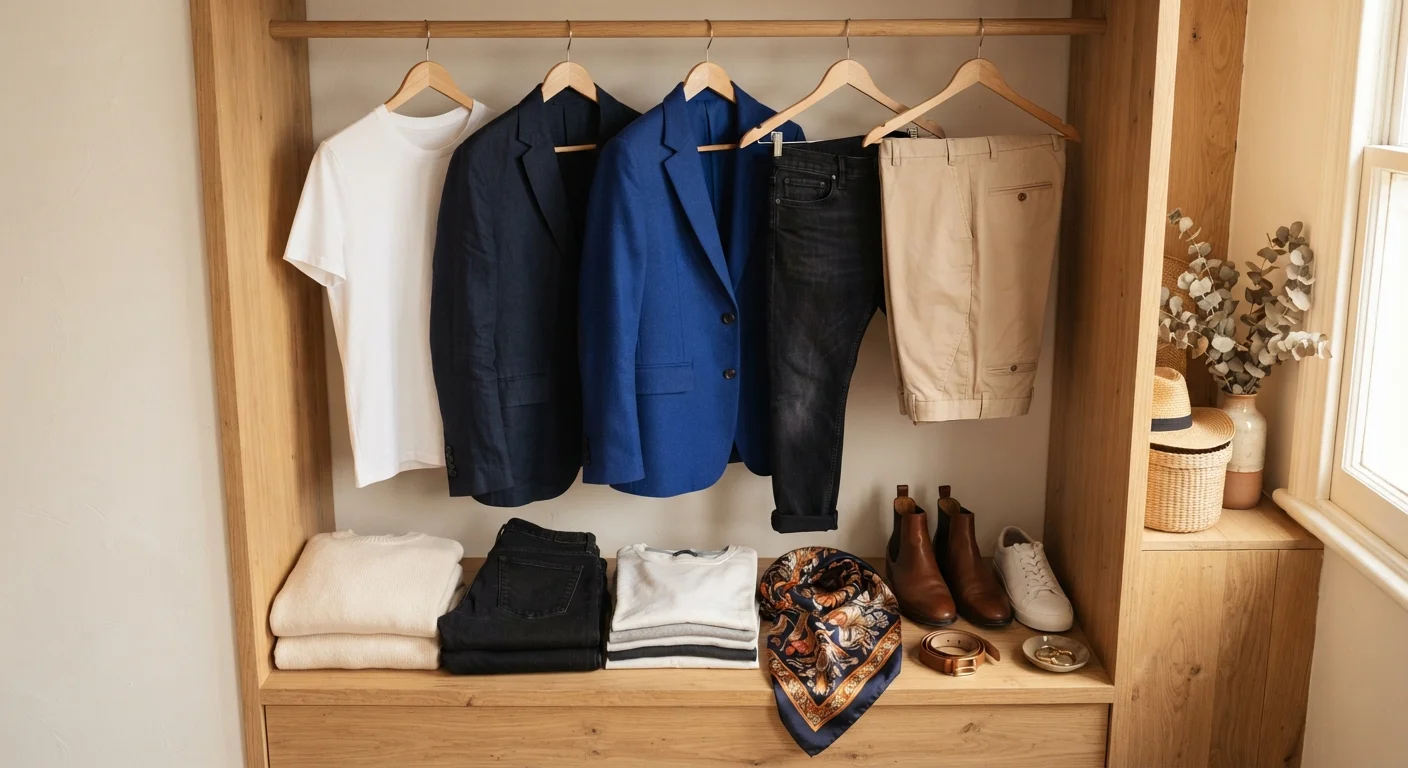
Fashion language can be slippery, so let's define the terms plainly. Basics—sometimes called wardrobe essentials or foundational pieces—are versatile, relatively neutral items that pair easily with almost everything else you own. Think a well-fitting white or navy crewneck, straight-leg dark jeans, a structured blazer in a muted tone, or a simple black dress. They're workhorses, not showstoppers.
Statement pieces are the opposite: items that lead the conversation. A boldly printed blouse, a fire-engine red coat, embellished boots, or a neon handbag. They carry personality and visual energy. Worn on their own with quiet basics, they sing. Stacked against other loud pieces, they compete and clash.
Neither category is inherently better—they serve different functions. The problem arises when shoppers accumulate one at the expense of the other. If you're curious why your outfits sometimes feel scattered, this breakdown of common wardrobe planning pitfalls is worth a read.
The Case for Loading Up on Basics
There's a reason capsule wardrobe advocates are so passionate: a strong base of basics dramatically reduces decision fatigue and increases the number of outfits you can pull together on autopilot.
Basics maximize outfit combinations effortlessly
Because basics pair with nearly everything, each foundational piece multiplies your outfit options across the whole wardrobe rather than working in isolation.
Longer style lifespan means better cost-per-wear
Classic cuts and neutral colors resist trend cycles, so basics stay wearable season after season without feeling dated.
Reduces daily decision fatigue
A reliable base of basics lets you build outfits quickly and confidently, especially useful on busy mornings or during travel.
Easier to dress for different occasions
Basics transition smoothly between casual, professional, and social settings with only minor adjustments like swapping accessories or layers.
Basics also tend to have longer style lifespans. A well-cut pair of trousers or a classic striped tee won't feel dated in two seasons the way a micro-trend item might. If you're building a wardrobe from scratch on a tight budget, investing in durable basics first is the approach most style editors recommend—and for good reason.
Fit matters enormously here. A perfectly fitting basic punches well above its weight in terms of how polished it looks. For more on that idea, fit versus brand name is a concept worth internalizing.
The Case for Bold Statement Pieces
A closet of nothing but basics can feel like a uniform—functional, yes, but potentially uninspiring. Statement pieces are the reason getting dressed can feel like a small creative act.
Can make a wardrobe feel flat and uninspiring
Too many statement pieces—or the wrong ones—create a closet full of items that compete visually and are hard to style into cohesive outfits.
Often tied to specific trends or seasons
Bold prints, unusual silhouettes, and trend-driven colors can feel dated quickly, reducing the number of occasions you'll reach for them.
Require more thought to style successfully
Statement pieces demand the right foundational pieces around them; without those basics already in place, a bold item can sit unworn.
A single great statement piece can refresh an entire rotation of basics. That cobalt blazer you bought last year? Pair it with white jeans one day, dark trousers the next, a simple dress the weekend after. One item, multiple distinct looks. That's genuine value—not just aesthetic excitement.
Statement pieces also signal personality in contexts where it matters. Whether you're meeting new people, attending a social event, or simply wanting to feel more energized on a Tuesday, the right bold item can shift your mood and how others perceive you. Just be mindful of context—dress codes and setting expectations still apply.
Finding Your Ratio—and Knowing When It's Off
70/30
Basics-to-statements ratio used as a starting framework
A widely recommended wardrobe proportion among style educators, though your lifestyle and preferences should guide your personal balance.
~80%
Clothes the average person regularly wears
Wardrobe studies and decluttering surveys consistently suggest most people wear only a fraction of what they own, pointing to imbalance in the mix.
A commonly cited starting framework is roughly 70% basics to 30% statement pieces. That's not a rigid rule, but it reflects something real: most of your daily outfit-building relies on foundational pieces, while statements provide the accent.
Your actual ratio depends on your lifestyle, your color comfort zone, and how expressive you want to be. Someone in a creative profession who loves maximalism might run 50/50 comfortably. Someone with a conservative dress code at work might find 80/20 more functional. Neither is wrong—the point is intentionality.
Signs your ratio is off: you own mostly statements but struggle to build complete outfits, or you own mostly basics but find your closet feels flat and you never reach for most of it. Both are fixable. Understanding the role of neutrals can help you recalibrate if you're trending too far toward bold.
A Note on 'Investment Dressing'
You may have heard advice to 'invest' in basics and 'save' on trends. That's a useful general framework, but it's not an absolute. A statement piece you wear constantly can be a smarter spend than a high-priced basic that doesn't fit quite right. What matters is honest self-assessment: Will I actually wear this, and does it work with what I already own? If the answer to both is yes, the price tier matters less than the decision quality.
When evaluating any item—basic or statement—consider cost-per-wear rather than sticker price. An $80 statement blouse you wear twice a month for three years costs far less per use than a $20 impulse buy worn once. This framing helps cut through the noise of sales and trends. For broader money management thinking, budgeting basics offers grounding principles that apply just as well to clothing spending.
Practical Steps to Rebalance Your Wardrobe
If you suspect your closet is out of balance, a simple audit reveals a lot. Pull everything out and sort into two piles: items that mix easily with three or more other pieces (basics), and items that need very specific pairings to work (statements). The ratio you see is your current ratio.
- Too many statements, too few basics: Before buying anything new, identify which foundational pieces are genuinely missing. A neutral tee, a versatile pair of pants, or simple flat shoes often do more to unlock existing statement pieces than another bold item would.
- Too many basics, not enough personality: Choose one or two statement pieces that genuinely excite you and that work with what you already own—not items that require entirely new outfits around them.
- Items that belong in neither category: Pieces that don't mix well and don't excite you are clutter. Donating or reselling them frees both physical and mental space.
If you're dressing for multiple contexts—work, weekend, social—building one wardrobe that covers professional and everyday life can help you see how statements and basics serve different roles depending on context.
The goal isn't a perfect, magazine-ready closet. It's a wardrobe that works for your actual life—one where you can get dressed confidently most mornings without second-guessing every choice.
The content on this site is for informational purposes only and is not a substitute for professional advice. Always consult a qualified professional for guidance specific to your situation.