

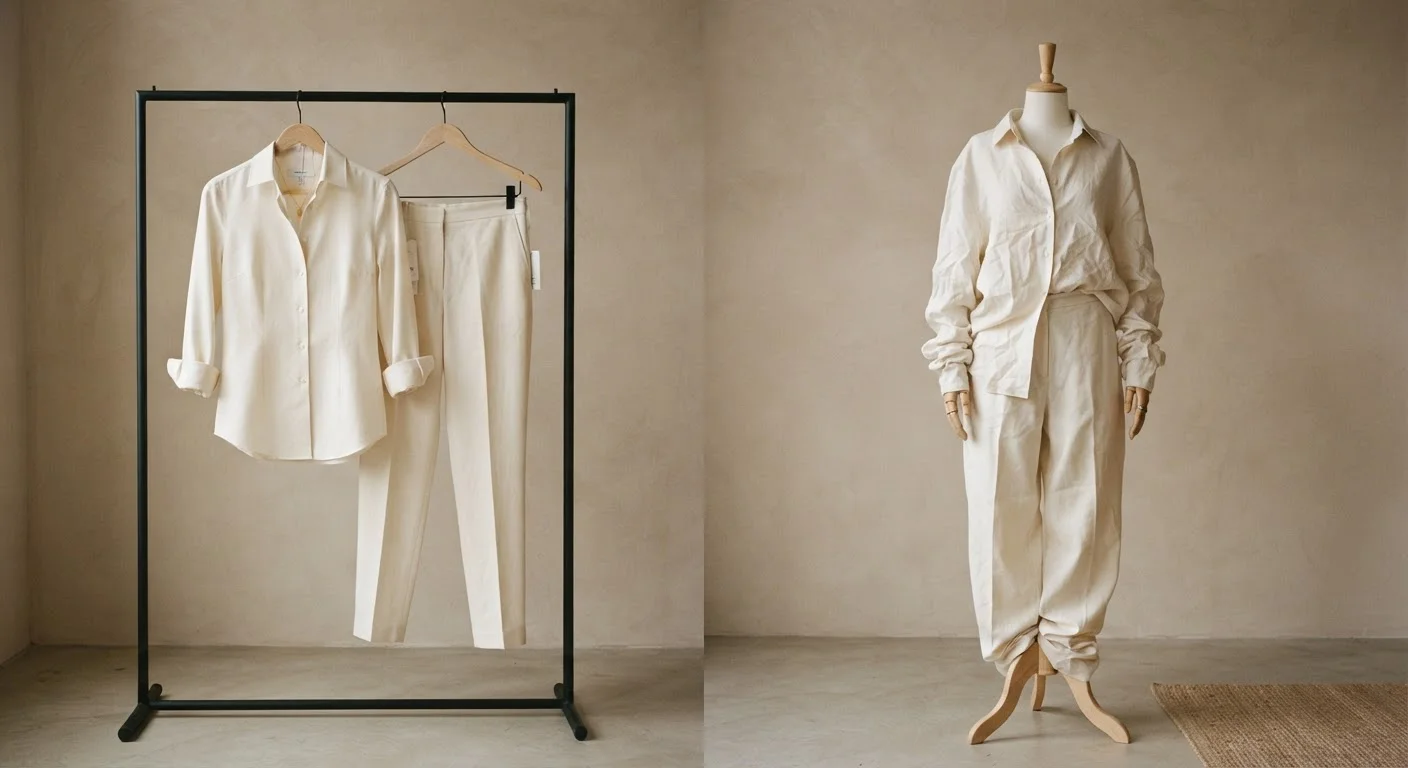
Option A
Proper Fit
The quiet force behind every polished outfit.
Best for: Anyone who wants to look put-together on any budget, regardless of brand or price point.
Option B
Brand Name
The recognizable label that signals taste — on its own terms.
Best for: Shoppers who value heritage craftsmanship, consistent sizing, or the social currency that certain labels carry.
Why Fit Dominates the First Impression
Before anyone reads a label, they read the silhouette. A jacket that pulls across the shoulders, trousers that bunch at the crotch, or a shirt drowning in extra fabric — these details register instantly, even subconsciously. The eye interprets ill-fitting clothes as dishevelment, regardless of how much was spent on them.
Fit is essentially about proportion: how a garment follows the natural lines of your body. When the shoulder seam sits at your actual shoulder, when fabric skims rather than clings or sags, the overall effect reads as intentional. That intentionality is what people often call "polish."
This is why common fashion myths like "you have to spend more to look better" persist — people conflate price with quality of fit, when in reality the two are only loosely connected. A $30 pair of chinos tailored to your inseam and waist will consistently outperform a $150 pair worn straight off the rack in the wrong size.
| Criterion | Proper Fit | Brand Name |
|---|---|---|
| Impact on appearance | Immediate and transformative | Subtle; visible mainly to insiders |
| Cost to achieve | Low to moderate (alterations) | Often premium-priced |
| Works across body types | Yes — tailored to your proportions | Inconsistent; depends on the cut |
| Consistency across purchases | Requires checking each garment | More predictable sizing within a label |
| Perceived polish | High — universally readable | Context-dependent |
| Works with thrift / budget finds | Yes — alterations unlock these | Not applicable |
What Brand Name Actually Buys You
Brand names are not meaningless — they just don't deliver what most people assume. What an established label often does provide is consistency: a reliable size run, predictable fabric weights, and construction that holds up over time. If you've worn a specific brand's shirts for years and know their medium fits your chest reliably, that's genuinely useful information.
Some brands also engineer clothing for specific body proportions — athletic cuts, tall or petite sizing, or designs shaped for broader shoulders. Within those lanes, a brand can be a helpful shortcut to fit. But outside your specific proportions, even premium labels can miss the mark badly.
~$15–$40
Typical cost of basic trouser hem or waist alteration
Basic alterations at local tailors or dry cleaners are generally accessible at this range, though prices vary by region and garment complexity.
80%
Of off-the-rack clothing needs some adjustment
Clothing is graded to standardized size ranges, not individual bodies — most garments benefit from at least minor fit correction for most wearers.
The social dimension is real too. In certain workplaces or social contexts, recognizable brand signals carry weight. That's a legitimate factor to weigh — just be honest with yourself about whether it's driving a purchase that actually flatters you, or one that fits poorly but feels prestigious.
For a nuanced look at cost-per-wear across shopping channels, see our comparison of thrift store vs. fast fashion spending over time.
The Practical Case for Alterations
The biggest gap between knowing fit matters and acting on it is a hesitation to alter clothing. Many people treat alterations as a luxury reserved for formal wear or custom suits — but basic tailoring is far more accessible than that reputation suggests.
Common alterations — taking in a waist, hemming trousers, or tapering a shirt's side seams — are typically inexpensive at local dry cleaners or tailors, and they can completely change how a garment reads. The goal isn't to make clothes look expensive; it's to make them look like they were made for you.
If tailoring feels like uncharted territory, understanding your own proportions first makes a real difference. Our guide on dressing for your body shape breaks down silhouette language in plain terms so you can shop and alter more strategically.
A Note on Sizing Across Retailers
Clothing sizes are not standardized across the industry in the United States, which means a size medium in one brand can fit very differently than a medium in another. This is called 'vanity sizing' and it varies widely. Always check a brand's specific size chart and, where possible, try garments on before purchasing. When shopping online, look for detailed measurements rather than just letter or number sizing.
One practical approach: build your wardrobe around a handful of well-fitting basics — the kind of foundational pieces that create versatility before you layer in personality. See how statement pieces vs. basics interact for a genuinely useful closet.
The content on this site is for informational purposes only and is not a substitute for professional advice. Always consult a qualified professional for guidance specific to your situation.