

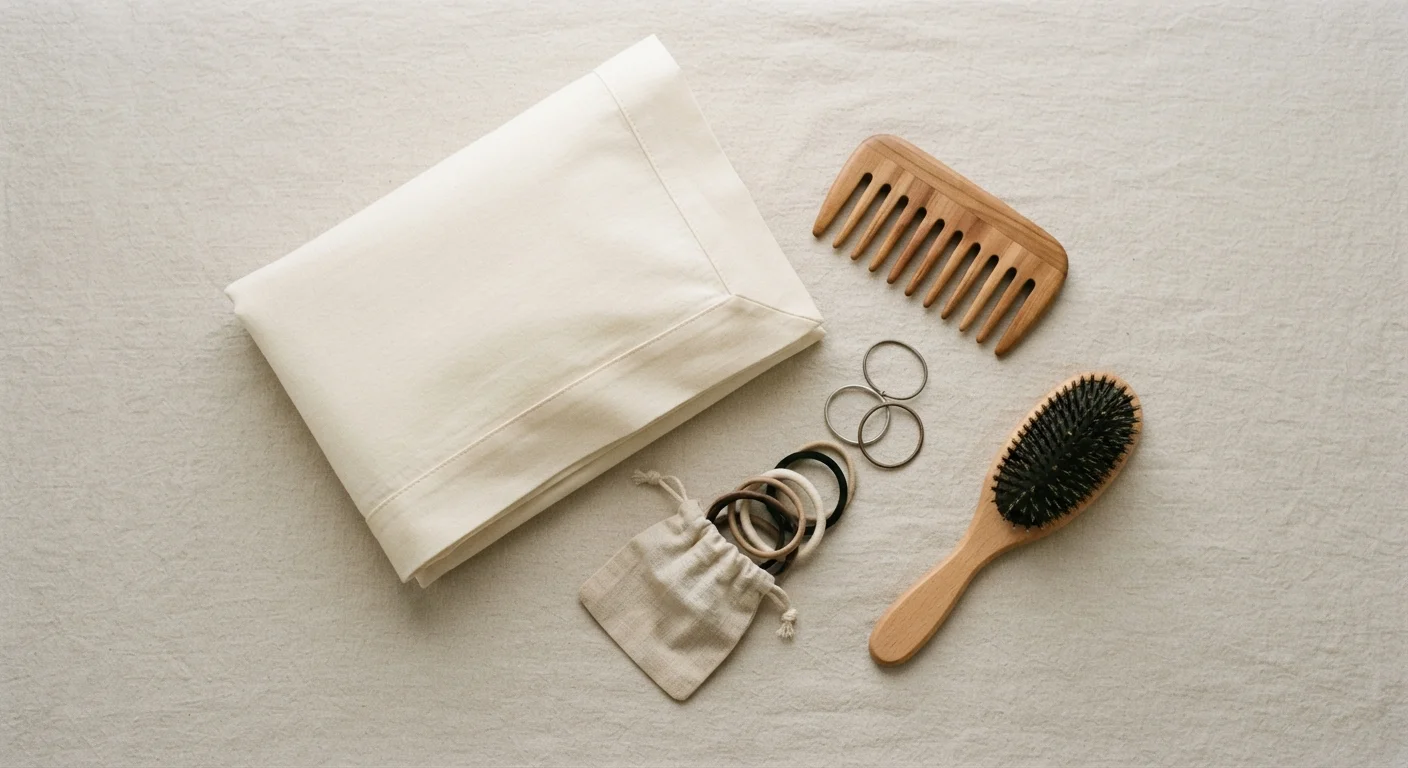
The Damage Hiding in Your Daily Routine
Hair damage rarely happens in one dramatic moment. More often, it's the quiet accumulation of small, repeated habits — the tight ponytail you've worn for years, the aggressive morning brush, the hot shower you linger in — that gradually degrade your hair's strength, shine, and density. The tricky part is that cumulative damage tends to be invisible until it's significant.
The good news: most of these habits are easy to adjust. You don't need an expensive overhaul or a cabinet full of new products. A few intentional changes can make a real difference over weeks and months. For a broader look at how various factors shape your hair from the root up, see our guide to everything that affects hair growth.
Below are seven grooming habits that quietly work against you — and what to do instead.
Wearing tight hairstyles every single day
Pulling hair into the same high, tight ponytail or bun day after day creates persistent tension at the follicle. Over time, this can cause traction alopecia — gradual follicle damage that may eventually lead to permanent thinning, particularly along the hairline and temples. Elastic bands with metal clasps are especially problematic because they snag and break strands with each removal.
Rotate your style regularly, alternate the position of your ponytail, and choose soft, seamless hair ties. Even loosening your everyday style by a single notch reduces the cumulative mechanical load on your follicles.
The same tight ponytail worn daily can quietly erode your hairline over months and years.
Brushing wet hair aggressively
Hair is significantly more elastic — and therefore more fragile — when wet. Wet strands can stretch up to 30% before snapping, and aggressive brushing while wet pushes them past that threshold repeatedly. Starting from the roots and dragging through tangles compounds the stress at every knot.
Switch to a wide-tooth comb or a brush specifically designed for detangling wet hair. Always start from the ends and work gradually upward toward the roots to gently release tangles rather than forcing them apart.
Wet hair is far more vulnerable to breakage — always detangle gently from ends to roots.
Skipping heat protectant before styling
Heat damage is cumulative. Each pass of a flat iron or blow-dryer without a protectant raises the cuticle and degrades the protein structure of the strand slightly. One session may be unnoticeable; hundreds of sessions add up to dull, brittle, snap-prone hair. For a thorough look at what heat actually does and what protectants can realistically prevent, see our piece on heat styling and hair damage.
Apply a heat protectant to damp or dry hair before any thermal styling. This doesn't eliminate risk entirely, but it meaningfully reduces the temperature impact on your strands.
Skipping heat protectant isn't one mistake — it's hundreds of small ones stacked across years.
Sleeping on a rough cotton pillowcase
Cotton is absorbent and textured, which means it draws moisture from hair and creates friction as you move during sleep. For curly, coily, or chemically treated hair especially, a cotton pillowcase can leave strands dry, frizzy, and more prone to tangles and breakage each morning.
Satin or silk pillowcases — or a satin sleep bonnet — reduce friction significantly. This is one of the lowest-effort, highest-payoff swaps in hair care, and it requires no change to your actual styling routine.
Eight hours on a rough cotton pillowcase is eight hours of unnecessary friction against your strands.
Washing with very hot water
Hot showers feel relaxing, but very hot water strips the scalp's natural oils (sebum) more aggressively than warm water does. This disrupts the scalp's moisture balance, can contribute to dryness and irritation, and leaves hair looking dull. A compromised scalp environment affects the health of hair as it grows.
Washing with warm water and finishing with a cool rinse is a simple habit shift. The cooler finish also helps the hair cuticle lie flat, which improves shine and reduces frizz without any product.
Very hot water strips essential scalp oils, creating a cycle of dryness that affects hair quality.
Towel-drying with rough rubbing motions
Vigorously rubbing wet hair with a bath towel roughs up the hair cuticle and causes mechanical breakage, especially near the ends. Terrycloth is particularly abrasive. Most people towel-dry without a second thought, making this a habit that repeats hundreds of times per year.
Gently squeeze and press moisture out rather than rubbing. A microfiber towel or even a soft cotton T-shirt is less abrasive than a standard bath towel and reduces the friction load meaningfully.
Rubbing hair dry with a bath towel is one of the most frequent causes of preventable breakage.
Skipping trims and then over-cutting to compensate
Avoiding trims allows split ends to travel up the hair shaft, causing increasingly severe damage that eventually requires cutting off far more length than regular maintenance would have. Many people then overcorrect with a drastic cut, starting the cycle again. Consistent, modest trims actually preserve length over time by stopping splits before they spread.
The frequency that works varies by hair type, texture, and styling habits — but a general framework for at-home maintenance can help you stay on top of it between salon visits. See our guide to trimming hair at home for a realistic breakdown of what's achievable.
Regular small trims preserve more length over time than irregular large ones ever will.
Small Shifts, Lasting Results
None of these corrections require a dramatic lifestyle change. The goal is simply to reduce repetitive mechanical and thermal stress before it compounds into real damage. If you're unsure where to start, building a hair care routine from scratch offers a clear framework you can adapt to your texture and schedule.
Start With One Change, Not Seven
Trying to overhaul every habit at once often leads to abandoning all of them. Pick the one item on this list that resonates most — maybe it's the pillowcase swap or loosening your ponytail — and lock that in for a few weeks before adding another. Consistency with small changes beats perfection with many.
Scalp care is also worth folding into your thinking — check out Scalp Health 101 for a deeper look at the foundation most routines overlook. Small, consistent adjustments made now will show up in healthier, stronger hair months down the line.
The content on this site is for informational purposes only and is not a substitute for professional advice. Always consult a qualified professional for guidance specific to your situation.