

Start here
Why the Scalp Matters More Than Most People Realize
Understand the baseline
What a Balanced Scalp Actually Looks Like
Identify issues
Common Scalp Problems and What Causes Them
Build good habits
Daily and Weekly Habits That Support Scalp Health
Know your limits
When to See a Dermatologist
Why the Scalp Matters More Than Most People Realize
Most hair routines focus almost entirely on the strands — the products applied to the lengths, the techniques used to style, the treatments meant to restore shine. But hair health doesn't start mid-shaft. It starts at the root, in the skin that anchors every strand you have.
The scalp is a specialized area of skin packed with hair follicles, sebaceous (oil) glands, and a network of blood vessels that deliver nutrients to each follicle. When the scalp is out of balance — too oily, too dry, inflamed, or clogged with product buildup — the follicles that produce your hair are directly affected. The result can show up as dullness, breakage, slow growth, or increased shedding.
Think of the scalp as the soil in a garden. You can water and tend the plants all you like, but if the soil is depleted or compacted, growth suffers. The same logic applies here. Building a strong scalp foundation makes everything else in your hair care routine more effective.
Sebaceous glands
Tiny glands in the skin that produce sebum — the natural oil that lubricates and protects the scalp and hair shaft.
Hair follicle
A small pocket in the scalp skin from which each individual hair grows. Follicle health directly influences hair growth and thickness.
Sebum
The natural oil produced by scalp glands. In the right amount, it protects and conditions the scalp; too much or too little causes problems.
Malassezia
A type of yeast that naturally lives on everyone's scalp. When it grows beyond normal levels, it can contribute to dandruff and irritation.
Product buildup
The accumulation of styling products, dry shampoo, or conditioner residue on the scalp and hair over time, which can block follicles and weigh hair down.
Contact dermatitis
A skin reaction — redness, itching, or rash — triggered by direct contact with an irritating or allergenic substance, such as a hair product ingredient.
What a Balanced Scalp Actually Looks Like
Knowing what healthy looks and feels like is the first step toward getting there. A well-balanced scalp has a few telltale signs:
- No persistent itching or irritation. Occasional mild itchiness after a workout is normal. Constant scratching is not.
- Minimal visible flaking. A small amount of natural skin turnover is normal; heavy flaking — white or yellowish — points to an imbalance.
- Comfortable moisture level. Neither bone-dry and tight, nor visibly greasy by midday.
- No unusual odor. A healthy scalp shouldn't develop a strong smell between washes.
- Stable hair shedding. Losing around 50–100 hairs per day is considered within normal range for most adults, though this can vary.
If your scalp regularly feels uncomfortable or looks different from this baseline, that's useful information — not cause for alarm, but a signal worth paying attention to.
Quick Self-Check: Part Your Hair in Good Light
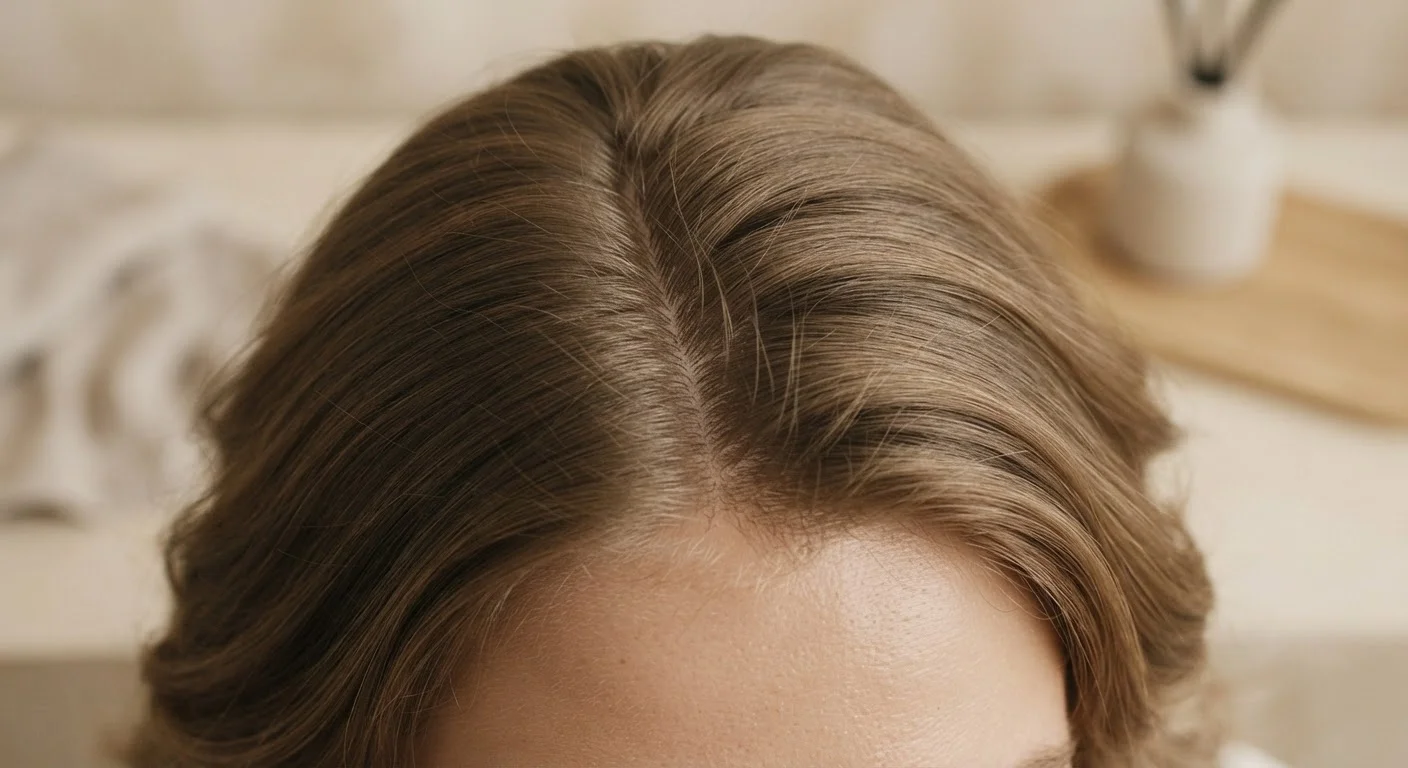
A simple way to assess your scalp: part your hair in a few places under natural or bright light and look at the skin directly. Healthy scalp skin looks similar in tone to the rest of your face — no redness, thick flakes, or visible oiliness. Doing this monthly gives you a useful baseline to track changes over time.
Common Scalp Problems and What Causes Them
Several conditions can disrupt scalp balance, and many are more common than people realize.
Dandruff and Seborrheic Dermatitis
Dandruff involves flaking associated with an overgrowth of Malassezia, a yeast that naturally lives on the scalp. When it multiplies beyond normal levels, it can trigger inflammation and visible flaking. Seborrheic dermatitis is a more persistent, sometimes redder version of the same underlying process. Both are manageable with the right approach — often including medicated or targeted shampoos — but ongoing cases benefit from a dermatologist's guidance.
Dry Scalp
Dryness can result from cold weather, low humidity, over-cleansing with harsh products, or simply not retaining enough moisture. It tends to produce fine, powdery flakes and a tight or uncomfortable feeling.
Product Buildup
Dry shampoos, styling products, and heavy conditioners can accumulate on the scalp over time, blocking follicles and creating a dull, weighed-down feeling. Regular cleansing and occasional clarifying washes help address this. For coily and kinky textures, scalp care within a natural hair routine requires particular attention to buildup management.
Contact Dermatitis
Some people react to specific ingredients in hair products — fragrances, preservatives, dyes — resulting in redness, itching, or a rash. Patch-testing new products before full application can help identify sensitivities.
Don't Self-Treat Persistent Scalp Conditions
It can be tempting to pile on home remedies when a scalp issue doesn't resolve quickly. However, some conditions — like psoriasis, ringworm, or hormonal-related hair loss — require accurate diagnosis before treatment. Using the wrong approach can irritate the scalp further and delay proper care. When in doubt, consult a dermatologist rather than experimenting.
Daily and Weekly Habits That Support Scalp Health
You don't need a complicated regimen to maintain a healthy scalp. A handful of consistent habits make the biggest difference.
Cleanse Appropriately for Your Scalp Type
Washing too frequently can strip the scalp of its natural oils, triggering overproduction as compensation. Washing too infrequently allows oil, sweat, and product to accumulate. There's no universal answer — it depends on your hair type, activity level, and how your scalp behaves. Our guide to wash frequency walks through how to figure out your personal baseline.
Be Gentle During Cleansing
Use your fingertip pads — not nails — to massage shampoo into the scalp. Aggressive scrubbing can cause micro-irritation. A slow, circular motion for 60–90 seconds is more effective and less damaging than rushed scrubbing.
Scalp Massage
A few minutes of gentle scalp massage a few times a week supports circulation to the follicles and can help with stress-related tension that affects the scalp. Use fingers or a soft silicone scalp brush on dry or damp hair.
Mind Your Habits Beyond the Shower
Everyday grooming choices matter more than most people realize. Habits like tight hairstyles and aggressive brushing can cause traction and mechanical stress that affects the scalp over time. Letting your scalp breathe between manipulative styles is a simple win.
Support from the Inside
Hydration, sleep, and general nutrition all contribute to skin health — including scalp skin. Factors affecting hair growth extend well beyond topical products. This isn't about dramatic dietary overhauls; consistent basics go a long way.
Stress and the Scalp: A Real Connection
Chronic stress has been linked to various scalp and hair changes, including increased oil production, inflammation, and a form of temporary hair shedding called telogen effluvium. While managing stress won't replace targeted scalp care, it's a legitimate factor in overall scalp health — not just a wellness cliché. If you've noticed hair changes after a stressful period, it's worth mentioning to your doctor.
When to See a Dermatologist
Many common scalp concerns respond well to routine adjustments. But some situations call for professional evaluation:
- Flaking, redness, or itching that persists for several weeks despite gentle care
- Patches of hair loss or significant thinning
- Visible sores, scabs, or scaling that doesn't improve
- Scalp pain or burning sensations
- Sudden changes in scalp condition without an obvious cause
A board-certified dermatologist can distinguish between conditions that look similar on the surface — like psoriasis versus seborrheic dermatitis — and recommend targeted treatment. Self-diagnosing scalp conditions based on online searches often leads to using the wrong approach, which can delay improvement.
Once your scalp is in a good place, the next step is building out a full routine tailored to your specific hair texture and needs. Our guide to building a routine that matches your hair type is a natural next read.
This article is for general informational purposes only and is not a substitute for professional medical advice. If you are experiencing persistent or severe scalp symptoms, please consult a qualified healthcare provider or dermatologist.
Frequently Asked Questions
A healthy scalp is generally comfortable — no persistent itching, tightness, or flaking. The skin should feel neither bone-dry nor greasy. You shouldn't notice unusual odor between washes or excessive shedding beyond normal amounts.
Chronic scalp conditions can contribute to hair thinning or shedding in some cases, particularly when inflammation or buildup blocks follicles. However, hair loss has many possible causes, including genetics and hormones. A dermatologist can help determine what's driving it.
Some small studies suggest that regular scalp massage may increase hair thickness by stimulating blood flow to the follicles. It's not a proven cure for hair loss, but it's a low-risk practice that also helps relieve tension and distribute natural oils.
No — they look similar but have different causes. Dandruff is typically associated with an overgrowth of a naturally occurring yeast and produces oily flakes. A dry scalp results from lack of moisture and produces smaller, drier flakes. Treatment approaches differ for each.
Wash frequency depends on your hair type, activity level, and how quickly your scalp produces oil. There's no universal rule — our guide on <a href="/style-beauty/hair-grooming/washing-your-hair-too-often-or-not-enough">washing frequency</a> can help you find your personal sweet spot.
Yes, nutritional deficiencies — particularly in iron, zinc, biotin, and vitamin D — have been linked to scalp and hair changes. A varied, balanced diet supports healthy skin function overall, including the scalp. Consult a healthcare provider if you suspect a deficiency.
The content on this site is for informational purposes only and is not a substitute for professional advice. Always consult a qualified professional for guidance specific to your situation.