

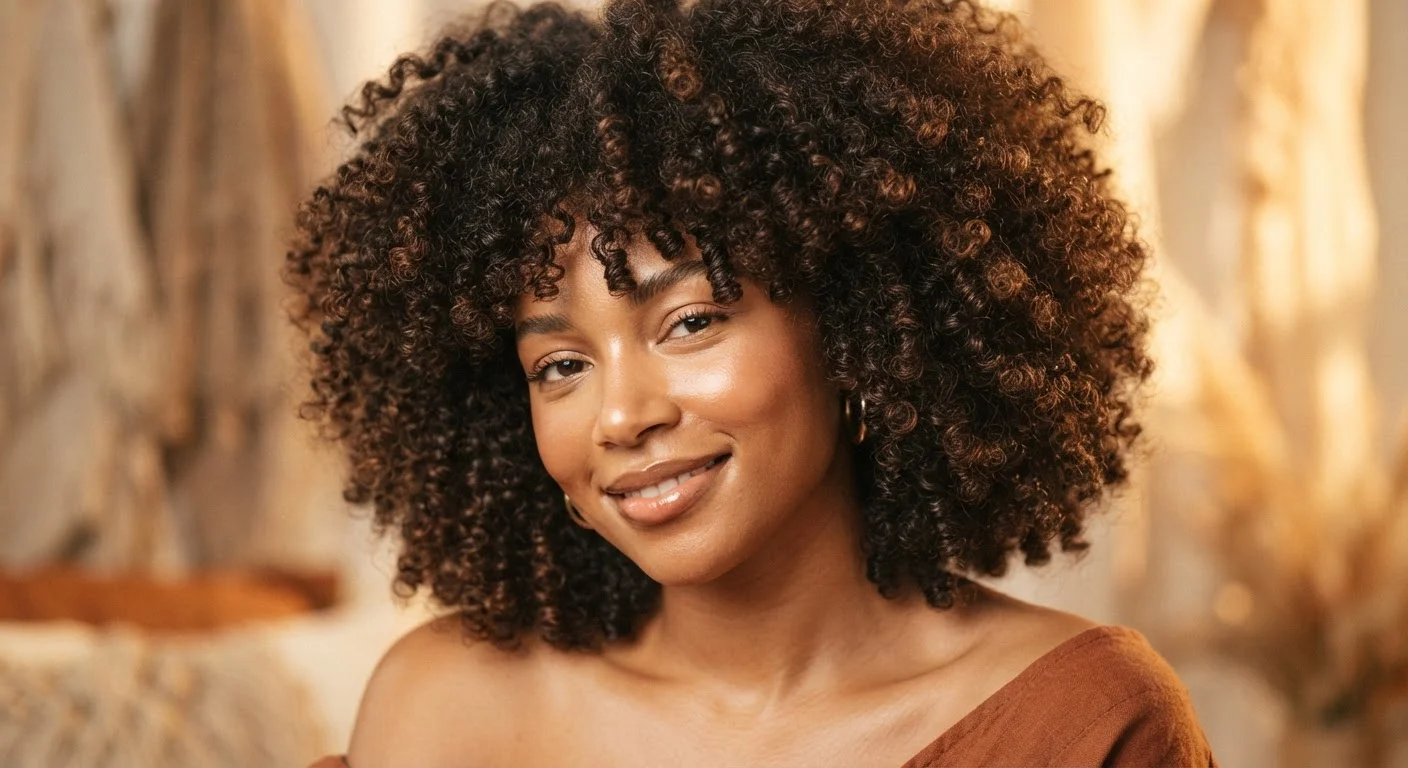
Why Coily and Kinky Textures Need a Different Approach
Coily and kinky hair — generally categorized as types 3C through 4C — has a unique structure that sets it apart from straighter textures. The tight curl pattern creates natural bends along each strand, which slows the travel of scalp oils down the hair shaft. The result: these textures are structurally prone to dryness, even on a healthy scalp.
That curl architecture also makes strands more fragile at each bend, which means rough handling or skipping moisture steps leads quickly to breakage. Understanding this isn't about discouraging you — it's about working with your hair's biology rather than against it. See our guide to what hair types actually mean for a full breakdown of curl categories and how they shape your care approach.
Moisturize using the LOC or LCO method consistently
Coily and kinky strands lose moisture faster than other textures due to the curl pattern preventing oil distribution. Layering a liquid, oil, and cream (or cream before oil) seals hydration into the strand significantly longer than any single product alone.
Always detangle on damp, conditioned hair using finger-first technique
Dry detangling on coily textures causes unnecessary stress at each curl bend, leading to breakage and split ends. Slip — the lubricated smoothness that conditioner creates — is what allows knots to release without snapping strands.
Incorporate protective styles, but give your scalp breathing room
Styles like twists, braids, and buns minimize daily manipulation and shield ends from environmental damage — both major causes of breakage. However, wearing protective styles too tightly or for too long without moisturizing the scalp can cause traction stress and buildup.
Deep condition regularly with heat
Deep conditioners penetrate the hair shaft to restore elasticity and strength — qualities that coily textures constantly need replenished. Adding gentle heat (a hooded dryer or a warm towel wrap) opens the cuticle slightly, allowing the treatment to absorb more effectively.
Sleep on satin or silk to preserve moisture overnight
Cotton pillowcases absorb moisture from hair and create friction that disrupts curl patterns and causes frizz. Switching to a satin or silk surface — or using a satin bonnet — is one of the simplest and most impactful changes you can make.
The Core Practices That Make the Biggest Difference
Good natural hair care doesn't require a 12-step regimen or a shelf full of products. It requires consistency with a handful of proven fundamentals. Whether you're newly natural or refining an existing routine, these practices form the backbone of a healthy hair journey.
Scalp Health: The Foundation You Can't Skip
Healthy hair starts before it even exits the follicle. A clean, balanced scalp supports stronger, more resilient growth — and neglecting it can contribute to buildup, inflammation, and slowed growth over time. For coily and kinky textures, scalp care deserves its own dedicated attention.
Wash frequency is personal, but most people with tighter textures find a weekly or bi-weekly co-wash (conditioner-only wash) combined with a monthly or bi-monthly clarifying shampoo hits the right balance. Clarifying removes product buildup that can suffocate the scalp without over-stripping natural oils.
Clarifying vs. Co-Washing: Know the Difference
A clarifying shampoo uses stronger cleansing agents to fully remove product buildup, hard water minerals, and excess sebum. A co-wash (conditioner wash) gently cleanses without stripping. Using only co-washes long term can cause buildup on the scalp, while over-clarifying can leave hair dry and brittle. Most naturals benefit from alternating between both depending on their styling product use.
For a deeper look at what a balanced scalp looks like and common problems that can disrupt it, visit our Scalp Health 101 guide. And if you're building your routine from the ground up, our hair care routine framework walks you through it step by step.
~60%
Moisture retained with sealant layering vs. single products
Hair care research consistently shows that combining a humectant, oil, and cream layer retains significantly more moisture than any single moisturizing product applied alone.
4C
Most tightly coiled hair type — lowest natural oil distribution
Type 4C hair has the tightest curl pattern, meaning scalp sebum travels the least distance down the shaft compared to any other texture category, requiring the most intentional moisture support.
The content on this site is for informational purposes only and is not a substitute for professional advice. Always consult a qualified professional for guidance specific to your situation.