

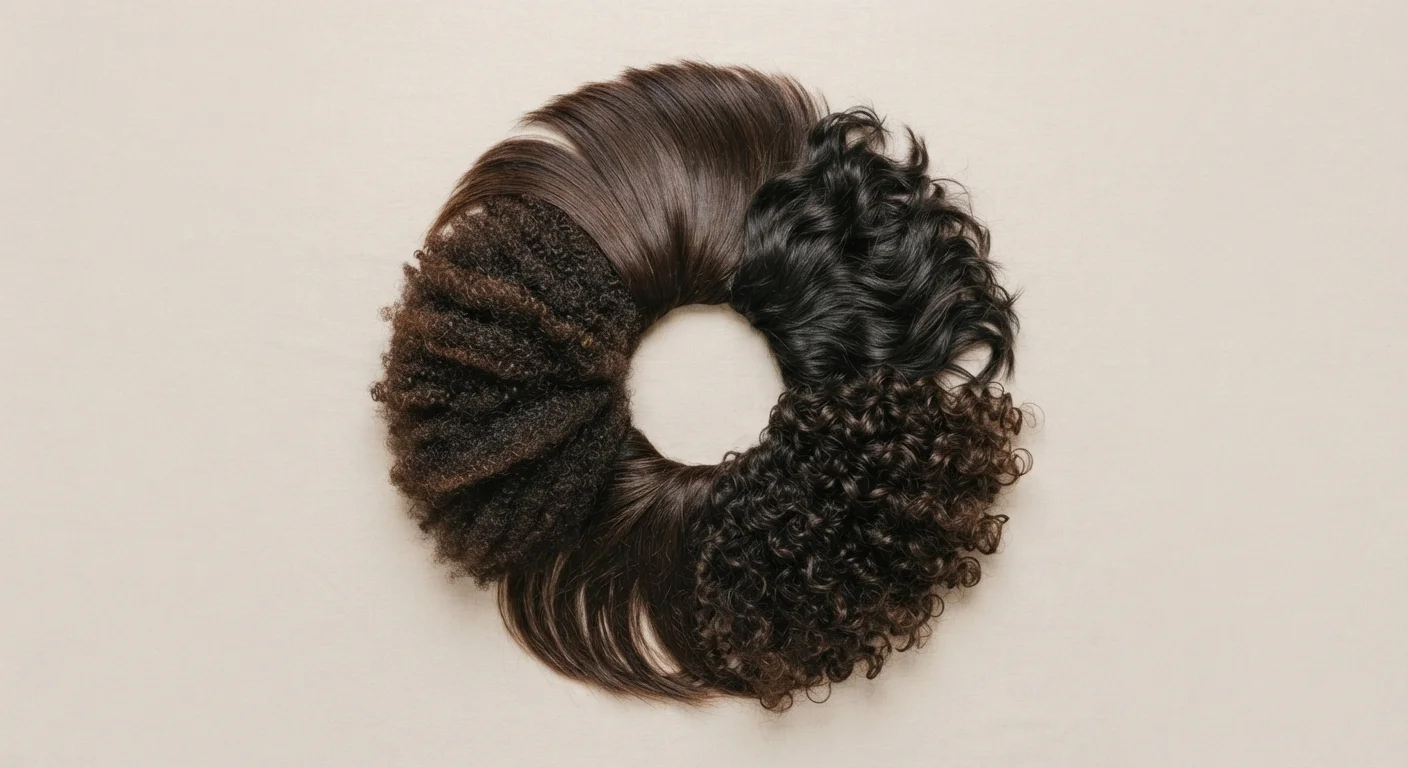
The Four Main Hair Types, Explained
The numbering system goes from 1 to 4, and within each number are three subtypes — A, B, and C — that move from looser to tighter patterns. Here's what each category actually looks like:
- Type 1 (Straight): No natural curl. 1A is very fine and limp; 1B has more body and volume; 1C is straight but thicker and prone to frizz.
- Type 2 (Wavy): An S-shaped pattern that falls between straight and curly. 2A has a loose, beachy wave; 2B has more defined waves with some frizz; 2C forms tighter waves and can start to show curl formation.
- Type 3 (Curly): Clear, springy curl loops. 3A curls are large and loose; 3B curls are tighter and more voluminous; 3C curls are corkscrew-shaped and dense.
- Type 4 (Coily): Tight, coiled patterns that may appear shorter than their actual length. 4A has a soft, defined coil; 4B has a Z-shaped pattern with less visible definition; 4C has very tight coils with significant shrinkage and the most fragility when dry.
These aren't rigid boxes — many people have two or even three subtypes across different sections of their head, and that's entirely normal.
~60%
People with more than one hair texture
Hair experts commonly note that a majority of people have multiple curl patterns across different sections of their scalp, particularly at the nape versus the crown.
4C
Hair type with highest shrinkage rate
Tightly coiled 4C hair can shrink up to 75% of its actual length when dry, according to general cosmetology education resources.
Type 1
Hair type most prone to oil buildup
Straight hair distributes scalp sebum most efficiently down the shaft, making it the hair type most likely to appear greasy quickly without regular cleansing.
Why Hair Type Actually Shapes Your Routine
Your curl pattern affects how moisture moves through your hair, how quickly it dries, and how it responds to products and handling. Understanding this connection is what turns hair typing from a fun quiz into genuinely useful information.
Straight hair (Type 1) gets oily faster because sebum from the scalp slides straight down the shaft. Heavy products weigh it down quickly, so lighter formulas and more frequent cleansing tend to work better.
Wavy hair (Type 2) is a balancing act — it can go frizzy without moisture but flat and greasy with too much product. Lightweight hydration and layering techniques (like scrunching) tend to serve it well.
Curly hair (Type 3) needs consistent moisture to maintain its pattern and prevent frizz. Rich conditioners, leave-ins, and curl creams help keep the pattern defined and bouncy. Rough towel-drying and fine-tooth combs can disrupt the curl and cause breakage.
Coily hair (Type 4) is the driest of the four types structurally, because the tight coil shape makes it harder for scalp oils to coat the strand. Deep conditioning, gentle detangling with wide-tooth combs or fingers, and protective styles all play a significant role here.
Test Your Hair Type on Wash Day
For the most accurate read on your hair type, observe your strands after washing with a clarifying or residue-free shampoo and letting your hair air dry completely without touching it. Styling products, heat, and manipulation can all alter how your natural pattern looks. Give your hair one clean, product-free dry before drawing conclusions about your type.
For a more complete picture of what your hair needs, type is just one variable. Porosity, elasticity, and density round out what type alone can't tell you.
Using Your Hair Type as a Starting Point, Not a Rulebook
Hair typing is a helpful framework, not a rigid prescription. Two people with 3B hair may have completely different needs if one has fine, low-porosity strands and the other has coarse, high-porosity ones. That's why pairing your type with an understanding of your hair's other properties matters so much.
Hair Type Is Just One Variable
The 1–4 typing system only captures curl pattern. It doesn't reflect strand thickness, density (how many hairs per square inch), or porosity (how well your hair absorbs and retains moisture). Two people with identical types can have very different hair needs based on these other characteristics. Think of your type as a directional guide, not a complete diagnosis.
Once you know your type, building a practical routine becomes much more intuitive. Building a routine that matches your hair type walks through exactly how to translate that knowledge into daily and weekly steps. If you're starting from zero, building a hair care routine from scratch offers a clean, straightforward framework without overwhelming product lists.
The goal of hair typing isn't to put your hair in a box — it's to give you a smarter starting point so you stop guessing and start actually getting results.
Frequently Asked Questions
Wash your hair with a gentle, residue-free shampoo, skip conditioner, and let it air dry without touching or diffusing it. The natural shape it forms while drying reveals your closest hair type. Keep in mind your hair may show more than one pattern across different sections.
Hair type refers to curl pattern (straight, wavy, curly, coily). Hair texture refers to the width of each individual strand — fine, medium, or coarse. Both affect how your hair behaves, but they're separate characteristics. A person can have coily Type 4 hair that is fine in strand thickness, for example.
Yes, it can. Hormonal shifts, medications, pregnancy, and significant weight changes can alter your curl pattern. Heat damage and chemical treatments can also loosen or disrupt your natural pattern temporarily or permanently.
Product buildup, heat damage, humidity, and how wet versus dry your hair is can all shift how your curl pattern looks. Your "true" type shows best on clean, air-dried hair that hasn't been manipulated while drying.
No — no hair type is inherently healthier or better. However, tighter curl patterns (3C–4C) can be more prone to dryness because natural scalp oils have a harder time traveling down a coiled strand. This is a structural reality, not a health ranking.
The content on this site is for informational purposes only and is not a substitute for professional advice. Always consult a qualified professional for guidance specific to your situation.