

Why These Three Properties Matter
Most of us learn about hair through curl charts and product labels — but those categories only tell part of the story. Understanding what your hair type actually means is a great foundation, but porosity, elasticity, and density are what determine how your hair actually behaves day to day: why it frizzes in humidity, why a conditioner works beautifully on your friend but leaves your hair feeling coated, or why your color fades faster than expected.
These properties aren't exotic science — they're observable, testable, and directly useful. Once you have a rough sense of where your hair lands on each scale, you can stop guessing at product choices and start making adjustments that actually stick.
~100,000
Average number of hair strands on the human scalp
According to the American Academy of Dermatology, the average person has roughly 100,000 strands, though the range varies considerably by individual.
50–100
Strands lost per day considered normal
The American Academy of Dermatology notes that losing 50 to 100 hairs daily is part of the normal growth cycle for most people.
~30%
How far healthy hair can stretch when wet
Hair science literature generally notes that healthy hair can extend up to approximately 30% of its length when wet before returning to its original shape.
Porosity: The Open-Door Policy of Your Strands
Porosity describes how easily moisture enters and exits each strand, governed primarily by the condition of the cuticle — the outermost layer of the hair shaft, made up of overlapping cells like roof shingles. When those shingles lie flat and tight, the hair is low porosity: moisture is slow to absorb, but once it's in, it tends to stay. When the cuticle is raised or damaged, the hair is high porosity: it drinks up water quickly but loses it just as fast, leading to chronic dryness and frizz.
Low porosity hair often resists products — you may notice conditioner sitting on top of your strands rather than soaking in. Lighter formulas, heat during deep conditioning treatments, and water-based products tend to work better. High porosity hair (common in chemically treated or heat-damaged strands) absorbs quickly but needs help sealing in that moisture — layering with thicker creams or oils on wet hair can help.
Most hair falls somewhere in between, and porosity can vary across different sections of the same head. Reading a hair product label with porosity in mind helps you spot whether an ingredient list is actually suited to your needs.
Try a Porosity Test Before Buying Products
Before investing in a new moisturizing line, run a quick float test on a clean, shed strand (not one with product buildup). If the strand floats for several minutes, low porosity is likely — look for water-based, light formulas over heavy creams. If it sinks quickly, prioritize sealing ingredients like butters or oils applied over a leave-in. Think of it as a free first step before spending money on trial and error.
Elasticity: The Stretch Test That Reveals Hair Health
Elasticity is the hair's ability to stretch under tension and spring back without breaking. Healthy hair can typically stretch up to about 30% of its length when wet before returning to its original state. Low elasticity — where a strand snaps almost immediately — often signals a disrupted protein-moisture balance, chemical damage, or heat stress.
You can test this simply: take a wet strand and gently stretch it. Healthy hair stretches, then recoils. Hair that breaks immediately without stretching lacks moisture or is over-processed. Hair that stretches but doesn't return to its original length may be over-moisturized or structurally compromised.
Elasticity and Protein Treatments
Protein treatments are sometimes recommended to restore elasticity in damaged hair, but more protein isn't always the answer — hair that's already low on moisture can feel brittle after a protein treatment. The goal is balance, not maximizing one or the other. If you're experiencing significant breakage, a consultation with a licensed stylist or trichologist (a specialist in hair and scalp health) is a smart move before introducing any intensive treatment.
Elasticity is one reason factors that affect hair growth and health — like nutrition and stress — show up visually in the strand. A diet consistently low in protein, for example, can affect the building blocks hair needs to maintain structural integrity.
Density: The Volume Variable Nobody Talks About
Density refers to how many individual strands grow from your scalp — typically categorized as low, medium, or high. It's different from strand thickness (also called hair width or coarseness), which is about the diameter of each individual strand. You can have fine strands but high density — meaning lots of thin hairs — or thick strands with low density.
Density matters enormously for how you build a routine. High-density hair needs thorough sectioning during washing and conditioning to ensure product reaches all strands. Low-density hair can look thin or flat if weighted down with heavy products. When building a hair care routine that matches your hair type, density is one of the most overlooked factors in why a product seems to disappear into thick hair but immediately weighs down fine hair.
For those with coily and kinky textures specifically, density plays a key role in how styles take shape and how long moisture-sealing steps take — something covered in depth in guidance on natural hair care for coily and kinky textures.
Putting It All Together
The most useful shift you can make is thinking about these three properties as a combination, not a checklist. Someone with high porosity, low elasticity, and high density has very different needs from someone with low porosity, healthy elasticity, and medium density — even if they share the same curl pattern on a typing chart.
Start by observing your hair's behavior: Does moisture absorb quickly or bead up? Do strands snap during detangling or stretch before breaking? Does your hair look full or sparse at the roots? Those observations map directly to porosity, elasticity, and density — and they're far more actionable than a label on a product bottle.
Frequently Asked Questions
A simple float test involves placing a clean, shed strand in a glass of room-temperature water. If it sinks quickly, porosity may be high; if it floats for a while, it may be low. This method is widely referenced but considered a rough indicator rather than a precise diagnostic — use it as a starting point alongside how your hair actually behaves with moisture.
Yes. Chemical processes like coloring, bleaching, and relaxing can raise porosity by disrupting the cuticle. Heat damage and environmental exposure (sun, chlorine, hard water) can do the same. In contrast, consistently gentle handling and protective practices may help preserve lower porosity over time.
Hair with low elasticity breaks more easily when stretched — during detangling, styling, or even sleeping on rough surfaces. It often benefits from protein-moisture balance adjustments. If your hair feels mushy when wet and snaps without much resistance, it may signal over-moisturization or chemical damage; consider consulting a professional stylist.
It can, yes. High-density hair generally requires more product and benefits from lightweight formulas that won't weigh strands down or cause buildup. Fine or low-density hair is more prone to appearing limp or greasy when heavy creams or oils are used in large amounts.
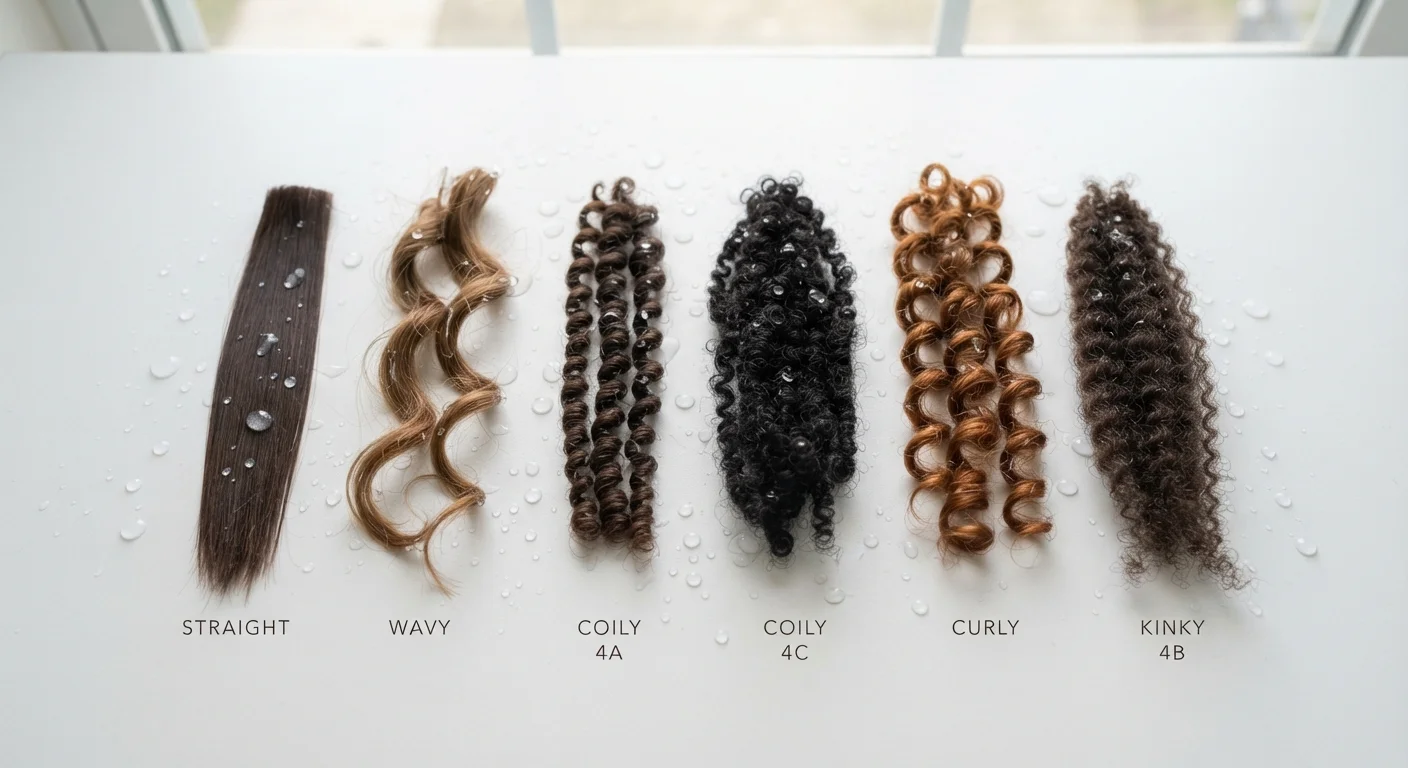
No — hair type (the 1A–4C classification system) describes curl or wave pattern, which is determined by the shape of your follicle. Porosity, elasticity, and density are separate physical properties that can vary independently of curl pattern. Two people with 3C hair, for instance, can have very different porosity levels.
The content on this site is for informational purposes only and is not a substitute for professional advice. Always consult a qualified professional for guidance specific to your situation.