

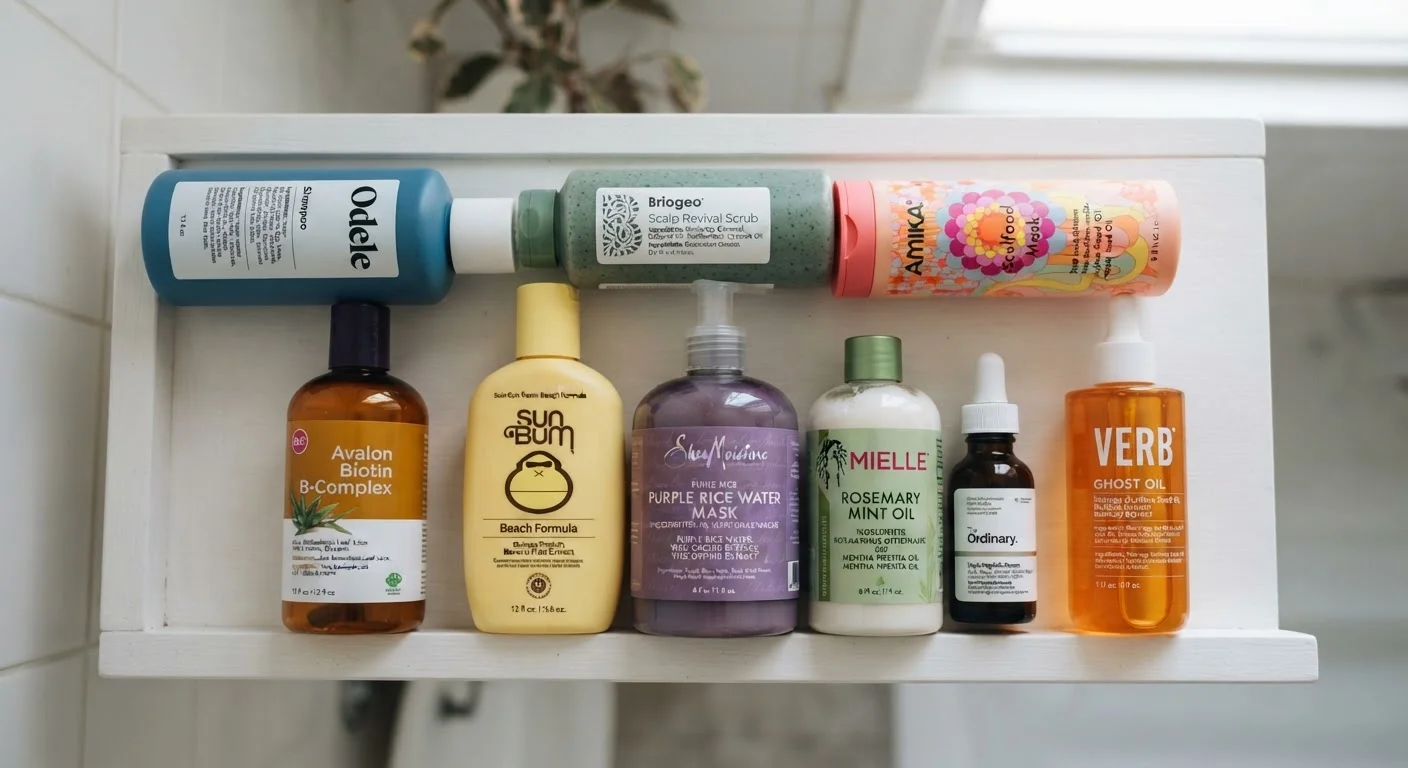
How Hair Product Labels Are Structured
Hair product labels follow the same basic rule as skincare: ingredients are listed in descending order by concentration. The first five or six ingredients make up the bulk of the formula — everything after roughly 1% concentration can appear in any order the manufacturer chooses.
That means water (often listed as Aqua) is almost always first. What follows tells you whether the formula is primarily a moisturizer, a protein treatment, a cleanser, or something else. Checking the top third of the list gives you a fast, reliable snapshot of what the product actually does — before any marketing claim on the front label influences your read.
For a related deep-dive into how this structure works in beauty products more broadly, see Reading a Skincare Label.
Surfactant
A cleansing agent that lowers the surface tension between water and oils, allowing dirt and product buildup to be rinsed away. Different surfactants vary in strength and gentleness.
Humectant
An ingredient that attracts and binds water to the hair shaft, helping to maintain moisture. Common examples include glycerin and panthenol.
Occlusive
An ingredient that forms a barrier on the hair or scalp surface to prevent moisture from escaping. Silicones, heavy oils, and butters are common occlusives in hair care.
Hydrolyzed Protein
A protein that has been broken down into smaller fragments so it can penetrate or adhere to the hair shaft. It temporarily reinforces damaged areas of the cuticle.
INCI Name
International Nomenclature of Cosmetic Ingredients — the standardized scientific naming system used on ingredient lists worldwide. This is why shea butter may appear as 'Butyrospermum Parkii Butter.'
pH Balance
A measure of how acidic or alkaline a product is. Hair and scalp have a naturally slightly acidic pH; products formulated in a compatible range help keep the cuticle smooth and sealed.
Terms Worth Knowing by Category
Hair product ingredients generally fall into a few functional buckets. Understanding those buckets helps you match products to your actual hair needs rather than relying on front-label claims.
| Label order rule | Ingredients listed highest to lowest by concentration (U.S. FDA cosmetic labeling regulations) |
| Most common first ingredient | Water (Aqua) |
| Threshold for any-order listing | Ingredients at or below ~1% concentration (FDA cosmetic labeling guidance) |
| "Natural" claim regulation | Not legally defined for U.S. hair/cosmetic products (U.S. FDA) |
| Fragrance disclosure | Listed as a single term; individual components not required (U.S. Fair Packaging and Labeling Act) |
| Protein placement tip | Look for hydrolyzed proteins in the first 50% of the list for meaningful concentration |
Cleansers (surfactants): These are the sudsy workhorses in shampoos. Sodium lauryl sulfate (SLS) and sodium laureth sulfate (SLES) are strong and lather well; ammonium lauryl sulfate is a mid-strength alternative. Gentler options include cocamidopropyl betaine and sodium cocoyl isethionate. For more on how sulfate choice affects different hair types, see Sulfate-Free vs. Regular Shampoo.
Humectants: These draw moisture into the hair shaft. Glycerin, panthenol (pro-vitamin B5), and aloe vera are common examples. They work best in moderate humidity; in very dry air, they can pull moisture from your hair instead of the environment.
Emollients and occlusives: These seal moisture in. Dimethicone, argan oil, shea butter, and mineral oil all fall here. They add slip, reduce frizz, and coat the cuticle — but heavier versions can build up over time on fine hair.
Proteins: Hydrolyzed keratin, wheat protein, and silk protein temporarily fill gaps in a damaged cuticle, adding strength and reducing breakage. Too much protein on low-porosity hair can cause stiffness. Understanding your hair's porosity and elasticity helps you gauge how much protein your hair can handle.
What's Mostly Marketing
Some label language sounds meaningful but carries no regulated definition in hair care. Here's a quick filter:
- "Natural" or "clean": Neither term is legally defined for hair products in the U.S. A product can use these words regardless of what's actually in it.
- "Clinically tested" or "dermatologist recommended": These phrases don't specify what was tested, on whom, or what the results showed. They signal that some testing occurred — not that results were independently verified or significant.
- Keratin-infused / protein-enriched: These claims can be meaningful, but only if a hydrolyzed protein appears in the first half of the ingredient list. A protein listed near the bottom may be present in trace amounts.
- "Free of" claims (paraben-free, silicone-free): These tell you what's absent, not what's present. They're useful if you're avoiding specific ingredients, but not a quality guarantee on their own.
INCI Names Can Look Intimidating
Don't let scientific names throw you off. Ingredients on U.S. labels follow INCI (International Nomenclature of Cosmetic Ingredients) naming, which means familiar ingredients appear in Latin or chemical form — like 'Cocos Nucifera Oil' for coconut oil. A quick search of any unfamiliar name on a cosmetic ingredient database can decode it in seconds.
Fragrance deserves its own mention. Listed as fragrance or parfum, it's a catch-all term that can cover dozens of undisclosed compounds. If you have a sensitive scalp, it may be worth checking where fragrance appears on the list — or exploring fragrance trade-offs in beauty products for more context.
The content on this site is for informational purposes only and is not a substitute for professional advice. Always consult a qualified professional for guidance specific to your situation.