

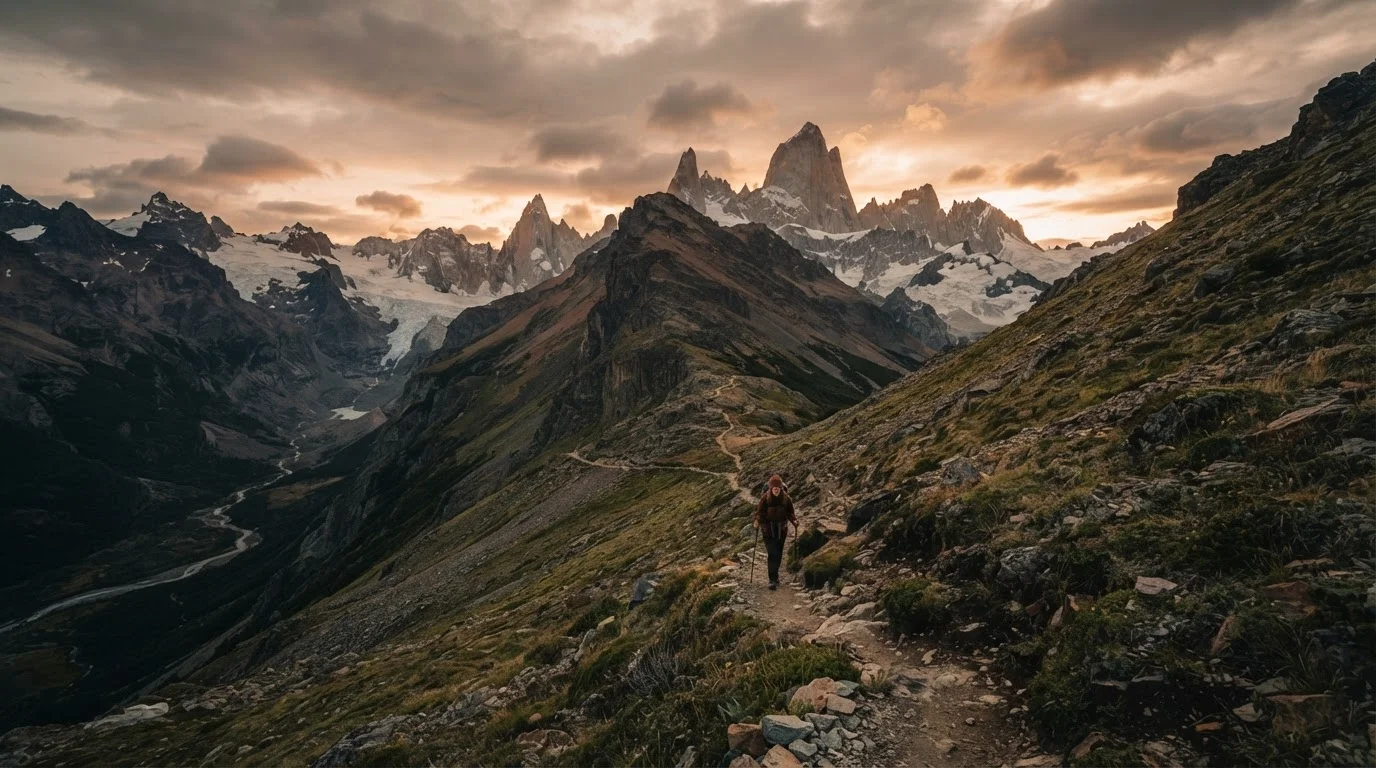
Why Off-Grid Travel Has an Outsized Reputation for Danger
Off-grid travel — venturing to destinations without standard utilities, cell service, or tourist infrastructure — occupies a strange place in the popular imagination. It's simultaneously romanticized on social media and dismissed as reckless by people who've never tried it. The result is a category of travel that many curious people rule out based on assumptions that don't quite hold up under scrutiny.
The barriers are rarely as steep as they seem. Most off-grid destinations exist on a spectrum: a dispersed campsite in a national forest, a backcountry hut in Montana, a rural guesthouse in Patagonia. Very few involve true isolation with zero safety nets. Understanding what off-grid travel actually looks like — versus what people imagine — is the first step toward deciding whether it's genuinely right for you.
For those already drawn to unconventional experiences, it's worth reading about dark sky travel as a gentler introduction to remote destinations that don't require extreme physical preparation.
Myth
You need advanced survival skills to travel off-grid safely.
Fact
Basic wilderness first aid, navigation fundamentals, and a well-stocked pack are sufficient for most off-grid trips.
The phrase "survival skills" conjures images of building fires from scratch or trapping food in the wilderness. In practice, off-grid travel rarely demands any of that. The competencies that actually matter — reading a topographic map, recognizing weather changes, treating blisters and minor injuries, and knowing when to turn back — can be learned through a weekend course or a few guided day hikes. Most off-grid destinations are remote, not hostile.
Myth
Off-grid destinations have no emergency support if something goes wrong.
Fact
Search and rescue services operate in most wilderness areas in the US, and personal locator beacons can summon help even without cell service.
True complete isolation — where no emergency response could realistically reach you — is rarer than people assume. National forests, BLM land, and most backcountry zones in the US fall within search and rescue jurisdiction. Beyond that, satellite communication devices allow travelers to send GPS coordinates and distress signals regardless of cellular coverage. These tools have changed the risk calculus of off-grid travel significantly.
Myth
Off-grid travel is inherently harmful to the environment.
Fact
Practiced responsibly using Leave No Trace principles, off-grid travel can have a lighter footprint than overcrowded tourist sites.
The assumption that venturing into wild places automatically damages them overlooks the larger problem: over-tourism at popular destinations. Dispersed travel to low-traffic areas, when done following established ethical guidelines — packing out waste, camping on durable surfaces, staying on trails — tends to distribute human impact rather than concentrate it. The environment isn't protected by keeping people away wholesale; it's protected by how people behave when they arrive.
Myth
Solo off-grid travel is too dangerous to attempt.
Fact
Solo off-grid travel carries manageable risks when travelers use communication devices, file trip plans, and choose routes suited to their experience level.
Solo travel of any kind involves greater personal responsibility, and remote settings amplify that. But framing it as categorically too dangerous overstates the case. Millions of people hike, camp, and travel remotely alone each year without incident. The key variables are preparation quality and honest self-assessment of fitness and experience. A solo traveler who shares a detailed itinerary, carries a satellite communicator, and selects terrain matching their skill level is taking a calculated, manageable risk — not a reckless one.
Myth
Off-grid travel requires expensive, specialized gear.
Fact
Many off-grid trips can be done with quality general-purpose outdoor gear; specialized equipment is only necessary for specific extreme conditions.
The outdoor gear industry does an effective job marketing specialized equipment as essential. For the majority of off-grid trips — dispersed camping, backcountry hiking, rural road travel — a sturdy tent, layered clothing, reliable footwear, and a water filtration system cover most bases. Technical gear becomes relevant when the environment genuinely demands it: glacier travel, extreme cold, or technical climbing. Choosing a destination that matches your current gear and fitness level is usually more practical than buying your way into readiness.
Planning Realities vs. Popular Assumptions
Much of the anxiety around off-grid travel dissolves when you look at what preparation actually involves. It's less about mastering wilderness survival and more about methodical verification before you leave.
97%
US land area with SAR jurisdiction coverage
According to the National Association for Search and Rescue, coordinated search and rescue services cover the vast majority of publicly accessible wilderness land in the United States.
~$350
Average cost of a personal locator beacon
Personal locator beacons (PLBs) — which send distress signals via satellite with no subscription required — are available to consumers at a price point that has dropped significantly over the past decade.
The pre-departure phase matters enormously. Travelers heading to remote areas should confirm communication options — satellite messengers and personal locator beacons have become increasingly affordable and compact — share detailed itineraries with trusted contacts, and understand the terrain's seasonal behavior. Our guide on what to confirm before a remote trip covers these essentials in detail.
It's also worth acknowledging that off-grid travel shares some psychological and logistical DNA with other forms of independent living. If you've ever been curious about full-time RV living, many of the mindset shifts — tolerance for uncertainty, comfort with self-sufficiency — translate directly to backcountry trips.
Always Verify Conditions Before You Go
Trail accessibility, road conditions, and water source availability at remote destinations can change significantly by season or after weather events. Check with the managing land agency — such as the US Forest Service or Bureau of Land Management — close to your departure date. Do not rely solely on trip reports that are months old.
Off-season conditions add another variable. Remote routes that are well-traveled in summer can become genuinely hazardous in shoulder seasons. Off-season travel pitfalls apply to remote destinations with extra force, since the margin for error shrinks considerably when fewer people are around.
The content on this site is for informational purposes only and is not a substitute for professional advice. Always consult a qualified professional for guidance specific to your situation.