

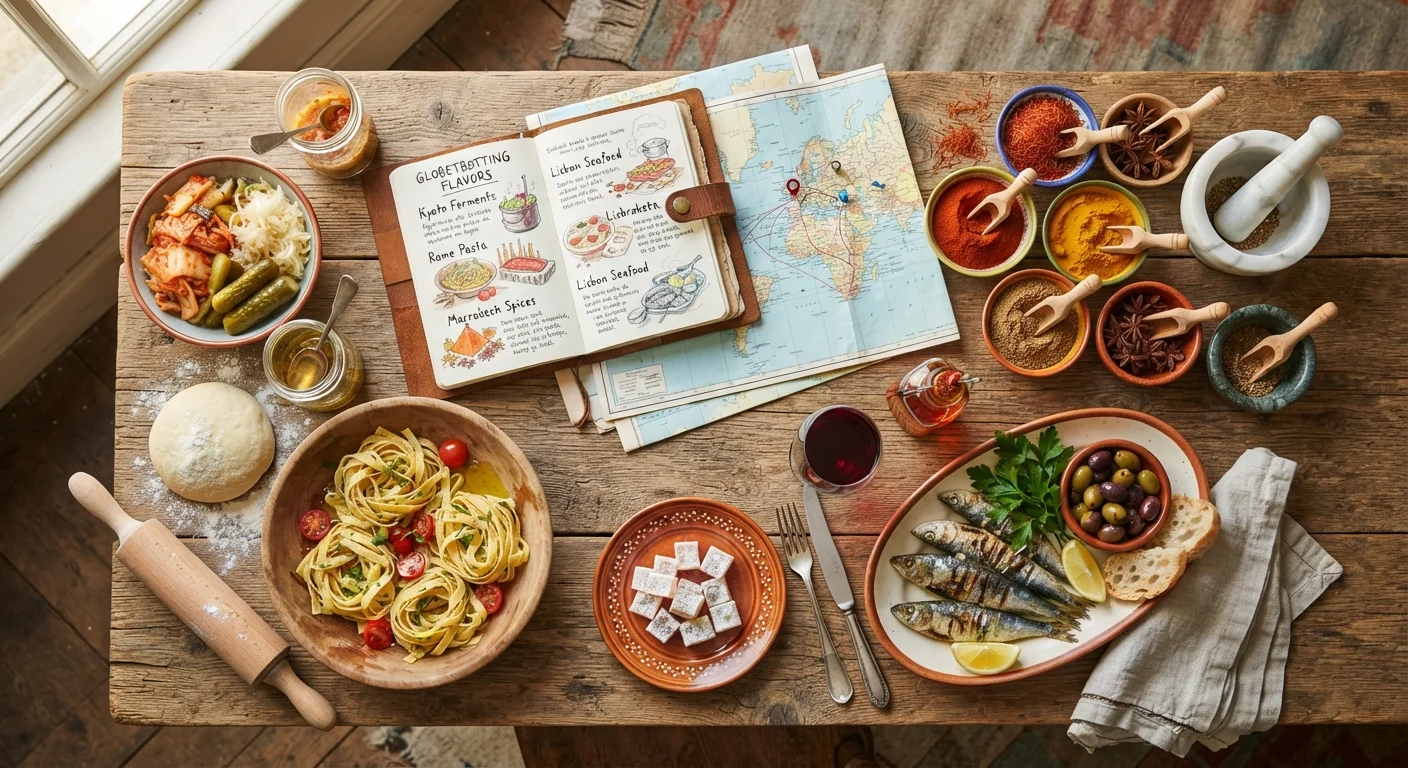
Beyond the Food Tour: What Culinary Tourism Actually Covers
Ask most travelers what culinary tourism looks like and they'll picture a guided group nibbling through a city's historic quarter, tasting cheese and bread between stops. That image isn't wrong — but it captures only a sliver of what food-centered travel actually encompasses.
At its core, culinary tourism is about using food as a primary way to understand a place. That might mean tracking down a single regional ingredient — say, saffron in La Mancha or black truffles in Périgord — across the farms, markets, and kitchens that depend on it. It might mean booking a multi-day stay at a family-run winery and learning to read a landscape through the grapes it produces. Or it might mean something as simple as shopping alongside locals at a dawn fish market and letting the catch dictate your morning meal.
This intentionality is what separates culinary tourism from ordinary travel with good restaurants. The food isn't incidental — it's the point of entry. As part of the wider landscape of specialty travel experiences, culinary tourism has developed its own rich set of sub-formats, each rewarding in different ways.
93%
Travelers who include food as a key trip activity
According to the World Food Travel Association's research, the vast majority of travelers consider food and beverage experiences a meaningful part of how they engage with a destination.
$150B+
Estimated global culinary tourism market size
Industry analysts have estimated the global food tourism sector is worth well over $150 billion annually, reflecting its growth as a primary — not incidental — travel motivation.
3–5x
Higher local economic retention via food tourism
Research on community-based tourism suggests that spending at locally owned food producers and restaurants retains significantly more value within host communities compared to mass-market hospitality.
The Many Forms Food-Centered Travel Takes
Culinary tourism's breadth is genuinely surprising once you start mapping it out. A few of the more distinctive formats:
- Fermentation retreats: From Korean kimchi workshops to Japanese miso-making classes, travelers spend days or weeks learning the patience and microbiology behind preserved foods. These experiences often include overnight stays with artisan producers.
- Fishing village homestays: Coastal communities in places like Portugal's Alentejo coast or Japan's Ama diving villages offer travelers direct access to traditional fishing practices — including preparing and eating the catch using methods passed through generations.
- Agricultural immersions: Olive oil harvest seasons in Greece, rice planting in Bali, or apple picking in Vermont's Northeast Kingdom invite travelers into the rhythm of farming rather than just its outputs.
- Beverage trails: Whisky routes in Scotland, mezcal trails in Oaxaca, and coffee origin tours in Colombia have established themselves as serious travel formats, often pairing landscape education with sensory depth.
- Culinary archaeology: Some travelers chase dishes that are disappearing — heritage grain bakers, traditional smoking pitmasters, grandmothers cooking recipes untouched by modernization — treating meals as living history.
Each of these formats offers something a restaurant reservation rarely does: access to process, people, and place all at once.
Food as a Framework for Understanding Place
One of culinary tourism's most underappreciated qualities is how efficiently it teaches. A single afternoon pressing olive oil in Crete communicates soil type, Mediterranean climate, ancient trade history, and contemporary family economics in ways a museum panel rarely could. The sensory engagement creates a kind of memory that persists long after the trip ends.
This connective quality makes culinary travel particularly compatible with slow travel philosophies, where depth takes precedence over breadth. Instead of optimizing a ten-day trip to check off landmarks, a food-centered traveler might spend four days in a single valley, tracing one ingredient from field to table.
Let the Calendar Shape Your Itinerary
Many of the richest culinary travel experiences are seasonal — truffle hunts in autumn, grape harvests in September, cherry blossom food festivals in spring. Building your travel dates around an agricultural or culinary calendar, rather than hotel availability alone, often unlocks access that standard tourists never encounter. Local tourism boards and regional food cooperatives are good starting points for timing research.
It's worth noting that culinary tourism, like any travel format, carries an ethical dimension. Travelers who seek authentic local food experiences have a role to play in sustaining what they love. Choosing family producers over industrial operations, asking about sourcing, and learning even a handful of words in the local language are small gestures that compound over time. For more on this, responsible tourism practices offer useful framing applicable to food travel specifically.
Whether you're a curious first-timer or a committed food traveler building itineraries around harvests and fermentation calendars, the field is wide enough to grow into. The entry point, often, is simply deciding that the next meal you eat somewhere new is worth asking a question about.
Frequently Asked Questions
Not at all. While fine dining can be a component, culinary tourism more broadly includes farmers markets, home-cooking classes, food festivals, agricultural visits, and beverage trails. The defining trait is intentional curiosity about how and why a place eats the way it does.
Culinary tourism is accessible across a wide range of budgets. Street food exploration, market visits, and community-based cooking classes are often inexpensive. The key is prioritizing food experiences as part of your travel planning rather than treating meals as an afterthought.
Food tours are one structured format within culinary tourism, typically led by a guide who introduces multiple tastings or vendors in a neighborhood. Culinary tourism is the broader category, encompassing self-guided exploration, multi-day immersions, cooking residencies, and destination-specific beverage trails.
When travelers seek out locally owned restaurants, cooperatives, and family producers, their spending more directly supports host communities. Being mindful of sourcing, waste, and cultural context aligns culinary travel with the principles of <a href="/travel/tourist-destinations/responsible-tourism-in-fragile-destinations">responsible tourism</a>.
Absolutely. Food exploration pairs naturally with slow travel, agricultural tourism, heritage travel, and even adventure itineraries. Many travelers find that centering meals and markets around other activities deepens their overall experience of a destination.
The content on this site is for informational purposes only and is not a substitute for professional advice. Always consult a qualified professional for guidance specific to your situation.