

How Africa's Safari Regions Are Organized
Africa is often discussed as a single safari destination, but the continent encompasses wildly different ecosystems, conservation models, and wildlife concentrations spread across more than a dozen countries. For wildlife travelers, understanding the broad regional framework — East Africa, Southern Africa, and West and Central Africa — is the starting point for any meaningful trip planning.
| Primary safari regions | East Africa, Southern Africa, West & Central Africa |
| Countries with major national parks | Kenya, Tanzania, Botswana, South Africa, Namibia, Zimbabwe, Zambia, Uganda, Rwanda |
| UNESCO World Heritage safari sites | Includes Serengeti, Ngorongoro, Okavango Delta, and others (UNESCO World Heritage List) |
| Gorilla trekking locations | Bwindi (Uganda), Volcanoes National Park (Rwanda) |
| Self-drive safari availability | Most developed in South Africa; limited elsewhere |
| Key planning factor | Dry vs. wet season timing affects wildlife visibility and access |
Each region operates under different land tenure systems, ranging from national parks managed by government agencies to private game reserves and community-managed conservancies. This shapes everything from crowd levels and accommodation styles to the rules governing off-road driving and walking safaris. If you're exploring how lodges and camps fit into the wider picture, our guide to global accommodation types covers tented camps, bush lodges, and more.
East Africa: Savannahs, Migrations, and Volcanic Highlands
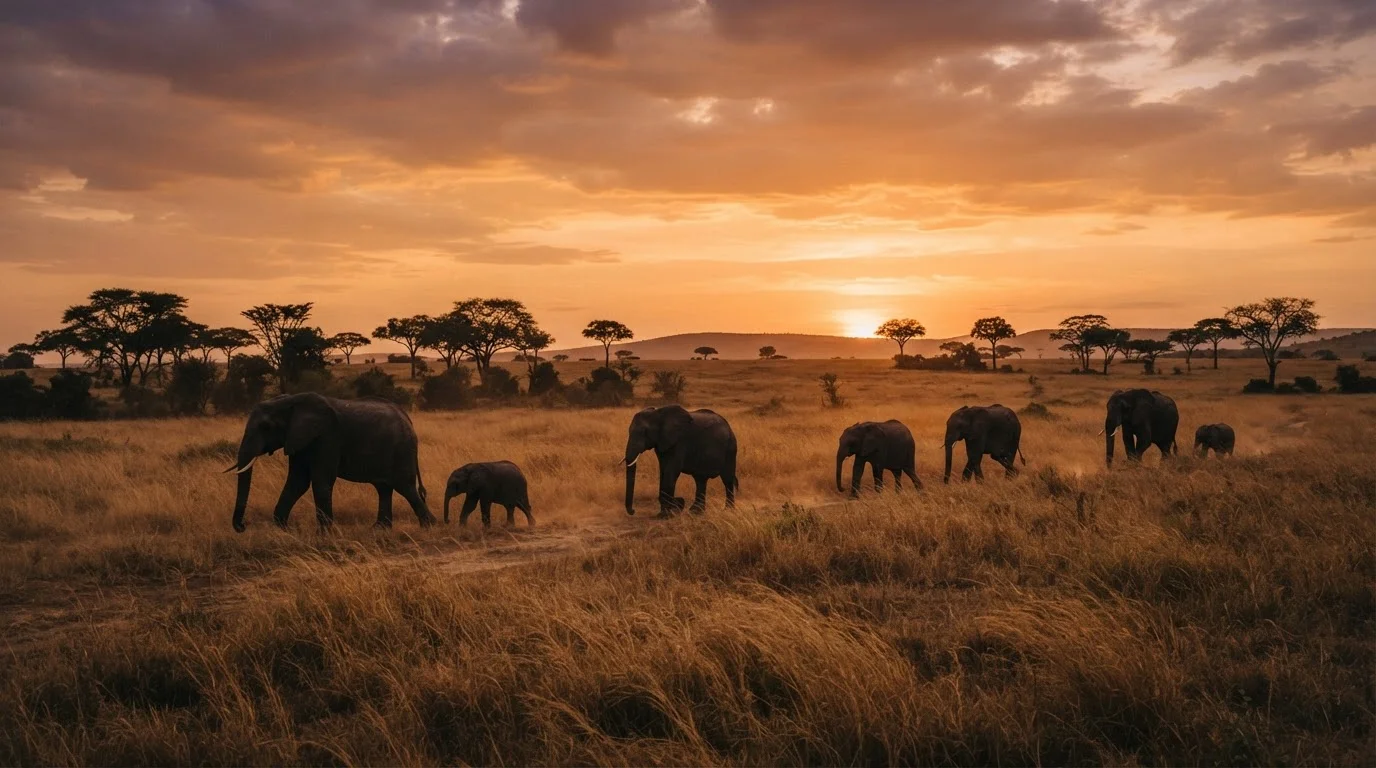
East Africa is the region most travelers picture when they imagine an African safari. Kenya and Tanzania anchor the ecosystem, sharing the Serengeti-Mara complex — one of the planet's most celebrated wildlife corridors. The Masai Mara in Kenya and Serengeti National Park in Tanzania form a single continuous ecosystem divided by a political border. The Wildebeest Migration, which sees roughly 1.5 million animals move in a broad annual circuit, is one of the most documented wildlife events on Earth, though exact timing varies by year and rainfall patterns.
Beyond the Mara-Serengeti, East Africa holds considerable diversity. Tanzania's Ngorongoro Crater is a collapsed volcanic caldera sheltering one of the densest concentrations of wildlife on the continent. Amboseli National Park in Kenya offers views of Kilimanjaro alongside large elephant herds. Uganda and Rwanda are home to mountain gorilla habitats in the Bwindi Impenetrable Forest and Volcanoes National Park respectively — experiences requiring separate gorilla trekking permits that should be arranged well in advance.
Big Five
A term originally coined by hunters referring to lion, leopard, elephant, Cape buffalo, and rhinoceros. It is now widely used in the safari tourism industry to describe these five species as key wildlife viewing targets.
Conservancy
A land area managed primarily for wildlife conservation, often in partnership with local communities. Conservancies may border or buffer national parks and frequently allow more flexible safari activities than government-managed parks.
Mokoro
A traditional dugout canoe used in the Okavango Delta of Botswana. Mokoro trips offer a quiet, water-level wildlife experience distinct from land-based game drives.
Wildebeest Migration
An annual movement of approximately 1.5 million wildebeest, along with zebras and gazelles, across the Serengeti-Mara ecosystem in Tanzania and Kenya. The exact timing is governed by rainfall and grass availability.
Walking Safari
A guided wildlife experience conducted on foot rather than from a vehicle. Walking safaris are regulated by most countries and must be led by a licensed, armed guide.
Southern Africa: Diverse Ecosystems and a Range of Safari Styles
Southern Africa offers arguably the widest variety of safari environments on the continent. Botswana's Okavango Delta — a vast inland river delta — supports extraordinary biodiversity and is recognized as a UNESCO World Heritage Site. Its seasonal flooding creates temporary islands and channels that are navigated by traditional mokoro canoes as well as motorized boats, making it unlike any savannah safari experience.
South Africa is notable for its accessible Big Five game viewing, particularly in Kruger National Park and the private reserves bordering it. South Africa also operates a well-developed network of self-drive safari options — something less common in other parts of the continent — making it a practical entry point for first-time safari travelers. Namibia's stark desert landscapes, including Etosha National Park's salt pan ecosystem and the Namib Desert, offer a dramatically different visual register than East Africa's rolling grasslands. Zimbabwe's Hwange National Park and Zambia's South Luangwa Valley are considered strongholds for walking safari traditions. For travelers considering a specialist operator, our overview of specialty travel agencies explains how different agency niches serve different safari styles.
~1.5M
Wildebeest in the Serengeti-Mara migration
The annual Wildebeest Migration is one of the most documented large-animal movements on Earth, involving roughly 1.5 million wildebeest alongside zebras and gazelles.
1,000+
Bird species in the Okavango Delta alone
The Okavango Delta in Botswana supports exceptional avian diversity, with over 1,000 bird species recorded across its seasonal wetlands.
~1,000
Mountain gorillas remaining in the wild
Mountain gorilla populations are critically limited; Uganda and Rwanda host the primary habitats accessible to trekking tourists under strict permit systems.
Planning Considerations Before You Book
Choosing a safari region involves trade-offs between budget, timing, wildlife priorities, and personal comfort with remoteness. Seasons matter significantly: the dry season generally concentrates wildlife around water sources and improves game-viewing visibility, but peak travel periods can mean higher costs and fuller camps. Wet seasons bring lush scenery, fewer visitors, and in many areas, exceptional birdlife — but some roads and camps may be inaccessible.
Health and entry requirements — including vaccination certificates, visas, and travel advisories — vary by country and can change. Always verify current requirements through official government sources and your country's foreign affairs ministry before finalizing plans. Our destination research checklist is a useful starting framework for this due diligence. Equally important is vetting operators for responsible practices; what ethical safari operators actually look like is essential reading before committing to a booking.
This article is for general informational purposes only. Travel conditions, entry requirements, and wildlife experiences can change. Always verify visa, health, and safety requirements with official government and provider sources before traveling.
The content on this site is for informational purposes only and is not a substitute for professional advice. Always consult a qualified professional for guidance specific to your situation.