

Why Accommodation Type Matters Before You Book
Choosing where to sleep is about far more than price. The type of accommodation shapes your entire experience — how you interact with locals, what amenities you can expect, and whether the setting matches your travel style. A business hotel in Seoul operates on entirely different principles from a family-run pensão in Lisbon or a glamping tent on the Serengeti. Knowing what you're booking — not just the star rating — helps you arrive with the right expectations.
This reference guide defines the most significant accommodation categories travelers encounter globally, organized by what makes each one distinct. Whether you're planning a first international trip or expanding your comfort zone, understanding these terms reduces surprises. For a practical comparison of the most common options, see hostel vs. hotel vs. vacation rental.
| Ryokan location | Japan (nationwide, concentrated in hot spring towns) |
| Riad origin | Morocco and parts of North Africa |
| Parador network | Spain — 100+ historic properties managed by Paradores de Turismo de España |
| Typical hostel dormitory | 4–20 beds per room; shared bathrooms common |
| Glamping structure types | Tents, yurts, geodomes, treehouses, converted vehicles |
| Aparthotel stay length | Often suited to stays of 3+ nights; nightly rates typically lower than equivalent hotels |
Culturally Rooted Accommodation Styles
Some accommodation types are inseparable from the culture and geography that produced them. These aren't just hotels with local décor — their structure, rituals, and service philosophy differ fundamentally from Western hospitality norms.
Ryokan
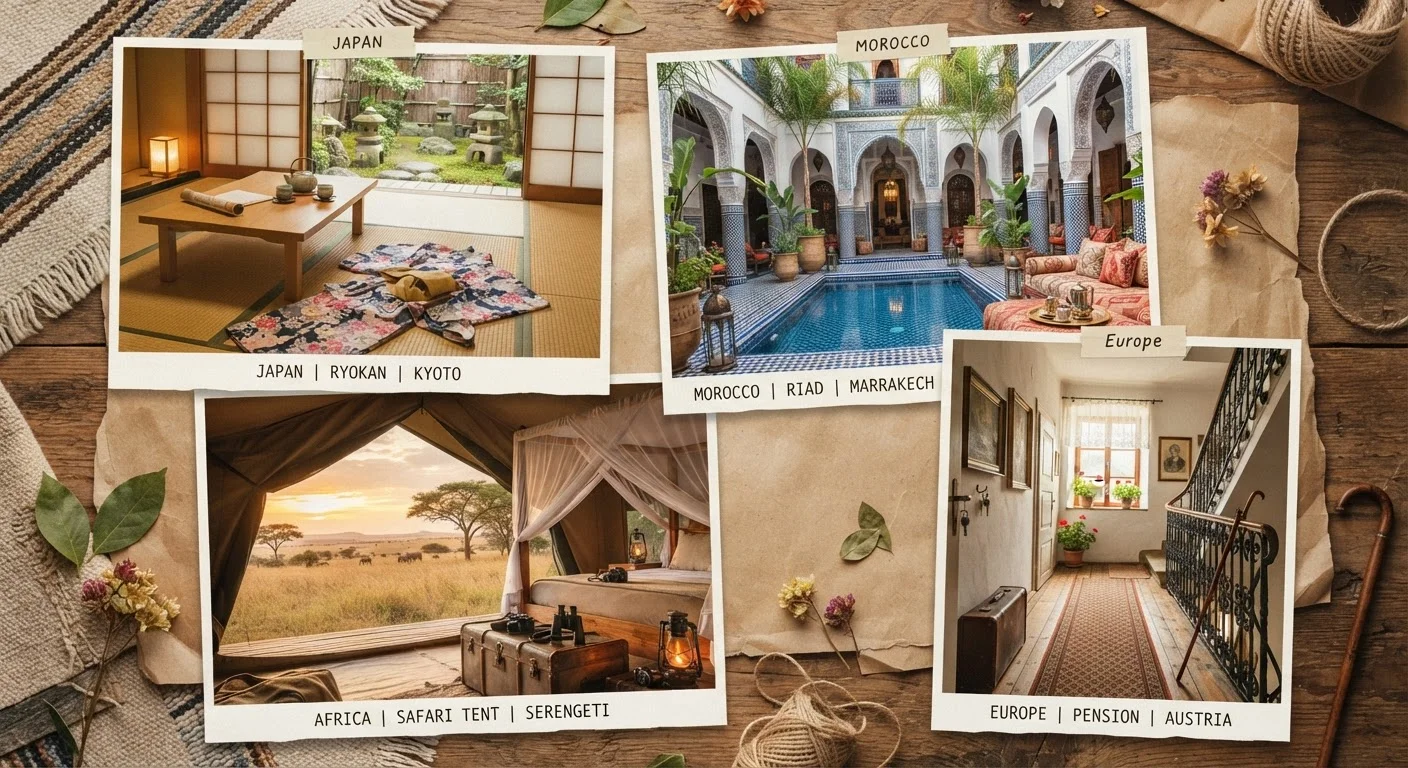
A traditional Japanese inn characterized by tatami-matted rooms, futon bedding, communal or private onsen (hot spring baths), and multi-course kaiseki meals. Etiquette is an integral part of the experience, including removing shoes at the entrance and wearing provided yukata robes.
Riad
A traditional Moroccan house or palace built around a central courtyard or garden, typically found in the medinas (old cities) of cities like Marrakech and Fes. Many riads have been converted into boutique guesthouses, featuring ornate tilework, fountains, and rooftop terraces.
Pensão / Pension
A small, family-operated guesthouse common in Portugal, France, Germany, and parts of Central Europe. Usually simpler and more intimate than a hotel, with breakfast often included. Service is personal and rooms are modest but comfortable.
Aparthotel
A hybrid property offering hotel-style services (reception, housekeeping) alongside self-contained apartment units with full kitchens. Popular for extended stays and widely available across European and Southeast Asian cities.
Glamping
Glamorous camping — a category of outdoor accommodation that provides a natural or remote setting alongside genuine comfort amenities such as proper beds, electricity, and ensuite facilities. Options include safari tents, yurts, geodomes, and treehouses.
Parador
A state-run hotel network in Spain that operates within historic buildings — castles, monasteries, and palaces — converted for modern hospitality. The network is managed by a government-owned company and is known for preserving architectural heritage alongside tourism.
Pousada
In Brazil, a small, locally owned inn or guesthouse ranging from simple beach lodgings to upscale boutique retreats. The term also applies to Portugal's historic inn network, similar in concept to Spain's Paradores.
Trullo
A traditional dry-stone dwelling with a conical roof, native to the Apulia region of southern Italy. Many trulli in the Alberobello area have been converted into holiday rentals, offering a distinctive architectural stay within a UNESCO World Heritage Site.
Experiences like ryokans or riads often connect travelers more directly to a destination's living culture than a standard hotel would. If that kind of immersive stay appeals to you, specialty travel experiences are worth exploring as a broader category.
For wildlife-focused travelers, the safari lodge deserves special mention. These properties — typically found in or near protected reserves — are designed around early morning and evening game drives, with architecture that minimizes environmental disruption. Accommodation ranges from permanent tented camps to elevated timber lodges. Our guide to Africa's major safari regions offers useful geographic context for planning around these stays.
Practical Considerations Across Accommodation Types
Beyond cultural appeal, each accommodation type comes with practical trade-offs travelers should weigh before committing.
190+
Countries with distinct regional lodging traditions
The UN World Tourism Organization recognizes accommodation as one of the most culturally variable aspects of global travel.
~1 in 5
International travelers choosing alternative accommodation
Data from the UNWTO indicates a growing share of international arrivals opt for non-hotel lodging, including hostels, rentals, and guesthouses.
Amenities and services vary dramatically. A ryokan includes multi-course meals and communal baths as part of the experience; a hostel dormitory offers a bed and typically shared kitchen access. Vacation rentals and aparthotels provide kitchen facilities but little or no daily housekeeping. Heritage guesthouses often have limited elevator access or smaller bathrooms by virtue of their age.
Booking flexibility also differs. Independent guesthouses and family-run inns may require direct contact, have stricter cancellation windows, or be unavailable on major booking platforms. Verifying cancellation and deposit policies before paying is always advisable, regardless of accommodation type.
If you're new to navigating hotel bookings in particular, the basics of booking a hotel provides a helpful primer on rates, room categories, and check-in expectations. For those who already stay in hotels regularly, making the most of a hotel stay covers the habits frequent travelers use to stay more comfortably. And if you're still figuring out what type of travel suits you most, matching your travel style to a destination can help narrow the field before you start searching for accommodation at all.
Verify Entry and Safety Conditions Separately
Accommodation information changes over time — properties close, ownership changes, and local regulations shift. Before traveling internationally, verify visa requirements, health advisories, and local safety conditions with official government sources such as the U.S. Department of State's travel advisory system. Do not rely solely on booking platform descriptions for up-to-date operational status.
The content on this site is for informational purposes only and is not a substitute for professional advice. Always consult a qualified professional for guidance specific to your situation.