

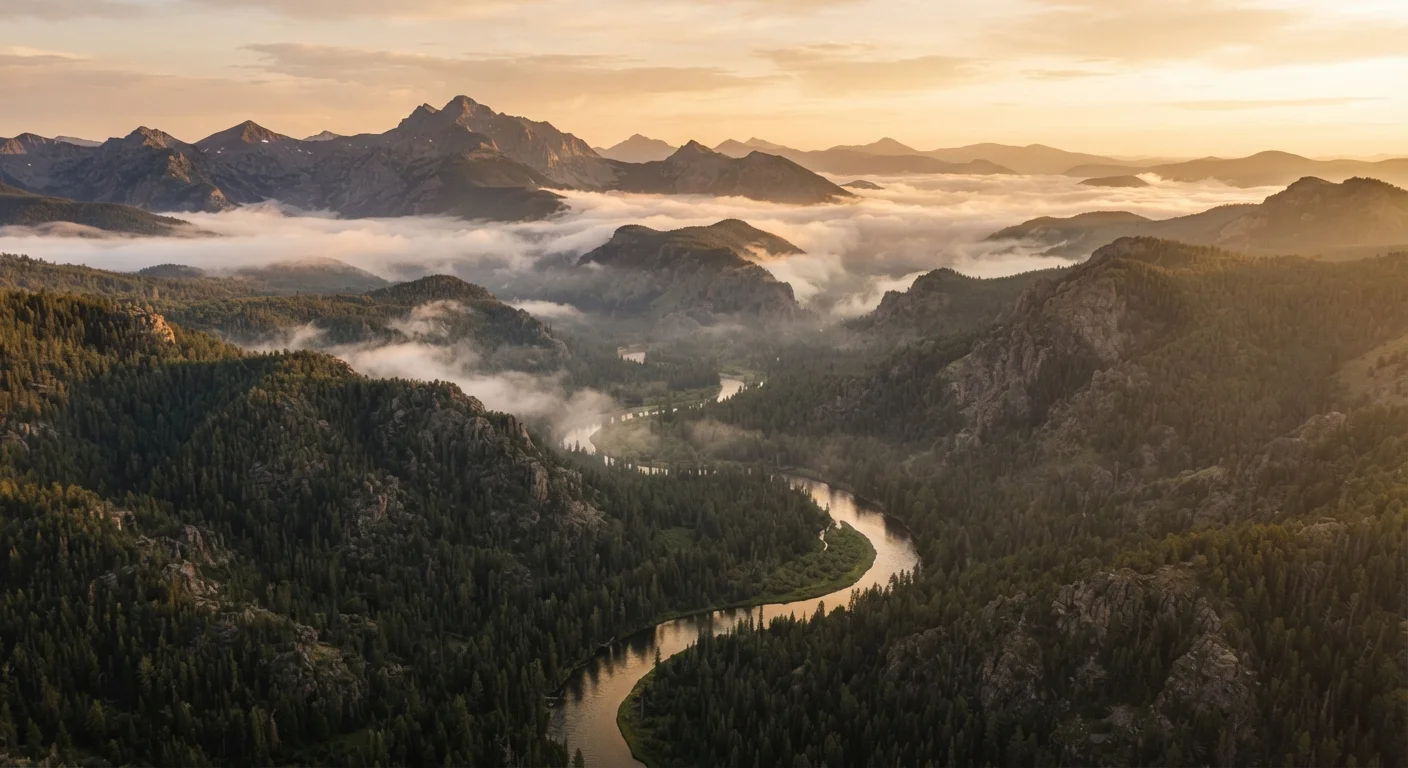
The Park System Has More to Offer Than Its Famous Headlines
Yellowstone and the Grand Canyon are extraordinary — no argument there. But with more than 60 designated national parks spread across the country, the US park system holds dozens of landscapes just as dramatic and far less crowded. The challenge for many travelers is simply knowing where to look.
Whether you're drawn to coastal fog, ancient forests, volcanic terrain, or surreal desert formations, there's likely a lesser-known national park that fits the bill — and where you won't need to book a campsite six months in advance just to secure a spot. Of course, conditions, availability, and access vary widely, so it's always worth verifying details with the National Park Service before you go.
For travelers curious about experiences that go well beyond the typical vacation itinerary, our piece on specialty travel formats explores how park visits can connect with geotourism and nature-immersion travel styles.
North Cascades National Park, Washington
Often called the American Alps, North Cascades contains more glaciers than any other park in the contiguous United States. Its jagged peaks, turquoise lakes, and dense old-growth forest sit just a few hours from Seattle, yet annual visitation is a fraction of what Mount Rainier sees. The park's remote terrain makes it a favorite among backpackers and climbers, though day hikers can access stunning viewpoints along the North Cascades Highway when it's open seasonally.
North Cascades holds more glaciers than any other park in the contiguous US.
Congaree National Park, South Carolina
Congaree protects the largest intact expanse of old-growth bottomland hardwood forest in the Southeast — a landscape of towering trees, floodplain wetlands, and remarkable biodiversity. Unlike most national parks, it's flat and accessible, with well-maintained boardwalk trails. The park is also an International Biosphere Reserve and a designated Dark Sky place, making it a compelling spot for stargazing. Paddle trips through the Cedar Creek canoe trail offer a quieter view of this underrated ecosystem.
Congaree is a Dark Sky preserve with old-growth forest and almost no crowds.
Isle Royale National Park, Michigan
Accessible only by boat or floatplane from the Upper Midwest, Isle Royale is consistently one of the least-visited national parks in the country — which is precisely its appeal. The island sits in Lake Superior and harbors a self-contained ecosystem, including wolves and moose whose population dynamics have been studied by researchers for decades. Visitors who make the effort find a genuinely wild place with excellent backcountry camping and kayaking. The park is closed in winter, so planning is essential.
Isle Royale is reachable only by boat or floatplane, making it one of the wildest parks in the system.
Great Basin National Park, Nevada
Tucked into eastern Nevada near the Utah border, Great Basin is among the most isolated national parks in the lower 48. Its centerpiece, Wheeler Peak, rises to nearly 13,000 feet and supports one of the world's oldest living tree species — the ancient bristlecone pine. The park also features Lehman Caves, a remarkably intact marble cavern accessible via ranger-led tours. Crowds are rare here, and the high elevation guarantees exceptional stargazing on clear nights. The American Southwest region surrounding it adds broader context for planning a multi-stop trip.
Great Basin's ancient bristlecone pines are among the oldest living organisms on Earth.
Guadalupe Mountains National Park, Texas
Just 35 miles from Carlsbad Caverns across the New Mexico border, Guadalupe Mountains contains the highest peak in Texas and preserves a striking mix of desert, canyon, and fossil reef terrain. It sees well under half a million visitors a year — a figure that makes it feel genuinely off the map compared to its neighbors. The fall foliage season in McKittrick Canyon is one of Texas's best-kept secrets, drawing vivid color that surprises most visitors expecting only desert browns.
McKittrick Canyon's autumn color display is one of Texas's most overlooked natural spectacles.
Voyageurs National Park, Minnesota
Voyageurs is a water-based park in a way few others are — most of its interior is accessible only by motorboat, houseboat, or canoe. Straddling the Minnesota-Ontario border, the park encompasses four large lakes and nearly 500 islands, with a boreal forest ecosystem that feels genuinely remote. Winter transforms it into a different experience entirely: ice roads open across the frozen lakes, making it one of the few parks in the country where snowmobiling and ice fishing are central activities. Travelers interested in ecologically driven experiences may find useful context in resources on specialty travel agencies that organize guided wilderness expeditions.
Voyageurs' interior is only reachable by water, giving it an isolation few parks can match.
Planning Your Visit to a Quieter Park
Finding a lesser-known park is only part of the equation. Timing matters enormously. Many parks that feel overlooked in summer become genuinely remote in early spring or late fall — and that solitude comes with tradeoffs like limited visitor services or unpredictable weather. Our guide to off-season travel pitfalls walks through what to watch for if you're planning a shoulder-season trip.
It's also worth tempering expectations shaped by photography. Dramatic images of park landscapes are typically taken under ideal conditions — specific seasons, early morning light, or with wide-angle lenses that compress scale. The reality can be just as beautiful, but different. Why popular tourist destinations look nothing like their photos offers a grounding perspective on that gap.
Check the America the Beautiful Pass
The National Park Service's America the Beautiful Annual Pass covers entrance fees at most national parks and federal recreation sites for a single calendar year. For travelers planning to visit multiple parks, it can represent meaningful savings. Passes are available at park entrances and through the NPS website — confirm current pricing and terms directly with the NPS before purchasing.
This article is for general informational purposes. Park access, fees, and reservations change frequently — always confirm current conditions directly with the National Park Service or official park websites before traveling.
The content on this site is for informational purposes only and is not a substitute for professional advice. Always consult a qualified professional for guidance specific to your situation.