

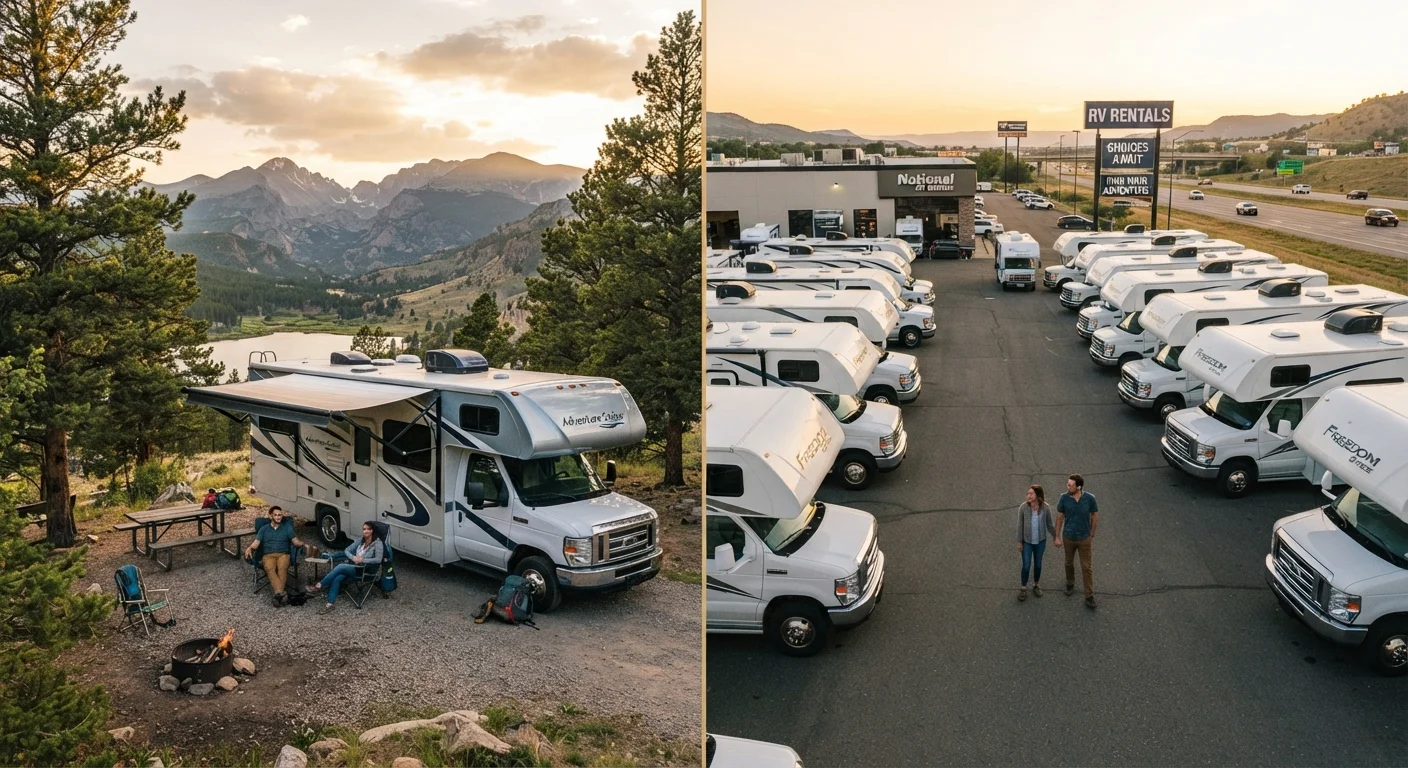
Our Verdict
Neither renting nor owning is universally the smarter path—it depends almost entirely on how often you travel, how much flexibility you value, and how prepared you are for the full cost of ownership. Renters gain freedom from maintenance burdens and the ability to try different rigs; owners gain convenience, personalization, and cost efficiency at high usage levels. Honest self-assessment of your travel habits is the most important calculation you can make.
Renting suits occasional campers and first-timers, while ownership makes the most sense for frequent travelers who camp 30 or more nights per year and are ready for the responsibilities that come with it.
The Core Question: How Often Will You Actually Use It?
The renting-vs-owning debate for RVs hinges less on ideology and more on a single honest number: how many nights per year do you realistically expect to camp? Industry observers generally suggest that somewhere around 30–50 nights annually is the range where ownership begins to compete economically with renting—though that threshold shifts depending on the type of rig, financing terms, and local storage costs.
Below that threshold, the math typically favors renting. Above it, ownership can start to make financial sense, particularly if you avoid financing and account carefully for all ongoing expenses. For a deeper look at what those ongoing costs actually include, see the hidden costs of RV ownership most buyers overlook.
Before weighing the pros and cons, it helps to have a realistic picture of your travel intentions—not your aspirational ones.
The Case for Renting
Renting removes nearly every long-term financial commitment from the equation. You pay for what you use, return the vehicle when you're done, and carry no responsibility for storage, off-season maintenance, or depreciation.
No long-term financial commitment or depreciation risk
Renters pay only for the trips they take and return the vehicle without absorbing any resale loss, which can be substantial on larger motorhomes.
Try different RV types before buying
A renter can experience a Class C one summer and a travel trailer the next, gaining real-world data before making a purchase decision.
No storage, insurance, or off-season maintenance costs
These recurring expenses are included in the rental or fall on the rental company, eliminating several hundred to thousands of dollars in annual fixed costs.
Availability of newer, well-maintained units
Rental fleets are typically refreshed on a regular cycle, meaning renters often access recent model years with current safety features and fewer mechanical unknowns.
No towing vehicle requirement for towable rentals
Many rental companies offer motorhomes that are drive-ready, sidestepping the need to own or upgrade a tow vehicle—a significant added cost for towable ownership.
There's also a practical testing dimension. RV styles vary enormously—Class A motorhomes, travel trailers, fifth wheels, Class B campervans—and what appeals on paper can feel very different on a two-week trip. Renting lets you evaluate a rig type before a five- or six-figure purchase. See how different configurations compare in our overview of motorhome vs. towable RV setups.
The Case for Owning
Ownership makes sense when your travel habits are consistent, your storage situation is workable, and you want the rig ready on your schedule—not a rental company's availability calendar. Frequent travelers who camp many weekends plus extended summer trips can spread fixed costs across enough nights to make ownership economically competitive.
Higher per-night cost at frequent usage levels
Renters who camp 40 or more nights annually will often spend more in total than owners who have spread fixed costs across heavy use.
Significant upfront purchase price and financing costs
Entry-level travel trailers start in the low five figures; larger motorhomes can exceed $100,000, and financing adds interest charges on top of that.
Ongoing storage, insurance, and maintenance expenses
These costs continue year-round regardless of how much you travel, increasing the effective cost per night if the rig sits idle.
Depreciation erodes resale value over time
RVs generally depreciate significantly in the first few years of ownership, meaning sellers rarely recover what they paid unless they purchased used at a significant discount.
Maintenance and repair responsibility falls on the owner
Roof seals, plumbing, appliances, tires, and slide-out mechanisms all require attention, and repair costs and scheduling fall entirely to the owner.
Beyond economics, owners cite personalization as a strong draw. You can install the gear you want, stock it between trips, and leave for a weekend without packing from scratch. For those considering full-time or near-full-time travel, full-time RV living carries its own realities worth understanding before committing.
Ownership Doesn't Mean Always Available
A common assumption is that owning an RV means you can leave whenever you want—and that's largely true, but availability still depends on where you store the rig and whether it's been prepped after sitting. Owners who store off-site should budget 30–60 minutes of retrieval and setup time each trip, and rigs left dormant for weeks may need systems checks before hitting the road. This is a real but manageable reality, not a dealbreaker.
Financial Realities on Both Sides
Rental rates vary widely by region, season, and rig class—but budgeting a few hundred dollars per night for a Class A or well-equipped travel trailer is not unusual during peak summer periods. Over 30 nights, that adds up quickly.
~$175–$275
Typical nightly rental rate, mid-size RV
Rental platform data suggests mid-range travel trailers and Class C motorhomes commonly fall in this band during peak summer season, varying by region and unit.
$6,000–$10,000+
Estimated annual ownership cost beyond purchase
Industry analyses of RV ownership typically cite storage, insurance, routine maintenance, and campsite fees totaling this range annually, before major repairs.
Ownership costs are less visible but persistent. A financed RV carries interest charges on top of the purchase price. Insurance, which differs structurally from both auto and homeowners policies—see what RV insurance actually covers—adds several hundred to over a thousand dollars annually depending on coverage and rig type. Storage for rigs that can't be parked at home often runs $100–$300 per month in many metro areas. Maintenance, repairs, and eventual depreciation complete the picture.
Budgeting for RV ownership benefits from the same discipline applied to any major recurring expense. The budgeting basics framework—tracking all ownership costs monthly rather than just the loan payment—gives a clearer view of true cost per night used.
The content on this site is for informational purposes only and is not a substitute for professional advice. Always consult a qualified professional for guidance specific to your situation.