

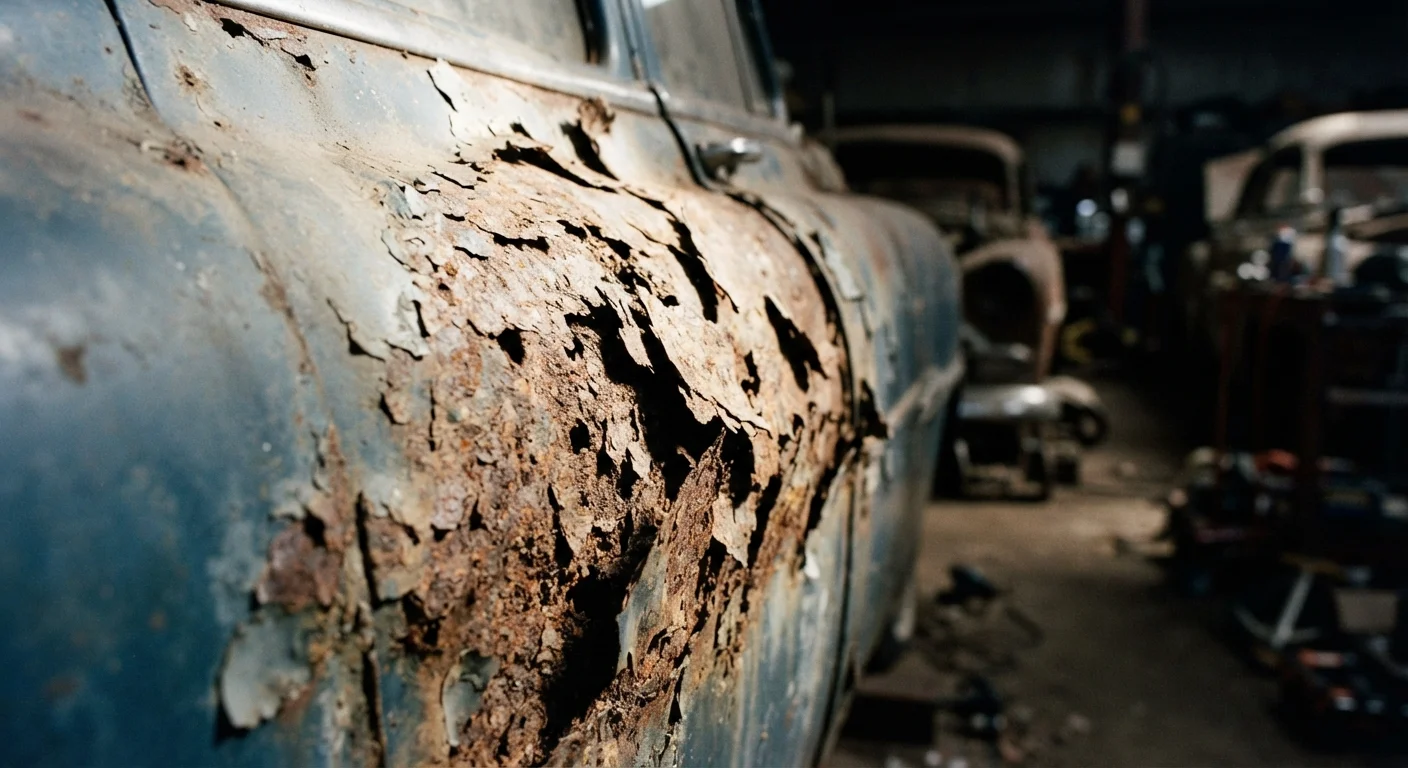
Why Rust Always Costs More Than Expected
Classic car restoration is one of the few pursuits where optimism is genuinely dangerous to your wallet. Corrosion — iron oxide formed when steel meets moisture and oxygen — does not respect budgets, timelines, or wishful thinking. It works invisibly, traveling through seams and panel overlaps long before it breaks through the surface, and by the time it's visible to the naked eye, the damage already extends far beyond what can be seen.
The fundamental problem is that corrosion is a discovery process. No estimate written before metal is cut can be fully accurate, because the true scope only becomes clear once disassembly begins. Restorers who don't account for this reality — structurally and financially — consistently find themselves mid-project with a car in pieces and a budget already exhausted. This is one of the most important distinctions between a project that gets completed and one that gets sold, unfinished, for a fraction of what was already spent.
Never Rely on a Surface-Only Inspection
A quick walk-around of a classic car in a driveway or showroom will not reveal corrosion hiding under carpet, inside door skins, behind trim panels, or along inner rocker sills. Even experienced buyers are surprised when a car goes up on a lift. Insist on a full undercarriage inspection — and budget accordingly before you commit to a purchase price or restoration quote.
Where Rust Hides on Classic Vehicles
Understanding the typical hiding spots on vintage American and imported classics helps restorers inspect more effectively and budget more honestly. Some of the most consistently problematic areas include:
- Floor pans: Moisture trapped under carpet — from rain intrusion, failed weatherstripping, or decades of condensation — attacks floor pans from both sides simultaneously. Full replacement can be substantial. Whether you're pursuing a period-perfect concours build or a restomod approach, sound floors are non-negotiable.
- Inner and outer rocker panels: Rockers catch road spray and hold moisture against the body. The outer rocker is visible; the inner is structural and often far worse.
- Trunk floors and spare-tire wells: Water enters through failed tail-light gaskets and trunk seals, pooling in the spare-tire well and spreading outward.
- Frame rails (body-on-frame vehicles): Interior surfaces of frame rails trap moisture and are rarely treated from the factory. Pinhole rust through the interior wall is common on vehicles from the 1960s through the 1980s.
- Torque boxes and firewall corners: These structural connectors absorb tremendous stress and are expensive to fabricate and weld correctly.
How a car was stored plays a significant role in how severe hidden corrosion becomes. Vehicles stored improperly — on dirt floors, in humid garages, or without moisture barriers — accelerate corrosion dramatically. Proper off-season storage practices can slow or prevent many of these failure points from developing.
Common Mistakes Restorers Make — and How to Avoid Them
The errors below account for most of the budget overruns, failed restorations, and recurring rust problems that plague classic car projects. Recognizing them before you commit to a car or a scope of work can save tens of thousands of dollars.
Judging rust severity by surface appearance alone.
Why it happens: Shiny paint and solid-looking bodywork give buyers a false sense of security, and many restorers assess a car visually without probing beneath trim, carpet, or undercoating.
Underestimating how far corrosion spreads beyond the visible damage.
Why it happens: Rust travels along moisture pathways — seams, overlapping panels, and spot-weld flanges — so a small surface patch often signals corrosion that has migrated well beyond the obvious spot.
Using filler or coating to hide rust rather than removing it.
Why it happens: Body filler and spray-on undercoating are faster and cheaper than metal repair in the short term, making them tempting solutions when budgets are tight or timelines are pressing.
Failing to inspect hidden structural areas — floor pans, trunk floors, and torque boxes.
Why it happens: These areas are covered by carpet, spare-tire wells, and trunk liners, making them easy to overlook during a casual inspection. Sellers may also not volunteer the information.
Setting a restoration budget without a rust-specific contingency.
Why it happens: Enthusiasts focus on the exciting elements — engine rebuilds, interior, chrome — and treat metalwork as a fixed, knowable cost rather than a variable one that expands with discovery.
Structural Rust Is a Safety Issue
Rust that compromises frame rails, unibody seams, or floor pans is not cosmetic — it directly affects crash protection and vehicle rigidity. No amount of paint or filler can substitute for proper metal repair or replacement. If a shop finds structural corrosion, treat it as a mandatory repair, not an optional line item.
After rust repairs are completed, understanding the full breakdown of what your shop charges — including metal fabrication labor, panel sourcing, and weld-through primer — is essential. Reading a repair estimate line by line prevents surprise charges and helps you verify the work scope matches what was actually done.
It's also worth noting that deferred maintenance on a running vehicle and deferred rust treatment on a restoration project share the same economic flaw: the problem compounds over time. Skipping scheduled maintenance on any vehicle accelerates the conditions — moisture ingress, failed seals, degraded coatings — that allow corrosion to take hold in the first place.
70%+
Restorations that exceed initial rust-repair budget
Industry restoration professionals commonly report that the majority of classic car projects encounter significantly more corrosion than was initially estimated during the planning phase.
$5,000–$20,000+
Typical range for full floor pan replacement
Depending on vehicle make, panel availability, and labor market, replacing both floor pans on a classic vehicle can reach or exceed this range at a reputable restoration shop.
The content on this site is for informational purposes only and is not a substitute for professional advice. Always consult a qualified professional for guidance specific to your situation.