

Why Storage Causes More Damage Than Miles
Many classic car owners instinctively worry about road hazards — gravel chips, rain, traffic. But ask any experienced restorer and they'll tell you the same thing: vehicles left sitting improperly for a single winter can sustain more damage than thousands of carefully driven miles. Rubber seals dry out, fuel systems varnish, moisture attacks bare metal, and rodents find their way into wiring harnesses with surprising speed.
The difference between a car that emerges from storage ready to drive and one that requires significant remediation often comes down to preparation. Whether you're storing a vehicle for three months or a full year, the same principles apply. This guide outlines the proven practices that serious classic car owners follow to protect their investments through every off-season.
Fuel, Fluids, and Battery: The Systems That Fail First
Modern fuel — particularly ethanol-blended gasoline — degrades significantly within 30 to 60 days. As it breaks down, it leaves behind varnish deposits that clog carburetors, injectors, and fuel lines. Adding a fuel stabilizer formulated for classic vehicles and running the engine long enough to circulate the treated fuel throughout the system is one of the most important pre-storage steps you can take.
Beyond fuel, consider changing the engine oil before storage rather than after. Used oil contains combustion acids that corrode internal bearing surfaces during long idle periods. Coolant should also be tested for freeze protection appropriate to your storage climate. For vehicles with drum or disc brakes, inspect the brake fluid — it absorbs moisture over time, which lowers its boiling point and can accelerate internal corrosion in the calipers and wheel cylinders.
On the electrical side, a fully discharged battery can freeze and crack in cold storage. A quality battery tender — a device that maintains a safe charge without overcharging — keeps the battery healthy and eliminates the hassle of a dead start when spring arrives. Disconnect the negative terminal if a tender isn't available.
30–60
Days until untreated gasoline begins to degrade
Ethanol-blended fuel can begin leaving varnish deposits within this window, according to fuel system specialists and stabilizer manufacturers.
~80%
Of classic car battery failures linked to storage discharge
Industry estimates from battery manufacturers suggest the majority of premature classic car battery failures stem from deep discharge during storage rather than road use.
Tires, Seals, and the Threat You Can't See
Flat-spotting is a real concern for any vehicle stored for more than a few weeks. When a tire sits stationary under load, the contact patch can develop a temporary — or in severe cases, permanent — flat area. Inflating tires to the upper end of the manufacturer's recommended range (never beyond the maximum sidewall rating) reduces this risk. Some owners use jack stands to take weight off the tires entirely, though this approach requires secure placement and is best done with guidance from a qualified mechanic if you're unfamiliar with proper support points.
Rubber components — door seals, window gaskets, and hoses — dry out and crack when exposed to low humidity or temperature swings over extended periods. Applying a rubber conditioner before storage helps slow this process. Pay particular attention to the condition of seals around doors and windows; moisture intrusion through failing seals is a primary pathway for the hidden corrosion that surprises so many restorers.
Apply Rubber Conditioner Before You Close the Garage
Door seals, window gaskets, and hose exteriors lose plasticizers over time when left untreated in dry or cold environments. A rubber conditioner applied before storage slows this hardening process and reduces the likelihood of cracking. This step takes under 15 minutes and protects components that are often expensive or difficult to source for vintage vehicles.
Choosing and Preparing the Right Storage Environment
Not all storage spaces are equal. An ideal environment is dry, well-ventilated, and maintains a relatively consistent temperature — wide temperature swings drive condensation cycles that deposit moisture on metal surfaces. Concrete floors can wick ground moisture; placing a vapor barrier (a sheet of heavy plastic) beneath the vehicle is a simple, inexpensive precaution.
Rodents are a genuine hazard in nearly any storage setting. Mice in particular seek warmth and nesting material, and a classic car's wiring, insulation, and upholstery offer both. Blocking the exhaust outlet and air intake with steel wool or purpose-made mesh covers, along with placing rodent deterrents around the perimeter, significantly reduces this risk. Never use mothballs inside the vehicle — the vapors can damage rubber and plastic components and leave lingering odors that are difficult to remove.
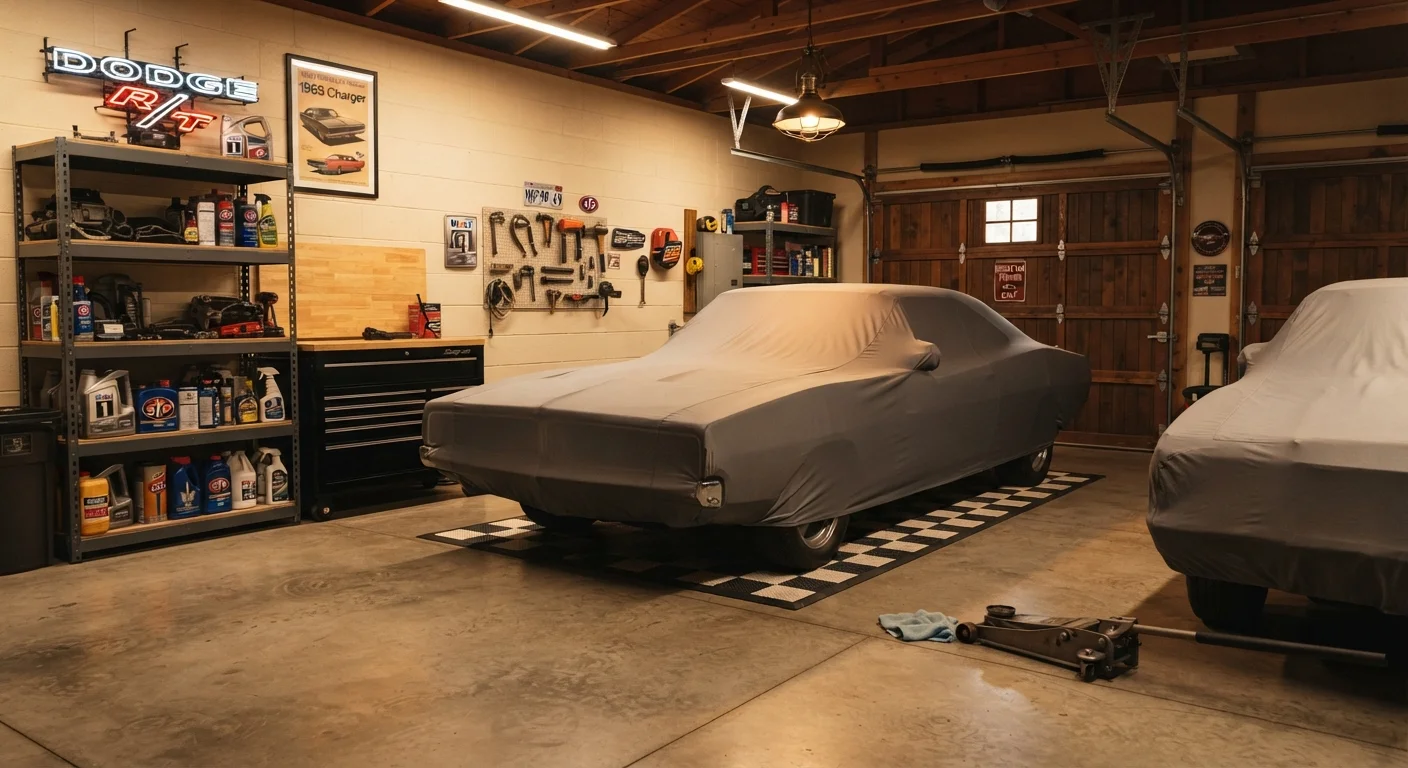
Choose a cover designed specifically for indoor storage: breathable fabric prevents moisture from being trapped against the paint, unlike plastic tarps, which create condensation. The cover should fit the vehicle's body lines without excessive looseness that allows it to abrade the surface during temperature-driven shifts.
If climate-controlled storage is available and within your budget, it substantially reduces the risks associated with humidity and temperature fluctuation — an important consideration especially in coastal or high-humidity regions where corrosion accelerates. For guidance on parallel seasonal preparation thinking, the approach used for winterizing an RV shares many of the same humidity and seal-protection principles.
Coming Out of Storage: Don't Skip the Re-Commissioning Steps
Storage preparation works best when it's paired with a structured re-commissioning process in the spring. Before starting the engine after a long storage period, check that all fluids are at proper levels, inspect belts and hoses visually for new cracking or stiffness, and remove any intake or exhaust covers you placed during storage.
Start the engine and let it reach operating temperature before driving. Listen and watch carefully — minor fluid seeps, unusual sounds, or hesitation during warm-up are easier and less expensive to address before a vehicle is back in regular use. A pre-drive inspection checklist designed for road trips translates well to re-commissioning, covering many of the same systems.
Owners who use a classic for both shows and occasional driving may find the guidance in balancing a show car versus a driver useful when determining how deeply to prepare for storage versus how aggressively to recommission for the season.
“The cars that survive the decades in the best shape are rarely the ones driven the least — they're the ones stored the most carefully. Neglect during the off-season compounds silently in ways that a season of driving never does.”
— Classic Car Restoration Council, Industry body representing professional restorers and preservation specialists
The content on this site is for informational purposes only and is not a substitute for professional advice. Always consult a qualified professional for guidance specific to your situation.