

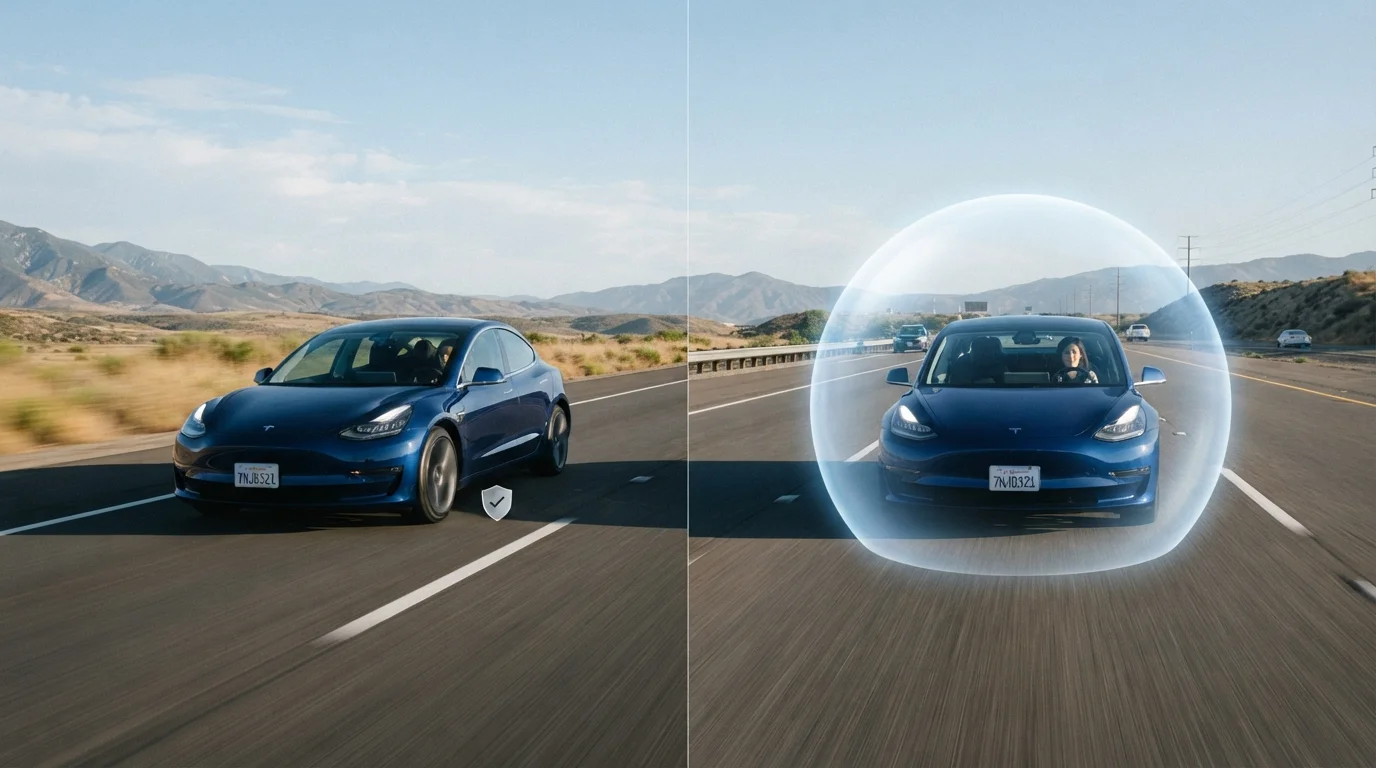
Option A
Liability-Only Coverage
The legally required minimum that protects others, not your own vehicle.
Best for: Drivers with older or lower-value vehicles who can absorb the cost of repairing or replacing their own car out of pocket.
Option B
Full Coverage
A broader package that adds protection for your own vehicle on top of liability.
Best for: Drivers with newer, financed, or higher-value vehicles who want protection against collision, theft, weather, and other physical damage.
What Each Policy Structure Actually Covers
Auto insurance isn't one-size-fits-all — it's a set of distinct coverage types that can be combined or kept minimal. Understanding what each layer actually does is the foundation of any smart coverage decision.
Liability coverage is the core required by law in nearly every U.S. state. It pays for bodily injury and property damage that you cause to other people in an accident. If you run a red light and damage another driver's car, your liability insurance compensates them. What it won't do is pay for your own vehicle's repairs or your own medical bills.
Full coverage is not a single, standardized policy — it's an industry shorthand for a combination that typically includes liability plus collision coverage (which pays for damage to your vehicle from an accident, regardless of fault) and comprehensive coverage (which covers non-collision events like theft, hail, flooding, or a fallen tree). For a closer look at how those two components differ from each other, see our breakdown of collision vs. comprehensive.
It's worth noting that even full coverage policies don't automatically include protections like uninsured motorist coverage or personal injury protection. Those are typically separate add-ons — and significant gaps can exist without them. Many drivers discover these gaps only after a claim.
| Criterion | Liability-Only | Full Coverage |
|---|---|---|
| Covers damage to others | Yes | Yes |
| Covers your own vehicle (collision) | No | Yes |
| Covers theft, weather, non-collision events | No | Yes (via comprehensive) |
| Required by state law | Yes (minimum requirement) | No (lender may require) |
| Typical premium cost | Lower | Higher |
| Includes deductible | No | Yes (for collision/comprehensive) |
| Suitable for financed vehicles | Generally not permitted | Yes — typically required |
The Key Factors That Drive the Decision
There's no universal answer to which option is right — but several concrete factors consistently shape that decision.
Your Vehicle's Market Value
This is often the deciding variable. If your car's current market value is relatively low, the maximum payout from a collision or comprehensive claim is capped at roughly that amount — minus your deductible. When annual premiums for those coverages approach a significant fraction of what you'd actually receive in a worst-case claim, the math can tip toward liability-only.
Whether Your Vehicle Is Financed or Leased
If you still owe money on your car, your lender almost certainly requires full coverage. This protects their financial interest in the vehicle. Dropping collision or comprehensive without their approval typically violates your loan agreement and can trigger forced-placement insurance — a more expensive policy the lender purchases on your behalf.
Your Ability to Self-Fund a Loss
Liability-only is essentially a bet that you can cover your own vehicle's repair or replacement if something goes wrong. For drivers with limited savings or no alternative transportation, that exposure can be significant. Full coverage converts that unpredictable risk into a known, manageable premium cost.
Your Deductible Choice
Full coverage costs vary substantially based on the deductibles you select. A higher deductible reduces your premium but increases what you pay out of pocket in a claim. Choosing a deductible you couldn't realistically afford defeats the purpose of having the coverage. This trade-off closely resembles decisions in other insurance contexts — similar logic applies when a low premium creates unexpected out-of-pocket exposure.
~13%
Estimated uninsured U.S. drivers
The Insurance Research Council has estimated that roughly 1 in 8 drivers on American roads carries no auto insurance, underscoring the limits of relying on others' liability coverage.
~$500–$1,500+
Typical annual full coverage premium range
Premium costs vary widely based on location, driving record, vehicle type, and deductible level; these figures are illustrative of the general range, not a guarantee.
What Neither Option Covers — and Where to Look Next
Both policy structures leave meaningful gaps that are worth understanding before assuming you're protected.
Liability coverage, by design, protects other people from you. Your own injuries in an accident may require separate medical payments coverage or personal injury protection (PIP), depending on your state. The distinctions between those options are explained in our comparison of PIP and MedPay.
Full coverage doesn't shield you from drivers who carry no insurance or too little of it. If an uninsured driver causes an accident, your collision coverage would pay for your car — but medical costs and other losses may go unaddressed unless you've added uninsured/underinsured motorist coverage. Learn how UM and UIM coverage fills that gap.
Neither standard option typically covers rental reimbursement, roadside assistance, or gap insurance (which covers the difference between what you owe on a loan and what a totaled car is worth). These are add-ons — and whether they're worth including depends on your situation.
State Minimums Are a Floor, Not a Recommendation
Every state sets minimum liability limits, but those floors are often quite low — sometimes insufficient to cover the full cost of a serious accident. Drivers who cause significant damage beyond their policy limits can be held personally responsible for the remainder. It's worth understanding what your state's minimums actually are and whether they reflect realistic accident costs in your area.
This article is for general informational purposes only and does not constitute personalized insurance or financial advice. Coverage terms, requirements, and availability vary by state and insurer. Consult a licensed insurance professional and review your actual policy documents before making coverage decisions.
The content on this site is for informational purposes only and is not a substitute for professional advice. Always consult a qualified professional for guidance specific to your situation.