

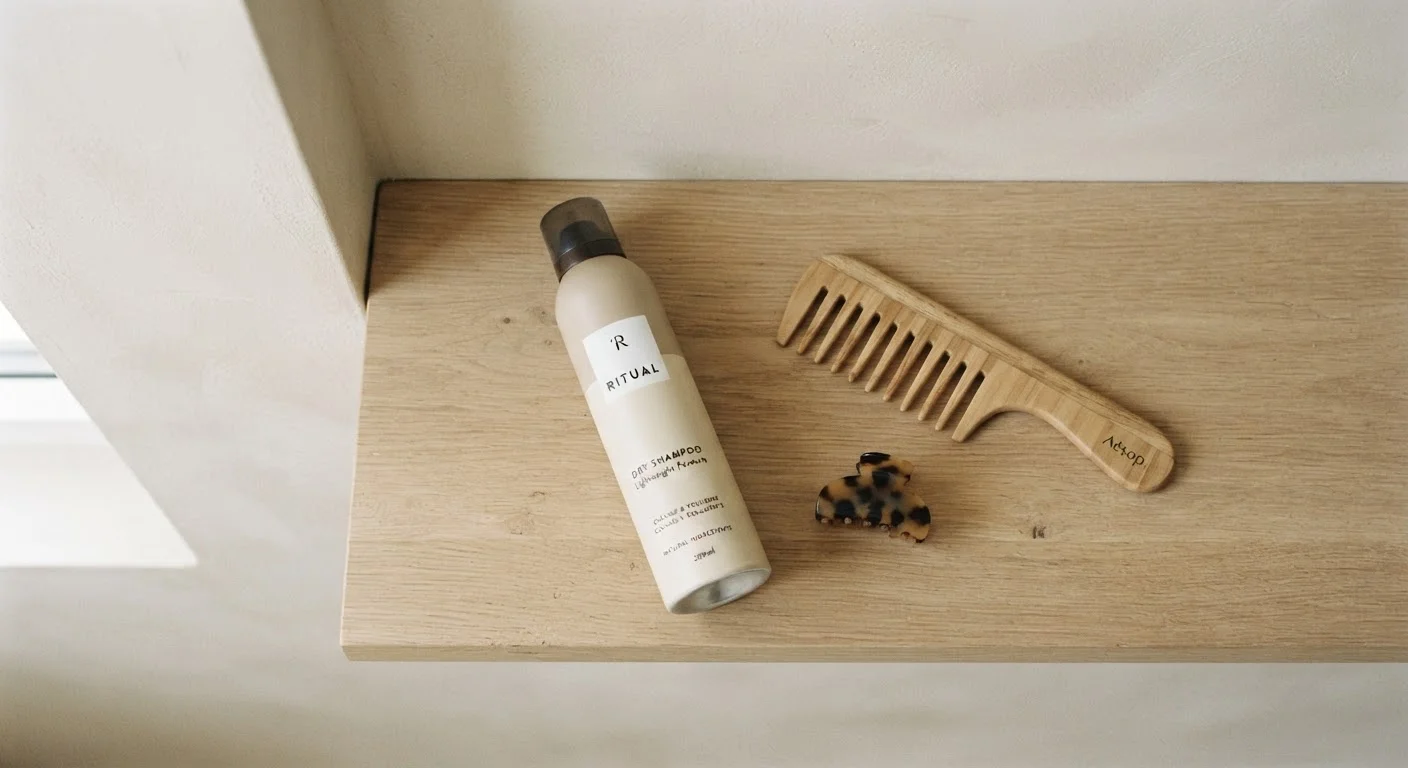
Our Verdict
Dry shampoo earns its place in a well-rounded hair routine when used strategically — meaning a couple of times per week at most, followed by a thorough wash. Problems arise when it becomes a daily crutch that delays proper scalp cleansing for days on end, leading to buildup, irritation, and potentially slower-growing, weaker strands over time. Used with awareness, it's a genuinely useful tool; leaned on too heavily, it quietly creates the scalp issues it seems to solve.
Best for people who wash their hair two to three times a week and want a quick refresh between wash days, particularly those with fine or oily hair types.
What Dry Shampoo Actually Does
Dry shampoo doesn't clean your hair — it's important to clear that up right away. What it does is absorb sebum (your scalp's natural oil) and any surface sweat using a starch- or clay-based powder, usually delivered via aerosol spray or a loose powder applicator. The result is hair that looks and feels less greasy without touching a drop of water.
Most formulas also add subtle friction to the hair shaft, which creates the appearance of volume and texture. That's why dry shampoo is beloved by people with fine, flat hair — it delivers a lift that regular washing sometimes strips away. For a deeper look at how scalp oil production fits into overall hair health, see our article on scalp health fundamentals.
Understanding what it actually does — and doesn't do — sets realistic expectations and helps you decide how it fits into your routine.
The Real Advantages
There are legitimate, practical reasons dry shampoo has become a bathroom staple for millions of Americans. Here's where it genuinely earns its keep.
Extends time between washes without sacrifice
For people with oily scalps, dry shampoo can buy an extra day or two before hair looks lank — which is actually beneficial, since washing too frequently can strip the scalp's natural moisture balance.
Adds volume and texture instantly
The powder particles coat the hair shaft and create friction, giving fine or limp hair noticeable lift. This is particularly useful on day-two hair when natural oils have flattened the style.
A genuine time-saver on busy mornings
A 60-second application replaces a 30-minute wash-and-dry cycle, making it practical for early workouts, travel, or any situation where a full wash isn't realistic.
Helps preserve color-treated hair longer
Frequent washing is one of the fastest ways to fade color-treated strands. Using dry shampoo to reduce wash frequency can meaningfully extend the vibrancy of a dye job between salon visits.
Useful for hair types that shouldn't be washed daily
Coily and curly hair textures are generally advised to wash less frequently to retain moisture. Dry shampoo gives a refresh option on non-wash days without disrupting curl pattern.
~2–3x
Typical wash frequency reduction with dry shampoo
Hair care surveys consistently find that dry shampoo users report washing their hair roughly two to three times less per week than non-users.
68%
Users who apply dry shampoo at least twice a week
Consumer research on dry shampoo habits in the U.S. suggests the majority of regular users apply it multiple times per week, raising buildup risk for those not following with regular washes.
If you're still figuring out how often your hair actually needs washing, our guide on how often to wash your hair can help you dial that in before leaning on dry shampoo as a bridge.
The Drawbacks You Should Know About
For all its convenience, dry shampoo comes with real trade-offs — particularly when it becomes a go-to rather than an occasional shortcut.
Causes product buildup on the scalp
Starch and clay particles don't dissolve — they accumulate on the scalp surface and in follicle openings. Without thorough cleansing, this buildup can contribute to clogged follicles and a dull, heavy sensation at the roots.
Can trigger or worsen scalp irritation
Some aerosol formulas contain alcohol, synthetic fragrance, or propellants that sensitize the scalp over repeated use, leading to itching, flaking, or a contact dermatitis-like reaction in people with reactive skin.
Does not actually cleanse the scalp
Dead skin cells, sweat, and environmental pollutants still accumulate with dry shampoo use — the scalp looks fresher but isn't actually clean. Treating it as a true cleansing step can delay scalp hygiene.
May contribute to follicle stress with overuse
Some trichologists (hair and scalp specialists) note that prolonged, heavy buildup around follicles can create an environment that stresses the follicle, though research specifically on dry shampoo and hair loss remains limited and evolving.
White residue can be visible on darker hair
Many powder-based formulas show up clearly on dark or black hair unless worked in very thoroughly, which can look unwashed rather than refreshed.
Aerosol Ingredients Worth Checking
Some aerosol dry shampoos have historically contained ingredients — including certain propellants — that have drawn regulatory attention. The U.S. Food and Drug Administration has issued guidance on aerosol cosmetic products in recent years. It's worth reviewing the current ingredient list on any product you use regularly and consulting a dermatologist if you experience persistent scalp irritation. Our guide to reading hair product labels can help you evaluate what you're looking at.
If you're curious about what's actually in your dry shampoo, our primer on reading hair product labels walks through how to decode ingredient lists without getting lost in the jargon.
How to Use It Without Creating Problems
The goal is to get the convenience without the scalp consequences. A few practical habits make a real difference:
- Hold the can 6–8 inches from your scalp when spraying. Too close and you get patchy white residue and concentrated buildup in one spot.
- Apply to roots only, not mid-lengths or ends, where it adds unnecessary dryness without benefit.
- Work it in before it sets — give it 30 seconds, then massage with fingertips and brush through so the powder distributes and lifts rather than sitting on the scalp surface.
- Cap usage at two to three applications between proper washes. More than that, and buildup accumulates faster than you can see it.
- Follow with a thorough wash using a clarifying shampoo periodically to clear residue. This matters more for dry shampoo users than for those who skip it entirely.
Dry shampoo fits naturally into a broader hair care plan. If you're building a hair care routine from scratch, think of it as a between-wash tool rather than a foundation of the routine itself.
The content on this site is for informational purposes only and is not a substitute for professional advice. Always consult a qualified professional for guidance specific to your situation.