

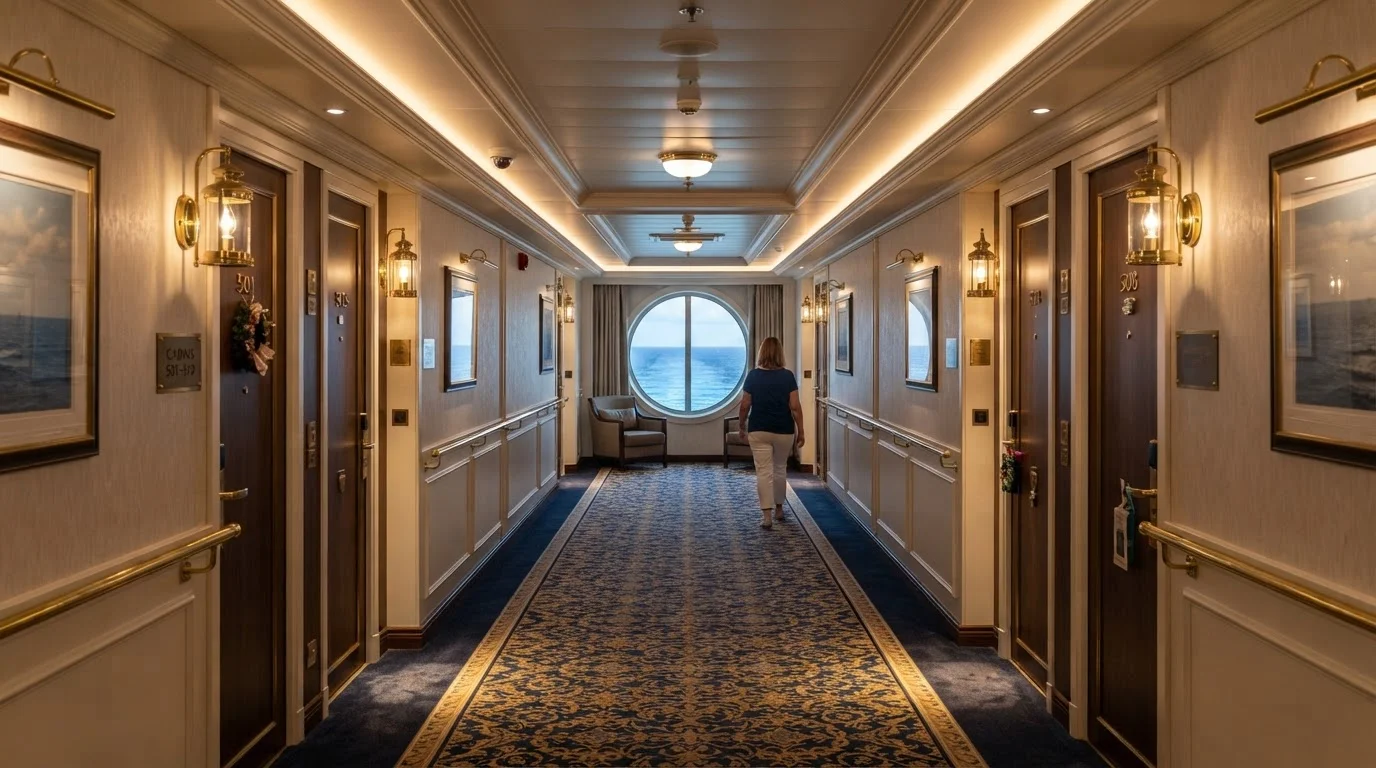
The Four Main Cabin Categories
Every cruise ship organizes its staterooms into a hierarchy of roughly four tiers. Understanding what each one actually delivers — not just the marketing language — helps you spend wisely and arrive without surprises.
| Most budget-friendly category | Interior cabin |
| Most popular category booked | Balcony cabin (Widely reported by major cruise lines) |
| Typical interior cabin size | 150–185 sq ft |
| Typical balcony cabin size | 185–230 sq ft plus balcony |
| Suite size range | 300–1,400+ sq ft depending on ship |
| Accessibility cabins | Available in all categories on most modern ships |
Interior cabins have no window. They're dark, quiet (surprisingly good for sleep), and the smallest rooms on the ship. If your plan is to spend days in port and evenings at the theater or dining room, an interior cabin keeps costs down without meaningfully affecting your experience.
Oceanview cabins add a sealed porthole or picture window. Natural light matters more than people expect over a seven-day sailing, and this category costs noticeably less than a balcony while still connecting you to the sea visually. Watch for "obstructed view" variants — those sell cheaper because a lifeboat or overhang cuts into the sightline.
Balcony cabins are the most commonly booked category for good reason. A private outdoor space lets you watch port arrivals, feel salt air at sunrise, and decompress without going to a public deck. On itineraries like Alaska or Norway, where scenery is continuous and dramatic, a balcony pays for itself in sheer moments. On a party-focused Caribbean sailing where you're off the ship most days, it may not.
Suites vary enormously. Entry-level mini-suites may add only a sitting area and a slightly larger bathroom. Full suites and owner's suites on premium lines can include multiple rooms, dedicated concierge service, and private dining. The perks bundled with suites — priority embarkation, specialty restaurant access, sometimes drinks and gratuities — can offset the higher sticker price depending on how you cruise.
Interior Cabin
A stateroom with no window or outside view. Typically the smallest and least expensive cabin category on any cruise ship.
Oceanview Cabin
A stateroom with a fixed, sealed porthole or picture window looking out to sea. Provides natural light but no outdoor access.
Balcony Cabin
A stateroom with a private outdoor deck attached to the room, usually furnished with at least two chairs and a small table. Also called a veranda cabin.
Suite
A premium cabin category offering significantly more square footage, a separate living area, and often exclusive perks such as priority boarding, dedicated dining, or butler service.
Guarantee Cabin
A booking where you pay for a category but the cruise line assigns the specific cabin later, sometimes resulting in an upgrade.
Obstructed View
A cabin whose window or balcony view is partially blocked by a lifeboat, railing, or structural element. Usually sold at a discount within its category.
Choosing the Right Cabin for How You Actually Travel
Cabin selection is ultimately about how you use a ship. A few honest questions help narrow it down quickly.
150–185 sq ft
Typical interior cabin footprint
Interior cabins on large ocean ships average around 150–185 square feet, making storage strategy essential.
~30–50%
Typical price premium for a balcony over interior
The price gap varies by itinerary, ship, and season; book early or late for the widest range of options.
How much time will you spend in the cabin? Solo travelers and couples who treat the ship as transportation between ports often find interior or oceanview cabins entirely sufficient. Families or groups spending sea days relaxing benefit more from balcony space or a suite's separate living room.
What's the itinerary? Alaska, the Norwegian fjords, or a scenic river route reward window and balcony cabins — the landscape is the show. On action-packed Caribbean itineraries with five port days in seven nights, you may barely see your room. Thinking about sailing type? Our overview of cruise itinerary types walks through what each region does best.
Does location on the ship matter to you? Cabins midship on lower decks feel the least motion, which matters if you're prone to seasickness. Higher decks provide better views but more sway. Cabins directly below a pool deck or above a nightclub can mean noise at unexpected hours — worth checking the ship's deck plan before confirming any booking.
Are you considering a guarantee cabin? Booking a category guarantee rather than a specific room can yield an upgrade, but you relinquish control over location. It's a reasonable gamble on a ship you know well; riskier on your first sailing.
Accessibility Cabins Exist Across All Categories
Most modern cruise ships offer accessible staterooms in interior, oceanview, balcony, and suite tiers. If you or a travel companion has mobility needs, request an accessible cabin directly when booking rather than relying on a later assignment. See our guide on cruising with a disability or mobility challenge for what to ask before you sail.
Once you've sorted your cabin, the next puzzle is storage. Cruise staterooms are compact by any standard — our guide to packing for a cruise covers what actually earns a spot in your bag. And if you're still weighing ocean versus river cruising entirely, the differences in ship layout, cabin style, and itinerary rhythm are worth exploring in our piece on river cruise vs. ocean cruise.
The content on this site is for informational purposes only and is not a substitute for professional advice. Always consult a qualified professional for guidance specific to your situation.