

What Dry Camping Actually Demands
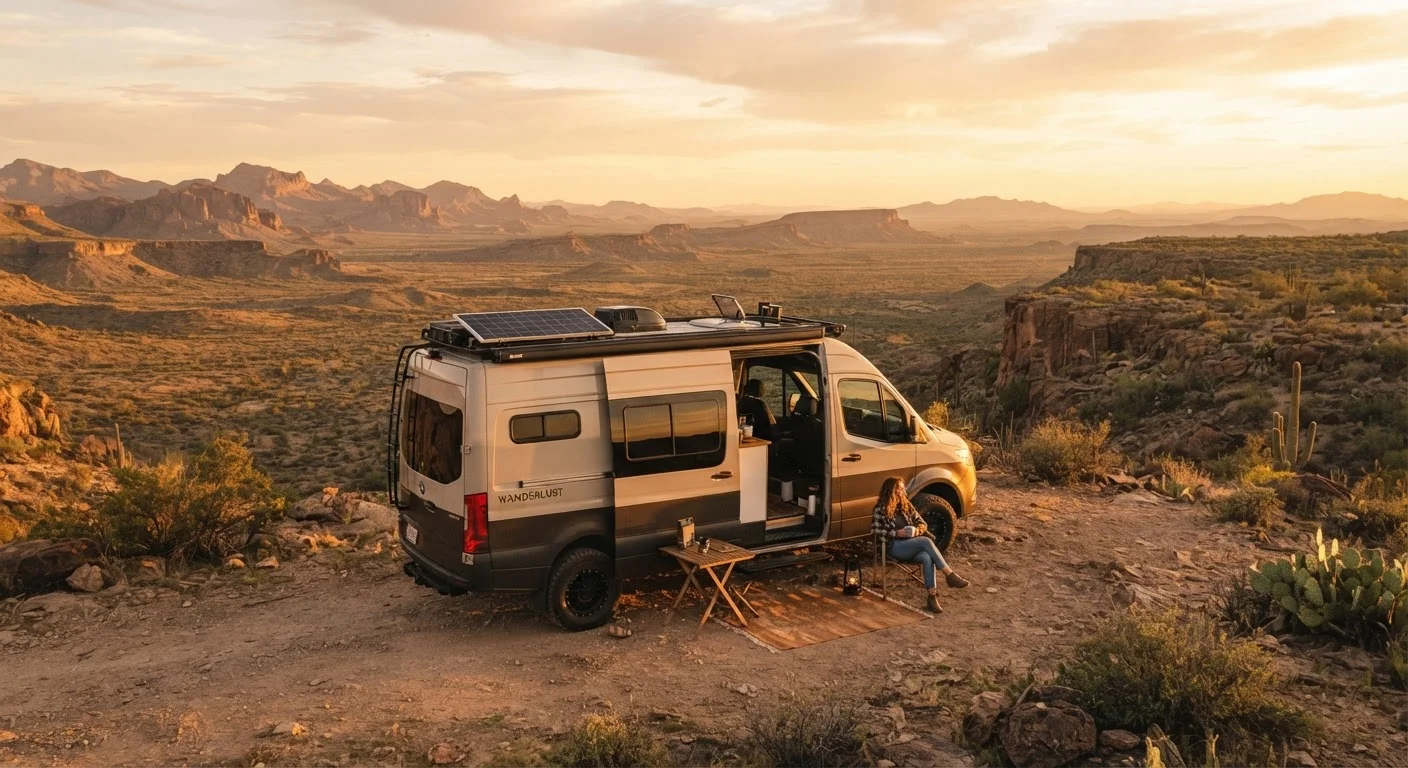
Dry camping (also called boondocking) means camping without shore power, water hookups, or sewer connections. You rely entirely on what you carry in: fresh water in your onboard tank, power stored in your batteries, and finite waste tank capacity. Understanding those three constraints — water, power, and waste — is the foundation of every practice that follows.
Before heading out, it helps to know your rig's specific capacities. A typical Class C motorhome might carry 40–60 gallons of fresh water, 60–80 amp-hours of usable battery capacity (more with lithium), and 30–40 gallons each in gray and black tanks. Those numbers set a hard ceiling on how long you can stay. The practices below are about raising that ceiling as high as possible. For a broader orientation to the RV lifestyle, see The Complete Guide to Owning and Traveling in an RV.
Best Practices for Resource Management Off-Grid
Experienced boondockers treat resource management as a set of intentional habits, not guesswork. The practices below reflect what works across a wide range of RV types and remote environments.
Track your water consumption daily and set a per-person budget of 1–2 gallons per day for basic needs.
Fresh water is almost always the first resource to run out. Without a daily target, usage creeps upward in ways that aren't immediately obvious — dishes left running, extended handwashing, casual rinsing. A concrete per-person number creates accountability and stretches a 50-gallon tank from two days to five or more.
Switch to navy showers: wet down, turn off water, soap up, then rinse briefly.
Showering is the single largest water draw for most campers. A standard shower uses 2 gallons per minute; a navy shower can reduce that to under half a gallon total. Making this the default rather than an occasional sacrifice removes the biggest variable in daily consumption.
Monitor gray and black tank levels every morning and adjust behavior before tanks approach 75% full.
Waiting until tanks are nearly full leaves no margin for error, and dumping at full capacity in the field (at a dump station en route) costs time and often means breaking camp earlier than planned. Checking levels daily lets you course-correct — using less water, making a short trip to a dump station, or extending your stay confidently.
Invest in a lithium (LiFePO4) battery bank and appropriately sized solar array before frequent dry camping.
Traditional lead-acid batteries typically deliver only 50% of rated capacity without damage; lithium batteries can safely discharge to 80–90%, nearly doubling usable power. Paired with solar panels, a lithium system can often sustain multi-week stays without running a generator at all, reducing noise, fuel cost, and mechanical wear.
Use propane for cooking and heating instead of electric appliances whenever possible.
Electric cooking and heating draw heavily on battery banks and can collapse a day's solar harvest in minutes. Propane is energy-dense, widely available, and far more efficient per unit of useful output when batteries are the only alternative power source. Reserving battery power for lighting, refrigeration, and communication extends functional time at site significantly.
Arrive at your site fully prepared: topped-off tanks, charged batteries, tested connections, and a waste dump within the past 24 hours.
The margin you arrive with is the margin you camp with. Starting at 100% fresh water, full battery charge, and empty waste tanks is the single most effective way to extend your stay. Arriving at 70% fresh water because you forgot to fill before leaving effectively removes two days of capacity before you've made camp.
Power: Making Every Amp-Hour Count
Electrical management is where technology and behavior intersect most visibly. Understanding how your RV's electrical system works — batteries, solar, and any generator backup — is essential before you dry camp for more than a night or two. Our article How RV Electrical Systems Work explains those layers in detail.
Solar Angle Makes a Real Difference
If your RV has a fixed rooftop solar array, parking with the panels facing south (in the Northern Hemisphere) during peak sun hours — roughly 10 a.m. to 2 p.m. — maximizes daily harvest. Even a 15-degree adjustment in site orientation can noticeably improve daily charging totals. Portable, tiltable panels connected to your system offer even more flexibility and are worth considering for frequent boondockers.
A practical rule: audit your daily loads before a trip. LED lighting, a 12V refrigerator, phone charging, and a fan can often run comfortably on a well-sized solar and battery setup. High-draw appliances — electric coffee makers, air conditioners, microwaves — are the fastest way to drain a battery bank and typically require a generator or shore power.
Planning Ahead: The Prep That Protects Your Stay
Most resource emergencies in dry camping trace back to pre-trip preparation gaps. Arriving with a partially filled fresh water tank, an untested solar connection, or a gray tank already at 30% capacity will shorten your stay before it begins.
Know the Rules for the Land You're On
Dry camping on Bureau of Land Management (BLM) and U.S. Forest Service land is legal in many areas but subject to specific rules — including stay limits (often 14 days), fire restrictions, and designated camping zones. Always check the relevant agency's website or call the local office before your trip. Camping outside of designated areas or overstaying limits can result in fines and damages the access that boondockers rely on.
If you're still deciding whether owning an RV makes sense for the kind of remote camping you're envisioning, Renting vs. Owning an RV offers a realistic look at both paths — including how boondocking frequency factors into the equation. Full-time RVers in particular need robust resource systems; Full-Time RV Living: The Realities covers the operational demands that come with life on the road year-round.
This article is for general informational and educational purposes. Always verify local land-use regulations and permit requirements before camping on public lands, and consult a qualified RV technician before modifying electrical, plumbing, or waste systems on your vehicle.
The content on this site is for informational purposes only and is not a substitute for professional advice. Always consult a qualified professional for guidance specific to your situation.