

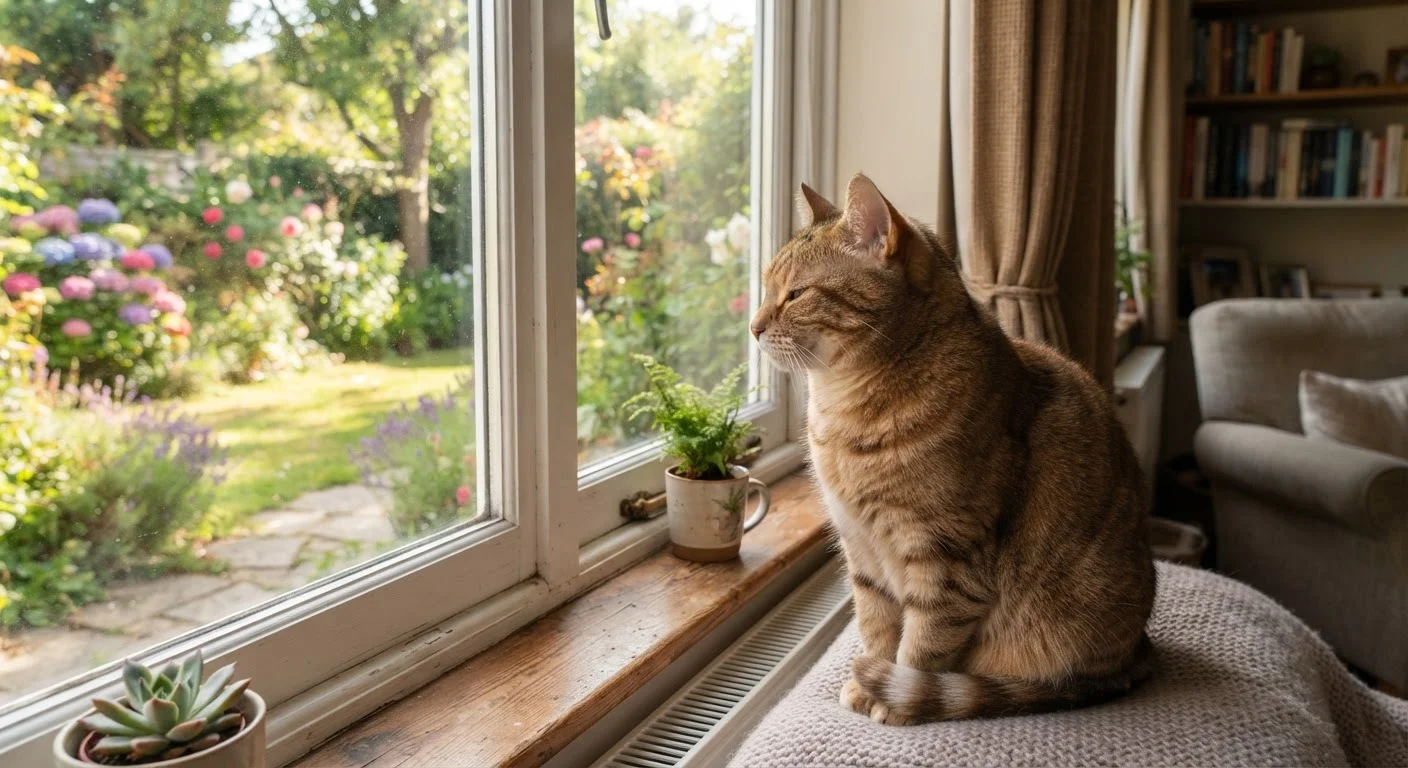
Option A
Indoor-Only Living
The controlled, lower-risk environment.
Best for: Cats in high-traffic areas, those with chronic health conditions, or owners who want to minimize exposure to external hazards.
Option B
Outdoor Access Living
The stimulating, higher-autonomy lifestyle.
Best for: Cats in lower-density rural or suburban settings where outdoor hazards are manageable and enrichment is prioritized.
What the Research Actually Shows About Lifespan and Safety
The most consistently cited finding in this debate is lifespan. Studies suggest indoor cats live significantly longer on average than their outdoor counterparts — estimates vary, but outdoor cats are often exposed to a far wider range of mortality risks. Traffic accidents, attacks from other animals, exposure to toxins, and infectious diseases like feline leukemia virus (FeLV) and feline immunodeficiency virus (FIV) are all substantially more common in cats with outdoor access.
For a deeper look at how these environments shape specific health profiles, see our article on how lifestyle shapes health risks in cats.
| Criterion | Indoor-Only | Outdoor Access |
|---|---|---|
| Average lifespan | Generally longer | Generally shorter |
| Infectious disease risk | Low | Significantly higher |
| Parasite exposure | Low with basic prevention | High; ongoing prevention required |
| Injury/trauma risk | Low | Higher (traffic, animals, falls) |
| Obesity risk | Higher without enrichment | Lower due to activity |
| Behavioral stress risk | Higher without stimulation | Lower if territory is stable |
| Veterinary prevention needs | Standard routine care | More intensive parasite/disease prevention |
That said, longer average lifespan doesn't automatically mean higher quality of life. Researchers and veterinary behaviorists have increasingly recognized that safety-focused indoor living, without adequate mental and physical stimulation, creates its own health problems.
The Hidden Costs of Indoor-Only Life
Indoor cats are at meaningfully higher risk for obesity, lower urinary tract disease, and stress-related behaviors — including overgrooming, inappropriate elimination, and aggression — when their environment lacks adequate enrichment. These aren't minor inconveniences; chronic stress in cats has documented links to immune suppression and gastrointestinal issues.
~52%
Estimated rate of overweight/obese cats in the U.S.
According to the Association for Pet Obesity Prevention, over half of domestic cats in the U.S. are classified as overweight or obese, a condition closely linked to sedentary indoor lifestyles.
2–5x
Higher FIV risk for outdoor vs. indoor cats
Veterinary epidemiology research consistently shows outdoor and stray cats face substantially higher rates of FIV infection compared to exclusively indoor cats.
The solution isn't necessarily outdoor access — it's deliberate environmental design. Vertical climbing structures, puzzle feeders, rotational toys, and scheduled interactive play sessions can address much of what outdoor environments provide naturally. Our guide on environmental enrichment for pets covers practical strategies veterinarians recommend most.
For broader wellness habits that support indoor cats specifically, responsible pet health habits outlines the small, consistent actions that add up over time.
Outdoor Risks Are Real — and Unevenly Distributed
Not all outdoor environments carry the same level of risk. A cat in a low-traffic rural area with few roaming dogs faces a meaningfully different risk profile than one in a suburban neighborhood with coyotes and busy roads. Parasite exposure — fleas, ticks, intestinal worms, and protozoa — is nearly universal in outdoor cats and requires consistent preventive veterinary care.
Infectious disease transmission is also a significant concern. FIV spreads primarily through bite wounds during territorial fights, making unneutered male cats with outdoor access particularly vulnerable. FeLV spreads through casual contact, increasing risk in areas with high stray cat populations.
Vaccination and Prevention Change the Equation
Core vaccines — including those for FeLV, rabies, and feline distemper — significantly reduce, though do not eliminate, the infectious disease risks associated with outdoor access. Cats with outdoor access typically require more frequent veterinary visits and year-round parasite prevention. Discuss an appropriate preventive care schedule with your veterinarian based on your cat's specific lifestyle and local disease prevalence.
Nutrition is another area where lifestyle intersects with health. Outdoor cats tend to be more physically active, which affects caloric needs — something worth discussing with a veterinarian. Our article on wet food vs. dry food for cats explores how diet choices interact with a cat's activity level and health needs.
Middle-Ground Options Worth Considering
The indoor/outdoor binary isn't the only framework available. Supervised outdoor time on a harness and leash, enclosed outdoor structures (commonly called catios), and screened windows that allow fresh air and sensory stimulation all offer ways to expand a cat's world without full free-roam outdoor exposure.
These approaches require investment — in time, training, or construction — but they're increasingly recommended by veterinary behaviorists as a way to balance behavioral welfare against physical safety. A cat that was previously outdoor-only and has been transitioned indoors may particularly benefit from structured outdoor access during the adjustment period.
Ultimately, what works best depends on the individual cat's temperament, health history, and the specific environment they live in. There's no universal right answer — but the decision is worth making deliberately, with veterinary input, rather than by default.
This article provides general information for educational purposes and is not a substitute for professional veterinary advice. Consult your veterinarian for guidance tailored to your cat's individual needs.
The content on this site is for informational purposes only and is not a substitute for professional advice. Always consult a qualified professional for guidance specific to your situation.