

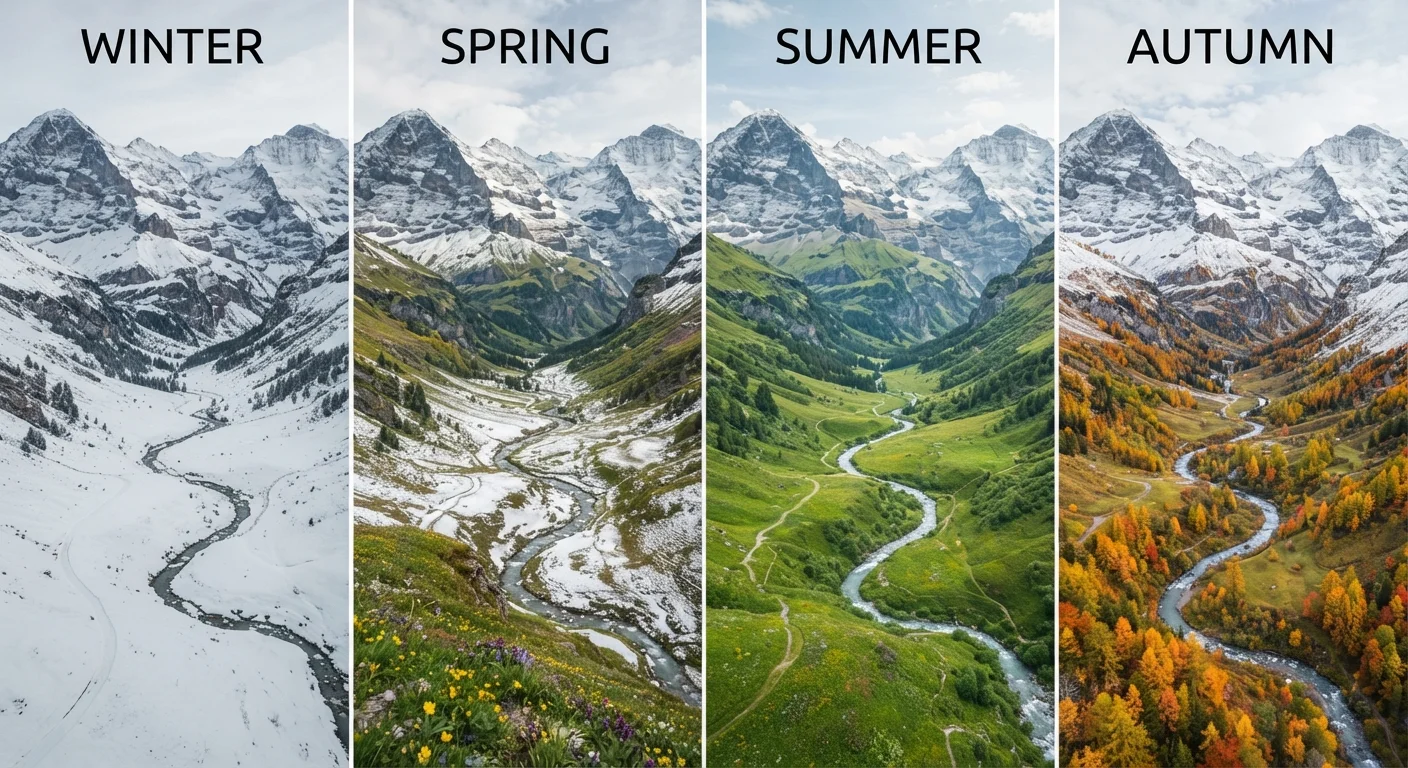
Why Timing Changes Everything
Imagine visiting a famous lavender region of Provence in late summer — fields already harvested, colors gone. Or arriving at a coastal resort during its peak weeks only to find every trail crowded and every table booked weeks in advance. The destination hasn't changed; the timing has, and with it, the entire experience.
Seasonal travel is one of the most underestimated variables in trip planning. Most people choose a destination, then pick dates around availability and budget. Experienced travelers tend to work the other direction: they understand a destination's seasonal personality first, then build their trip around the window that matches their priorities.
Weather is the most obvious driver, but it's far from the only one. Crowd density, pricing pressure, local event calendars, wildlife cycles, daylight hours, and even the mood of a place all shift with the season. Understanding these forces — and how they interact — is what separates a well-timed trip from one that falls flat despite the best intentions.
Conditions Change — Always Verify
General seasonal guides are a starting point, not a guarantee. Climate variability, infrastructure changes, and local events can shift what a destination looks and feels like in a given year. Before booking, check official tourism board resources and your government's travel advisory pages for the most current information.
The Four Seasonal Layers of Any Destination
High season is when most visitors arrive. The weather is typically at its most favorable, major attractions are fully operational, and the destination's full hospitality infrastructure is running. The tradeoff: higher prices, booked-out accommodation, and the kind of crowds that can diminish the very experience you came for. As destination photography often suggests, the gap between expectation and reality widens most sharply during peak periods.
Shoulder season sits just outside peak demand — often spring and early autumn in temperate destinations. Conditions remain good, visitor numbers drop noticeably, and hotel pricing tends to soften as demand eases. For many travelers, shoulder season represents the most balanced trade-off available.
Low season — often mislabeled simply as 'off-season' — brings the steepest price drops and fewest crowds, but also the greatest variability. Weather may be unreliable, some services may be curtailed, and a handful of attractions may be closed altogether. If you're planning a first off-season trip, preparation matters more than usual.
Event-driven seasons layer on top of all three. A local carnival, harvest festival, or sporting championship can compress demand into a narrow window — making a nominally quiet period feel like high season in terms of pricing and availability.
~60%
International trips concentrated in peak season months
Research on global tourism consistently shows that the majority of international leisure travel is concentrated in a minority of calendar months, with demand clustering heavily around summer and major holidays.
2–3x
Typical accommodation price range between low and high season
For many popular leisure destinations, accommodation rates during peak periods can be two to three times higher than the same property charges during low season, according to general hospitality industry observations.
6 months
Atlantic hurricane season duration annually
The official Atlantic hurricane season runs from June 1 through November 30 each year, per the US National Hurricane Center — a significant seasonal factor for Caribbean and Gulf Coast travel planning.
Destination-Specific Seasonal Patterns
No two destinations follow the same seasonal logic. Beach destinations in the Caribbean typically see peak demand in the US winter months — visitors are escaping cold weather at home. Island destinations in this region also carry hurricane season considerations from roughly June through November, a variable worth factoring carefully into planning.
Mountain destinations in the American West operate on a dual-peak model: summer hiking season and winter skiing season, with quieter shoulder windows in between. The American Southwest, meanwhile, is famously extreme — summer heat in canyon country can reach levels that genuinely affect safety, making spring and autumn the widely preferred windows for most visitors.
Cities behave differently still. Urban destinations are less weather-dependent and often busiest during school holiday windows and major conventions, making them more predictable in some ways but heavily event-driven in others.
Matching Your Travel Goals to the Right Season
The 'right' season isn't universal — it's personal. Someone planning a slow, immersive trip often thrives in shoulder or low season, when a destination's everyday rhythms are more accessible and local interaction feels more natural. A traveler chasing a specific festival, a particular wildflower bloom, or a wildlife migration has essentially no flexibility — the calendar is set.
Understanding your own travel style is a useful starting point. Comfort-seekers may prioritize predictable weather. Budget-conscious travelers may weight pricing above all. Photographers often seek shoulder seasons for their light quality and thinner crowds.
Whatever your priorities, a few habits help: consult official tourism boards and government travel advisories for current conditions; check actual accommodation availability and pricing rather than relying on general patterns; and build flexibility into your itinerary where weather is a meaningful factor. For specialty travel experiences tied to narrow natural windows — migrations, festivals, harvests — locking in plans early is especially important.
Build a Seasonal Research Checklist
Before finalizing any travel dates, check three things: the destination's general weather pattern for that month, any major local events that could compress accommodation availability, and whether key attractions operate year-round or on a seasonal schedule. This 10-minute exercise can prevent significant disappointment on arrival.
Frequently Asked Questions
High season is when a destination sees its peak visitor numbers, typically driven by favorable weather or school holidays. Shoulder season falls just before or after — conditions are often still pleasant, crowds are thinner, and pricing tends to be more moderate, though services can vary.
Lower demand typically puts downward pressure on accommodation and flight pricing, but not always. Some destinations have off-season events or limited supply that keep prices elevated. It's worth checking actual rates rather than assuming lower season means lower cost.
Many attractions, tours, and restaurants operate on seasonal schedules. Off-peak visits can mean reduced hours, closed facilities, or limited transportation options. Researching specific openings before you book helps avoid surprises.
Absolutely. A traveler seeking festivals and a full social scene may prefer high season. Someone prioritizing solitude, photography, or budget travel often finds shoulder or low season more rewarding. Your goals matter as much as the calendar.
General guides offer a useful starting point, but local conditions vary. Climate patterns can be unpredictable, and regional events shift year to year. Always cross-check with official tourism boards or government travel advisories close to your departure date.
The content on this site is for informational purposes only and is not a substitute for professional advice. Always consult a qualified professional for guidance specific to your situation.