

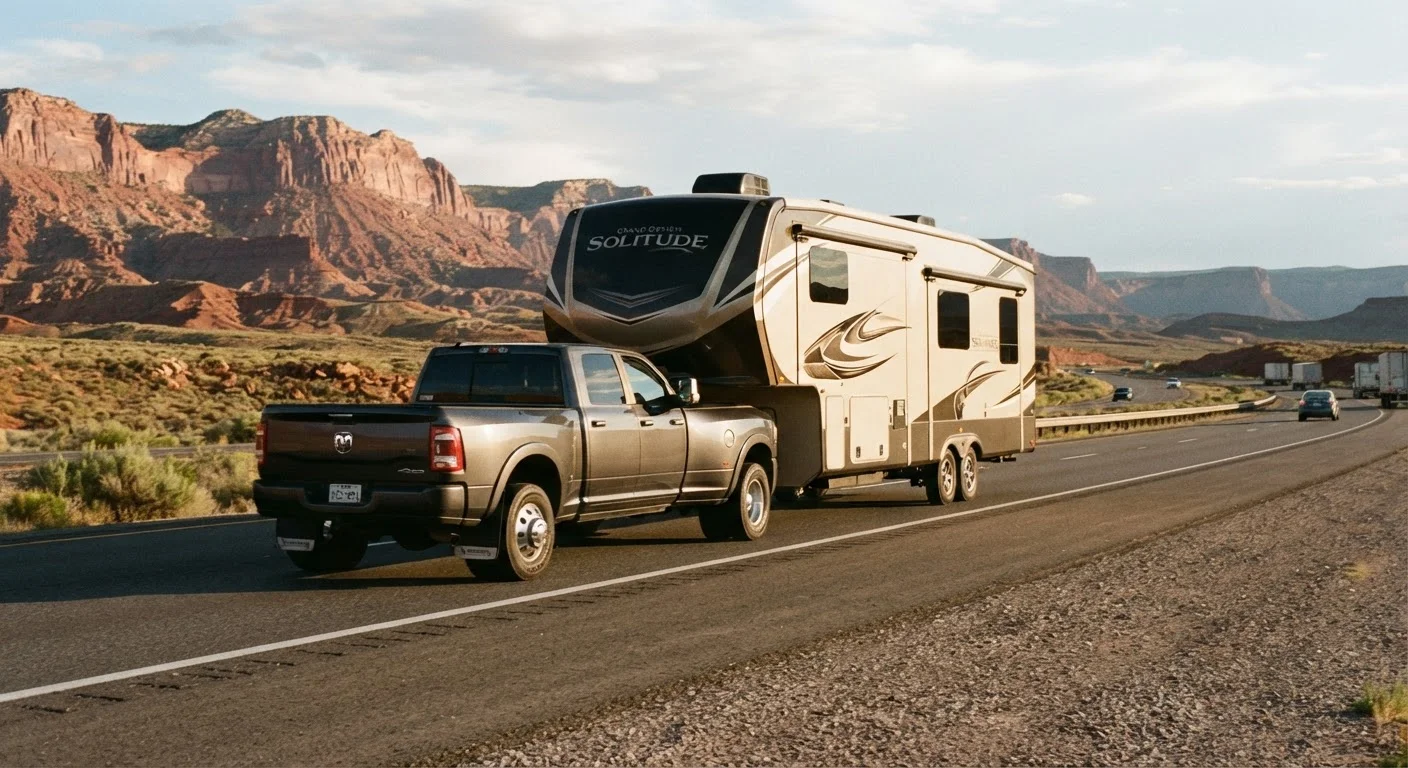
Why RV Weight Ratings Matter
Weight ratings aren't bureaucratic fine print — they're engineering limits determined by the manufacturer to keep a vehicle or trailer operating safely. Exceed them, and you risk brake fade, tire blowouts, structural stress, drivetrain damage, and loss of vehicle control. In some states, an overweight rig can also result in fines or liability complications if an accident occurs.
Whether you're shopping for your first travel trailer or upgrading a tow vehicle, understanding what GVWR, GCWR, and payload actually mean is a prerequisite — not an afterthought. This reference breaks each term down clearly so you can compare rigs and trucks with confidence. For a broader orientation on RV types, see our guide to motorhomes vs. towable RVs.
| What GVWR Covers | Total maximum weight of a single vehicle when fully loaded |
| What GCWR Covers | Combined maximum weight of tow vehicle plus loaded trailer |
| Payload Defined As | GVWR minus curb weight |
| Tongue Weight Rule of Thumb | 10–15% of trailer weight (travel trailer); 20–25% (fifth wheel) (General industry guidance; verify with your hitch and vehicle manufacturer) |
| Where to Find True Payload | Driver's door jamb sticker on the tow vehicle |
| Applies To | All towable RVs, motorhomes, and their tow or dinghy vehicles |
The Core Weight Ratings Defined
Three ratings form the foundation of RV and tow-vehicle weight management. Each describes a different point in the weight chain.
GVWR — Gross Vehicle Weight Rating
Gross Vehicle Weight Rating (GVWR) is the maximum total weight a single vehicle — including its own structure, fluids, cargo, passengers, and any tongue weight from a trailer — is designed to carry. For a towable RV such as a fifth wheel or travel trailer, GVWR represents the maximum the trailer itself may weigh when fully loaded. For a motorhome, it's the limit for the entire self-propelled unit.
GCWR — Gross Combined Weight Rating
Gross Combined Weight Rating (GCWR) applies specifically to tow-vehicle setups. It's the maximum allowable weight of the tow vehicle plus the fully loaded trailer combined. GCWR is set by the tow-vehicle manufacturer, not the trailer maker. If your truck has a GCWR of 25,000 lbs and it weighs 7,200 lbs fully loaded, you cannot tow a trailer that pushes the combined total above 25,000 lbs — regardless of what the trailer's own GVWR allows.
Payload Capacity
Payload capacity is the difference between a vehicle's GVWR and its curb weight (the weight of the vehicle empty with standard fluids). It tells you how much additional weight — passengers, gear, tongue weight from a hitch — the vehicle can legally and safely carry. Payload is frequently misunderstood because towing capacity and payload capacity are separate limits that must both be respected simultaneously.
GVWR
Gross Vehicle Weight Rating — the maximum total weight a single vehicle is engineered to support, including its own structure, fluids, cargo, and occupants. Exceeding it is unsafe and may be illegal.
GCWR
Gross Combined Weight Rating — the maximum allowable weight of a tow vehicle plus its fully loaded trailer combined. Set by the tow-vehicle manufacturer and cannot be exceeded safely.
Payload Capacity
The maximum additional weight a vehicle can carry beyond its curb weight (empty vehicle with standard fluids). Includes passengers, cargo, and tongue weight from a hitch.
Curb Weight
The actual weight of a vehicle as delivered, with all standard fluids but no passengers or cargo. Used to calculate payload capacity.
Tongue Weight
The downward force a trailer's coupler or kingpin exerts on the tow vehicle's hitch. It counts against payload and must be factored into every weight calculation.
UVW (Unloaded Vehicle Weight)
The weight of a recreational vehicle as manufactured, with standard equipment but no water, cargo, or dealer-added accessories. Used as the baseline for calculating how much load can be added.
How These Ratings Interact in Practice
The most common mistake RV owners make is checking only one rating in isolation. Consider this scenario: a half-ton pickup truck may advertise a towing capacity of 10,000 lbs, but if its payload is only 1,400 lbs, adding two adult passengers (roughly 350 lbs), a full tank of fuel (around 150 lbs), and a fifth-wheel hitch assembly (around 250 lbs) leaves only about 650 lbs of payload for tongue weight — which for a 10,000-lb trailer can easily exceed 2,000 lbs. The truck is over its payload limit long before it's over its tow rating.
This is why understanding truck classifications matters so much in RV contexts. A one-ton crew cab diesel and a half-ton short-bed V8 may share a similar advertised tow rating, but their payload capacities can differ by more than 1,500 lbs.
Brochure Numbers vs. Real-World Capacity
Advertised towing capacity figures in marketing materials often reflect a best-case configuration — typically a regular cab, short bed, specific axle ratio, and no passengers. Your actual truck, as configured, may have a meaningfully lower payload. Always use the door-jamb sticker payload and the owner's manual GCWR as your authoritative sources, not the headline spec sheet number.
The actual payload capacity for a specific truck is printed on a sticker inside the driver's door jamb — not just in the brochure. That number accounts for how the vehicle was actually built (cab size, bed length, axle ratio, options), and it is always the authoritative figure to use.
For motorhome owners, GCWR becomes relevant if you're towing a dinghy vehicle (a car flat-towed behind a motorhome). Even Class A diesel pushers have GCWR limits that restrict which vehicles can be towed behind them. See our overview of Class A, B, and C motorhome types for context on how size and drivetrain affect these ratings.
1,500+ lbs
Typical payload gap between half-ton and one-ton trucks
Payload differences between truck classes can dramatically affect safe tow limits, even when advertised tow ratings appear similar.
20–25%
Recommended tongue weight as share of fifth-wheel trailer weight
General industry guidance from RV and hitch manufacturers; actual limits vary by vehicle and hitch system.
Quick Reference and Next Steps
Before pairing any tow vehicle with a trailer, work through this checklist:
- Find the trailer's GVWR on its VIN plate (usually near the tongue or on the frame). This is the maximum it can legally weigh loaded.
- Find the tow vehicle's GCWR in the owner's manual or manufacturer spec sheets. Subtract the truck's loaded weight from GCWR to find maximum allowable trailer weight.
- Check payload via the door-jamb sticker. Account for passengers, fuel, gear, and tongue weight (typically 10–15% of trailer weight for travel trailers, 20–25% for fifth wheels).
- Use the most restrictive figure. The actual safe tow limit is the lowest number produced by your GCWR analysis, tow rating, and payload calculation combined.
Weight ratings are fixed engineering facts, not suggestions to negotiate away. For a deeper look at how payload and body-on-frame design interact, see what makes a truck a truck. And if you're building out a full RV ownership plan, the Complete Guide to Owning and Traveling in an RV covers the broader picture from rig selection to life on the road.
NHTSA Vehicle Safety Information
The National Highway Traffic Safety Administration provides regulatory background on vehicle weight standards and safety ratings relevant to RVs and tow vehicles.
RV Industry Association (RVIA) Consumer Resources
The RVIA publishes consumer guidance on RV standards, weight terminology, and safe loading practices for owners at all experience levels.
Tow Vehicle Owner's Manual
The single most authoritative source for your specific truck's GCWR, payload, and tow ratings — always consult it before pairing with any trailer.
The content on this site is for informational purposes only and is not a substitute for professional advice. Always consult a qualified professional for guidance specific to your situation.