

Start here
How an Electric Vehicle Actually Works
Next
Charging Basics: Levels, Speeds, and Where to Plug In
Build on it
Range, Battery Health, and What Affects Them
Go deeper
Day-to-Day Ownership: Maintenance, Costs, and Adjustments
Make your call
Is an EV Right for Your Life?
How an Electric Vehicle Actually Works
A battery electric vehicle (BEV) replaces the internal combustion engine with one or more electric motors powered by a large lithium-ion battery pack. When you press the accelerator, the battery delivers electrical energy to the motor, which converts it into rotational force at the wheels — almost instantly. There's no clutch, no multi-speed transmission in most EVs, and no exhaust system.
The absence of a combustion cycle eliminates dozens of traditional components: no oil changes, no spark plugs, no fuel injectors. This simplicity is one reason EVs tend to have fewer mechanical failure points than conventional vehicles. The trade-off is that the battery pack itself becomes the most significant long-term variable in ownership.
Battery Electric Vehicle (BEV)
A vehicle powered entirely by electricity stored in a battery pack, with no gasoline engine. Often called simply an "EV."
Regenerative Braking
A system that captures energy when the vehicle slows down and converts it back into electrical charge, extending range and reducing brake wear.
kWh (Kilowatt-Hour)
The unit used to measure battery capacity and energy consumption in EVs, similar to how gallons measure fuel in a gas car.
EPA Range
The U.S. Environmental Protection Agency's standardized estimate of how far an EV can travel on a full charge under controlled test conditions — real-world results will vary.
Level 2 Charging
A 240-volt home or public charging setup that adds 20–30 miles of range per hour — the most common solution for overnight home charging.
DC Fast Charging
High-powered commercial chargers that can add substantial range in minutes rather than hours, used primarily during long trips or away from home.
For a broader comparison of powertrain types, see Fuel Type Trade-Offs: Gas, Hybrid, and Electric Vehicles Compared.
Charging Basics: Levels, Speeds, and Where to Plug In
Charging is the functional equivalent of fueling — but happens mostly while the car is parked. There are three recognized levels of EV charging in the U.S.:
- Level 1 (120V): A standard household outlet. Adds approximately 3–5 miles of range per hour. Practical only if you drive fewer than 40 miles per day and can charge overnight.
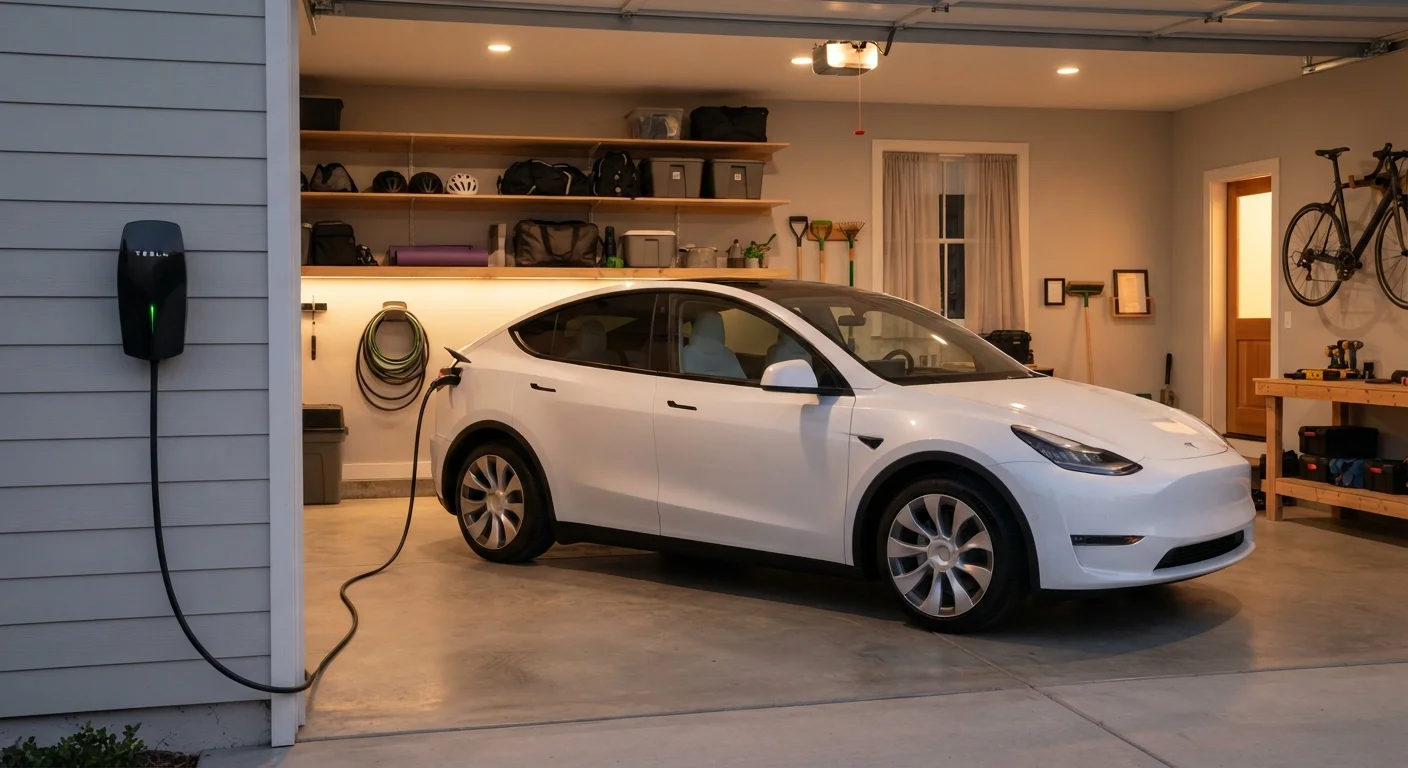
- Level 2 (240V): Requires a dedicated circuit installed by a licensed electrician. Adds 20–30 miles per hour, enough to fully replenish most EVs overnight. This is the standard home setup for most EV owners.
- DC Fast Charging (Level 3): Found at commercial charging stations. Can add 100–200 miles in 20–45 minutes depending on the vehicle and charger power. Not all EVs support the fastest charge rates.
Set Up Home Charging Before Delivery Day
Arrange your Level 2 charger installation before your EV arrives, not after. Contact a licensed electrician to assess your panel capacity and install a dedicated 240-volt circuit. Many utility companies offer rebates for home EV charger installations — check with your provider early in the process.
Installing a Level 2 charger involves upgrading your home's electrical capacity. Our related guide on understanding your home's electrical panel can help you understand what that process involves before calling an electrician.
Range, Battery Health, and What Affects Them
EPA range estimates are a useful benchmark, but real-world range varies. The key variables are:
- Temperature: Cold weather reduces battery efficiency and heating the cabin draws additional power. Hot weather stresses thermal management systems.
- Speed: Highway driving at 75+ mph consumes energy faster than city driving, unlike gas cars where city stop-and-go is less efficient.
- Climate control: Running the heater or air conditioner pulls directly from the battery pack.
- Driving style: Aggressive acceleration shortens range; smooth driving preserves it.
Battery capacity also degrades gradually over years of charge cycles — most manufacturers warrant battery packs for 8 years or 100,000 miles, typically guaranteeing a minimum capacity threshold. Understanding this is important when evaluating used EVs; The Full Life of a Car Battery offers relevant context on battery longevity principles.
Don't Over-Rely on the EPA Range Figure
Manufacturers are required to display EPA-estimated range, but real-world results routinely differ — sometimes significantly in extreme temperatures or at highway speeds. Plan charging stops with a comfortable buffer rather than running the battery close to zero, especially on unfamiliar routes.
Day-to-Day Ownership: Maintenance, Costs, and Adjustments
EV maintenance schedules are notably shorter than those for gas vehicles. Without engine oil, transmission fluid, or spark plugs, many routine service items simply don't apply. What remains includes tire rotations (EVs are often heavier, increasing tire wear), cabin air filter replacements, coolant system checks, and wiper blades.
Regenerative braking — a system that converts braking energy back into battery charge — significantly reduces wear on brake pads compared to conventional vehicles. However, having the brake system inspected periodically is still recommended, as calipers can seize if rarely used.
On the cost side, electricity is generally cheaper per mile than gasoline, though the gap varies by region and utility rates. For a full picture of long-term costs, see Total Cost of Vehicle Ownership. New EV owners should also review Vehicle Ownership for First-Timers for a grounded overview of maintaining any vehicle.
Is an EV Right for Your Life?
Electric vehicles suit some lifestyles and driving patterns better than others. They tend to work best when you have access to home charging, drive a predictable daily route within the vehicle's range, and can plan around charging stops for occasional longer trips.
They're a harder fit if you live in an apartment without dedicated parking access, frequently tow heavy loads (which accelerates range depletion), or regularly drive in remote areas without charging infrastructure. EVs are also worth weighing differently if you're considering a plug-in hybrid as an alternative — a PHEV bridges electric and gasoline use for drivers not yet ready to go fully electric.
Before committing to any vehicle, the vehicle research process is worth working through carefully. An EV is a significant purchase, and matching it to your actual driving life is the most reliable path to satisfaction.
U.S. Department of Energy: Alternative Fuels Station Locator
A publicly available tool from the DOE that maps EV charging stations across the U.S. by location, network, and connector type — useful for trip planning.
EPA Fuel Economy Guide for EVs
The EPA's official resource for comparing range estimates, energy consumption ratings, and annual fuel cost estimates across EV models.
This article is for general informational purposes only and does not constitute financial, legal, or professional automotive advice. Consult qualified professionals for decisions specific to your situation.
Frequently Asked Questions
A standard 120-volt outlet (Level 1) adds roughly 3–5 miles of range per hour — slow but workable for short daily commutes. A Level 2 home charger (240 volts) typically adds 20–30 miles per hour, fully charging most EVs overnight. A licensed electrician must install a dedicated 240-volt circuit; consult one for your specific home setup.
Generally, yes. EVs have no oil, transmission fluid, or spark plugs to replace, and regenerative braking reduces brake wear significantly. You still need to maintain tires, coolant systems, cabin air filters, and wiper blades. Consult your owner's manual for the recommended service schedule.
Cold temperatures reduce battery efficiency, and running the cabin heater draws significant power. Drivers commonly see 20–40% range reduction in very cold conditions. Pre-conditioning the cabin while still plugged in can help offset this loss.
EV batteries gradually lose capacity over many years of use — most manufacturers warrant the battery pack for 8 years or 100,000 miles. Replacement is expensive, though costs have been declining. Checking the remaining warranty before purchasing a used EV is advisable.
Yes, though planning matters more than with a gas car. Mapping fast-charging stops along your route using the vehicle's navigation or a third-party app is standard practice. DC fast chargers can add 100–200 miles of range in 20–45 minutes, depending on the vehicle and charger output.
Yes — a plug-in hybrid (PHEV) pairs a gasoline engine with a rechargeable battery, letting you drive on electricity for shorter trips before switching to gas. A fully electric vehicle (BEV) has no combustion engine at all. See our comparison article for a detailed breakdown of the differences.
The content on this site is for informational purposes only and is not a substitute for professional advice. Always consult a qualified professional for guidance specific to your situation.